



This piece contains discussion of domestic violence, child endangerment, and suicide. If you or someone you know is in crisis, the 988 Suicide & Crisis Lifeline is available by calling or texting 988. The National Domestic Violence Hotline can be reached at 1-800-799-7233.
A Note on This Episode
The interview featured in this episode was conducted directly with Dawna Holland, the maternal aunt of Jack Duane Morgan. Dawna spoke voluntarily and on the record.
All allegations made during this interview — including those regarding the conduct and character of Jack’s father, the circumstances of Jack’s disappearance, and the possible motive behind it — reflect the personal beliefs and recollections of Dawna Holland alone. They have not been independently verified, and no charges have ever been filed in connection with Jack Morgan’s disappearance. The individual referenced as Jack’s father has not been named, charged, or formally identified as a suspect by law enforcement, and has not been given the opportunity to respond to the claims made in this episode.
This episode is presented in the interest of bringing public attention to an unsolved missing persons case. It is not intended as a statement of fact regarding any individual’s guilt or culpability.
The Boy Nobody Was Allowed to Remember
There is a particular cruelty in erasure — not just the kind that happens when a person vanishes, but the deliberate, methodical kind. The kind where photographs come down from walls. Where belongings get thrown away. Where a name becomes forbidden inside what was supposed to be a home. Where a father calls a school to expel the very people asking where his son went.
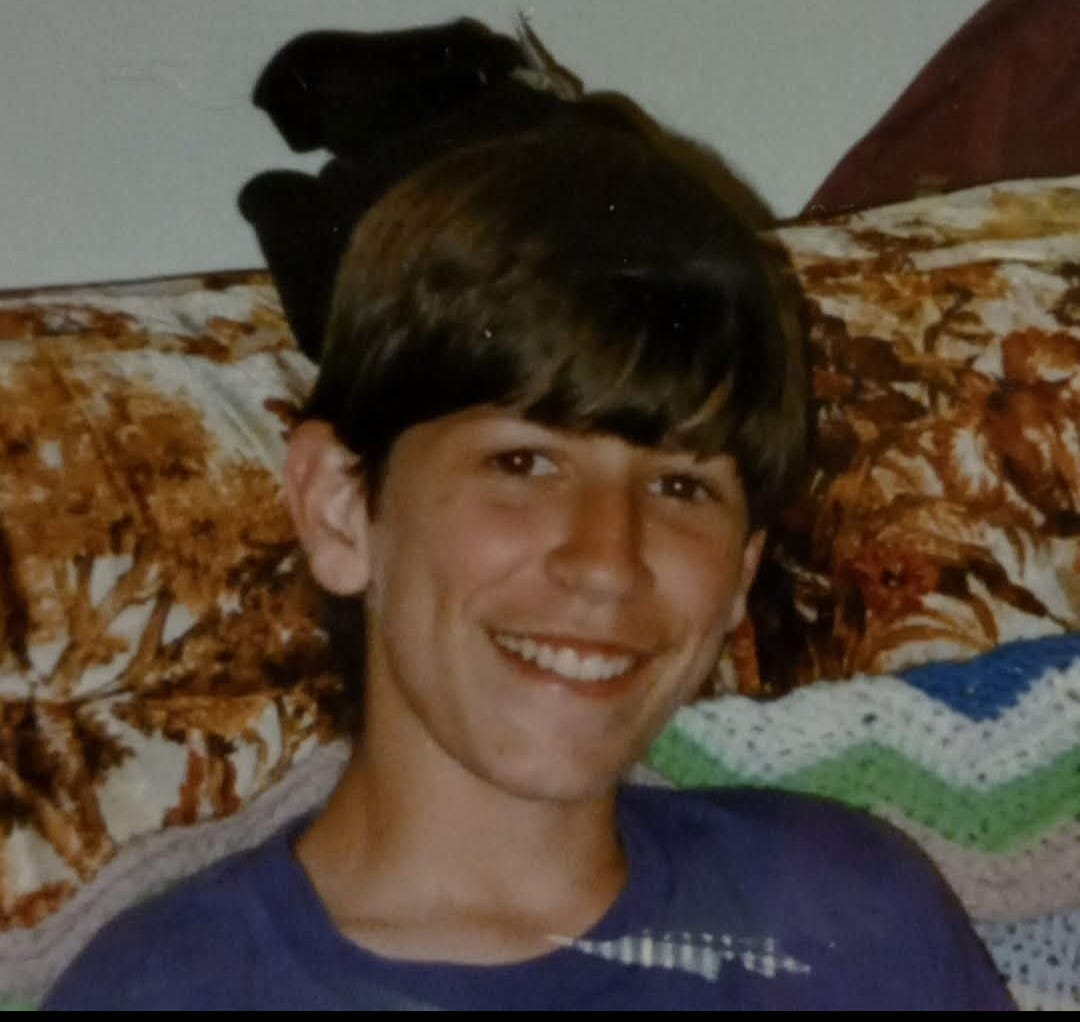
This is the story of Jack Duane Morgan. Fifteen years old. Brown hair, brown eyes. A scar near his left eye, or his right cheek, depending on which database you consult. An A+ student at a private school in San Diego, California, described by those who knew him as having a heart of gold — affectionate, warm, the kind of kid who made everyone around him feel seen.
On the afternoon of December 5, 1996, Jack was last seen at his home at 2203 Haniman Drive in San Diego. He was never seen again.
What happened next — not just to Jack, but to the investigation that followed, and to the family that tried to find him — is one of the more disturbing cold cases in California’s recent history. Not because the mystery is exotic or the circumstances spectacular. But because the obstruction was so thorough, so sustained, and so apparently effective, that the machinery of justice ground nearly to a halt for almost two decades.
And behind that obstruction, according to his aunt Dawna Holland, who spoke to this reporter directly, is a story about violence, fear, and the particular danger that can exist for a young gay man in a household run by a man willing to hurt the people who love him.
The Last Afternoon
The San Diego that Jack Morgan knew in December 1996 was a city caught between eras. The mid-nineties economy was reshaping California’s coastal cities, and San Diego’s neighborhoods were still largely defined by their proximity to the Navy bases and the Pacific. It was the kind of place where a fifteen-year-old boy on his own street, in his own neighborhood, should have been perfectly safe.
Jack’s home life had the particular texture of a post-divorce arrangement. His parents were separated, and he lived with his biological father in a single-family home in the 2200 block of Haniman Drive. By available accounts, the arrangement appeared unremarkable on its surface. Reports suggest Jack had no significant problems at home — but as his aunt Dawna Holland now makes clear, that characterization was dangerously incomplete.
What we know about Jack’s last day comes in fragments, filtered through investigators and advocates working the case years after the fact. At approximately 3:00 in the afternoon, Jack was at the house. Sometime that afternoon, according to the Resource Center for Cold Case Missing Children’s Cases, Jack and his father had a significant argument. When his brother returned home, Jack was gone. He has not been seen or heard from since.
The detail that investigators and family advocates have returned to repeatedly is this: Jack left behind everything. Not just some things — everything. His clothing was still in the house. His personal belongings remained exactly where they had been. There was no money missing. There was no note. There were, according to those who examined the circumstances, no indications that he had left of his own accord whatsoever.
The Runaway Classification
When San Diego police responded to the missing persons report, they made a judgment call that would shape the next several years of this case: they classified Jack Morgan as a runaway.
On its face, this classification is not unreasonable. A teenage boy vanishes after an argument with his father. No obvious signs of foul play. No body. No witnesses. In a city the size of San Diego — population approaching 1.2 million in 1996 — teenagers ran away with some regularity. Law enforcement resources are finite, and without compelling evidence to the contrary, a missing teenager in a post-argument household often lands in the runaway column. It is, unfortunately, a systemically overcrowded category that swallows cases where something far more sinister has occurred.
But the runaway classification has to be interrogated when examined alongside what we now know. Runaways, as a general matter, take things. They grab money, clothes, a treasured possession — anything that helps them start over or sustain themselves. A teenager who vanishes and leaves behind every stitch of clothing, every dollar, every personal item, is not running away to somewhere. That is not flight. That profile points toward something else entirely.
The National Center for Missing and Exploited Children has long grappled with the limitations of the runaway classification, which can delay the mobilization of resources that might otherwise preserve crucial evidence in cases of foul play. By the time investigators revise a classification, weeks or months may have passed. Memories fade. Physical evidence degrades. Witnesses move on. The critical window closes.
In Jack’s case, that window may have closed faster than anyone realized.
The Brother
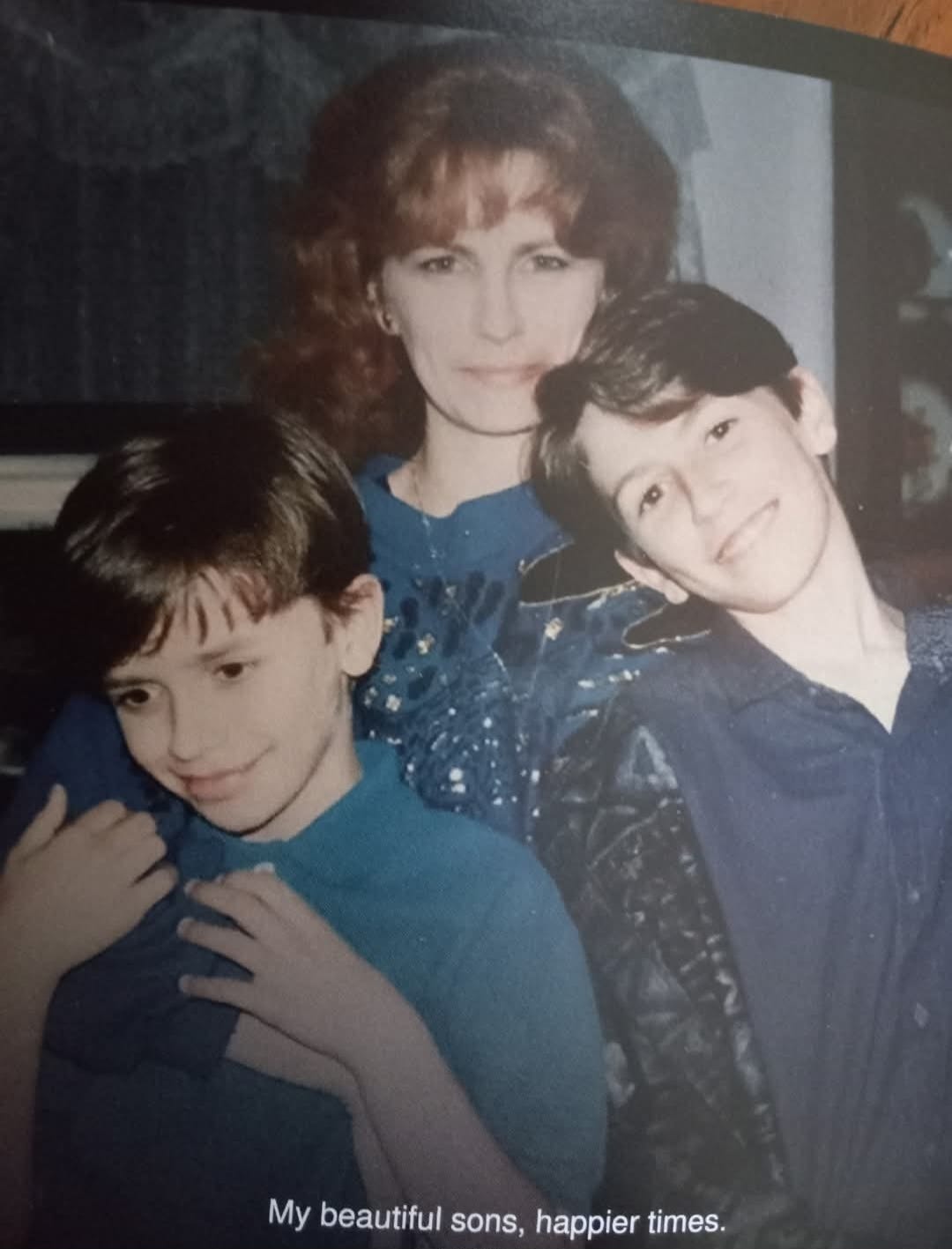
There is another figure in this story whose silence only deepens its tragedy. Jack’s brother was the boy who came home that afternoon to find him gone. He was in the house. He lived there. He knew the family dynamic. He knew his father.
According to Dawna Holland, Jack’s brother has, at points, expressed a desire to tell people what happened the day Jack disappeared. He has knowledge. And yet he will not speak of his brother — not now, not to family, not to anyone.
He carries something from that house. From that afternoon. From the years that followed. Whatever it is, it has not left him.
The implication is one of the most haunting elements of this entire case: the person most likely to have direct knowledge of what happened on Haniman Drive on December 5, 1996 — the only other child in that home — is still alive, and still silent. Not because he has nothing to say, but because saying it may be something he cannot yet bring himself to do.
What can be said from the outside is this: two sons were in that house. One disappeared that afternoon. The other has carried whatever he knows ever since.
The Father — And What the Family Says
This is the part of the story that demands careful attention, and careful language. No charges have ever been filed in connection with Jack Morgan’s disappearance. His father has not been publicly named or formally identified as a suspect by law enforcement. What follows is a recounting of documented, reported behaviors and the direct testimony of a family member — behaviors that were noted by investigators, by advocacy organizations, and, most critically, by Dawna Holland, Jack’s maternal aunt, in an interview conducted for this piece.
From the moment police arrived at 2203 Haniman Drive, Jack’s father was, according to the Resource Center for Cold Case Missing Children’s Cases, uncooperative in the investigation. He refused to speak with police about what had happened to his son.
Refusal to speak with police, on its own, is a constitutional right. People decline to speak with investigators for many reasons, not all of them sinister. But the behavior documented in Jack’s case went considerably further than a traumatized father’s silence.
According to available records, the father did not merely decline to cooperate with investigators himself. He actively worked to prevent other members of the family from speaking with police, going out of his way to impede any family member who might want to help investigators understand what had happened to a missing fifteen-year-old boy.
Then came the erasure.
Every photograph of Jack in the house was taken down. Every belonging was thrown out. His name was explicitly forbidden to be spoken inside the home. This was not the behavior of a parent in shock who could not bear reminders of a child he feared was dead or gone. This was systematic — a deliberate purging of evidence that his son had ever existed within those walls.
The obstruction extended to the school. When Jack’s mother and her sister traveled to the private school Jack had attended to speak with his friends — seeking any information, any clue, any thread they could follow — the father called school authorities and had them removed from the premises. The school complied. A mother and aunt, seeking a missing child, were expelled from the grounds of a school by the intervention of the very man from whose home that child had vanished.
Dawna Holland, in her own words, goes further.
“He was a Marine,” Holland told this reporter. “He was a violent man. He beat my sister. We all knew what he was capable of.”
Holland says the violence within the household was not a secret to those close to the family — it was a pattern. Jack’s father, she says, was physically abusive toward Jack’s mother during the marriage. The divorce, Holland suggests, did not create distance between her sister and the danger — it simply changed the address at which it operated.
Holland’s account also introduces a dimension of this case that has never before been publicly reported. She believes that Jack’s sexual identity may have been a direct factor in what happened to him.
“Jack may have been gay,“ Dawn said. “He was affectionate, he was caring, he was so loving with everyone around him. But his father — a man like that, a Marine, a violent man — that would not have been acceptable. Not to him.”
Holland stops short of providing direct evidence for what she suspects happened in the house on December 5, 1996. But she is not ambiguous about her conclusion.
“I believe his father killed him,” she said. “I believe it was because Jack was gay, and his father couldn’t accept that. I believe he did something to Jack that day, and then he spent years making sure no one could prove it.”
This allegation is, to be clear, unverified and unproven. Jack’s father has not been charged with any crime. He has not been publicly given the opportunity to respond to these specific claims. But Holland’s account — consistent as it is with the documented pattern of obstruction, erasure, and suppression — provides a possible motive for behavior that has long defied innocent explanation.
The Television Broadcast That Never Aired
In the 1990s, America’s Most Wanted was one of the most powerful tools in the American missing persons ecosystem. Hosted by John Walsh — himself the father of a murdered child — the show had a documented record of generating leads, locating fugitives, and drawing public attention to cases that might otherwise languish in obscurity. An appearance on America’s Most Wanted could transform a local cold case into a nationwide search overnight.
Jack Morgan’s case was slated to be one of those broadcasts. Producers had taken an interest. The segment was reportedly scheduled to air.
Then it wasn’t.
Jack’s father reportedly contacted the production and requested that the broadcast not happen. And America’s Most Wanted — for reasons that have never been publicly explained — honored that request. The segment was pulled. It never aired.
Whatever the production team’s reasoning, the effect was to leave a missing child further in the dark. A mother who had already been expelled from her son’s school, accused by a court of hiding him, and blocked by her estranged husband at every turn, was now denied the one platform that might have changed everything.
“We couldn’t understand it,” Dawna Holland said. “Here was this show that exists to find missing people, and his father — the person we believed hurt Jack — was able to just call and make it go away. And they let him.”
The Lost Report and the Closed Investigation
In 1999, three years after Jack’s disappearance, the original missing persons report on his case was lost. The physical paperwork — the foundational documentation of the investigation — was gone. And as a direct consequence, the investigation was closed.
It is almost impossible to overstate how consequential this was. A missing persons investigation without its case file is a rudderless ship. The documentation of witness accounts, leads pursued, evidence collected — all of it contained in a report that was no longer there. Without that file, there was no case. Without a case, there was no investigator assigned. Without an investigator, there was no one following leads, or re-examining the circumstances of December 5, 1996.
Jack Morgan’s case effectively ceased to exist in an official capacity for fourteen years.
How an active missing persons report on a missing child goes missing is a question worth asking with some force. Paper records are vulnerable. Administrative failures happen. But in a case already marked by systematic obstruction — a father who refused to talk, a family blocked at every turn, a television segment that was pulled — the loss of the only official record of the investigation lands differently. It is a question that has never been definitively answered.
The People Who Refused to Stop Looking
While the official investigation lay dormant, two things kept Jack Morgan’s name alive: his mother, and a small community of missing persons advocates.
Jack’s mother and her sister Dawna — the same women who had been turned away from his school, accused by a court of hiding him, and denied access to legal recourse — never stopped searching. In the years when there was no detective assigned, no open case file, and no official attention, they maintained whatever effort they could.
In 2013, nearly seventeen years after Jack vanished, a detective named Catherine Millet managed to reopen the case through Missing Persons of America, shortly before her own retirement. It was an act of professional commitment and human decency: to spend one of your final professional acts breathing life back into a case that had been systematically allowed to suffocate.
The reopening generated a small wave of media attention, including a 2013 report in a local San Diego publication suggesting that Jack — who occasionally went by the name Jason, or the initials JD — might still be in the local area. The piece floated the possibility that he had simply walked away from his life as a teenager and built a new one nearby.
Holland does not believe this.
“Jason wouldn’t have done that,” she said, using the name Jack went by in daily life. “He wouldn’t have let his mother suffer for thirty years without reaching out. That wasn’t who he was. He cared about people too much.”
What the Evidence and Testimony Suggest
Let us be direct about what the documented record and first-hand testimony show, while being equally clear about what they do not prove.
The documented record shows: a fifteen-year-old boy vanishes from his home after a fight with his father, leaving every single possession behind. His father immediately begins obstructing every possible avenue of investigation. Photographs come down. Belongings are discarded. A name cannot be spoken. A mother is expelled from her son’s school at her estranged husband’s instruction. A court turns a grieving mother away and accuses her of concealment. A national television broadcast is suppressed at the father’s request. The case file disappears. The investigation closes for fourteen years.
The testimony of Dawna Holland adds: a history of domestic violence in the household. A father described as physically abusive toward Jack’s mother. A belief, held by the family, that Jack was gay and in the early stages of understanding his own identity. A father described as a Marine with rigid, violent standards.
What this does not prove: that Jack is dead. That foul play occurred. That his father is responsible for anything beyond profoundly suspicious behavior. These are allegations. They are the beliefs of a grieving family member. They are not established facts.
But they are consistent with the documented record in every particular.
There are scenarios — improbable, but possible — in which Jack Morgan is alive. Severe trauma can cause dissociative responses that result in a person walking away from their entire former identity and not returning. If Jack experienced something in that house serious enough — serious enough that returning was more terrifying than disappearing — he might have built a quiet life somewhere under a different name.
But Holland speaks for many in the family when she says she has made her peace with a harder conclusion.
“I think he’s gone,” she said quietly. “I think he’s been gone since that day. And I think somewhere, people know it, and they’ve been protecting themselves instead of him for thirty years.”
The Question of Motive and the 1990s Context
To understand why Jack’s possible sexual identity might have been a precipitating factor in whatever happened that December, it is important to understand the cultural moment. The mid-1990s were a period of intense, often violent social conflict over LGBTQ+ visibility and rights. Matthew Shepard would not be murdered until 1998, and his death would shock the country precisely because it illustrated how lethal homophobia could be — but he was far from the only victim. The years between 1990 and 1998 saw consistent, documented violence against young gay men across America, with the most severe abuse often occurring within families.
For a teenage boy in a San Diego household headed by a career Marine — an institution that, under the “Don’t Ask, Don’t Tell” policy implemented in 1994, officially codified the idea that gay service members were a problem to be concealed or discharged — coming out, or being perceived as gay, carried risks that are difficult to fully appreciate from the vantage point of 2026.
Holland is clear that she does not know whether Jack had explicitly come out to his father, or whether his father perceived or suspected it.
“He was fifteen,” she said. “He was just starting to understand himself. But you could see it in him — the warmth, the way he was with people. And his father was not a man who would have accepted that.”
The allegation, if true, would transform the nature of this case. It would mean that Jack Morgan was not a runaway, and not simply the victim of a domestic dispute that spiraled out of control. It would mean he was the victim of a hate crime committed by his own father — a category of violence that, in 1996, had limited legal recognition and even more limited investigative priority.
The Systems That Failed
Jack Morgan’s case is, among other things, a study in institutional failure. Not the dramatic kind that makes headlines — not a corrupt investigator taking a bribe or evidence being deliberately planted — but the quieter, more insidious kind that happens when systems designed to protect children are too slow, too underfunded, or too deferential to the wrong people.
The initial runaway classification, while administratively understandable, meant the urgency of a potential foul play scenario was not applied in the critical early days. The failure to more aggressively pursue leads while the father was actively obstructing is, in retrospect, a significant gap. The loss of the case file resulted in fourteen years of nothing. The deference shown to a surviving parent — even one who was behaving in ways that, in any other context, would have drawn immediate suspicion — allowed the investigation to be starved of oxygen until it collapsed.
Perhaps most structurally troubling is the episode with America’s Most Wanted. The show existed precisely to amplify cases like Jack’s. That a single phone call from the last adult to see a missing boy could neutralize that platform entirely — that no other party, not Jack’s mother, not law enforcement, not the show’s own producers on behalf of a missing child — had standing to override that request, represents a gap that the missing persons advocacy community has struggled with for decades.
If Dawna Holland’s account is accurate — if the father was violent, if Jack’s identity was a factor, if his brother has carried the weight of what he witnessed — then the institutional failures in this case were not merely bureaucratic. They were, in effect, a second injury visited upon a family that had already been victimized by the same man the system failed to scrutinize.
The Detective Who Keeps the File Open
As of the most recent available information, Jack Morgan’s case has a detective assigned to it: Detective Maura Mekenas Parga of the San Diego Police Department — known to colleagues simply as Detective Mo Parga. A profile of Parga in the San Diego Union-Tribune described a career officer with more than 32 years on the force, someone known for her tenacity, her directness, and her commitment to cases that others might have given up on.
It matters that someone like this is assigned to this case. It matters that the case is active. It matters that Jack Morgan’s information is registered with NamUs, case number 19675, meaning that if anyone matching his description surfaces — in any database, any hospital, any unidentified persons file — there is a record to match against.
What remains unknown is whether, given the passage of nearly thirty years, there is enough surviving evidence to ever bring this case to resolution. The witnesses who were adults in 1996 are now in their fifties, sixties, and beyond. The physical evidence — whatever there was of it — has been subject to three decades of attrition. The original case file was lost.
But Dawna Holland is still here. And she has not stopped talking.
What Jack Deserves
Jack Duane Morgan would be 44 years old today. He has been missing since December 5, 1996. He had a scar near his eye, brown hair, and a disposition that, by every account, made the people around him feel genuinely cared for. His aunt describes a boy who was warm and loving, who was finding his identity, and who deserved every chance to live fully into who he was becoming.
He deserved a real investigation in December of 1996, not a runaway classification and a case file that later went missing. He deserved a platform — the one America’s Most Wanted was prepared to give him — that was not taken away by the one person whose cooperation should never have been required in the first place. He deserved a mother and aunt who could look for him without being thrown out of his school and accused of hiding him.
And if Dawna Holland is right — if Jack was gay, if that was why an argument escalated on a December afternoon into something irreversible, if the subsequent decades of silence and obstruction were a father’s attempt to bury both a son and the truth of what he did to him — then Jack also deserved to live in a world where that would not have been a reason to die.
Whether the full truth of what happened on Haniman Drive on December 5, 1996 is ever known, one thing is certain: the story of what followed Jack’s disappearance is a story about what happens when a violent man is given the benefit of the doubt that his victim was not.
Somebody knows what happened to Jack Morgan. Somebody has known for a very long time.
Jack Duane Morgan, DOB July 21, 1981. Missing from San Diego, California since December 5, 1996.
NCMEC case number 827758 | NamUs case number 19675
San Diego Police Department: 1-619-531-2000 | NCMEC: 1-800-843-5678
Sources
Interview with Dawna Holland, Jack Morgan’s maternal aunt (primary); The Charley Project; The Resource Center for Cold Case Missing Children’s Cases (RCCCMCC); Missing Persons of America; NamUs; The Doe Network; National Center for Missing and Exploited Children; San Diego Union-Tribune; California Office of the Attorney General.


