



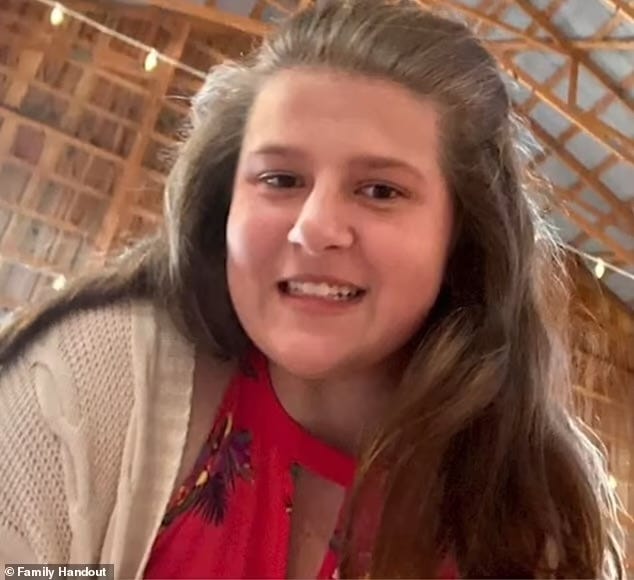
#JusticeForShaylee · Her Life Mattered · Demand Answers · She Was Not a Runaway
She left without her medications. Without money. Without a phone or a bag or a change of clothes. She left because someone had spent weeks earning her trust — someone who had sent her burner phones hidden beneath her bedroom floorboards — someone who told her: don’t bring anything, just come with me. Twelve days later, Shaylee Snyder was found dead beside railroad tracks on the opposite side of the city, bruised from head to toe, her pants around her ankles, half inside a sleeping bag. A burning car was nearby. She was fifteen years old. And for three days, not a single authority in Indianapolis knew her name.
The Cold Cases sat down with Laura Davis, Shaylee’s aunt, to hear directly what happened — to her niece, and to a family that went to the police with everything they had and was turned away with a dismissal so callous it beggars belief. What follows is Shaylee’s story, told in full, built from Laura’s testimony, public records, and verified reporting — because Shaylee Snyder deserves more than a footnote in an overdose database.
Case Profile — Shaylee Marie Snyder
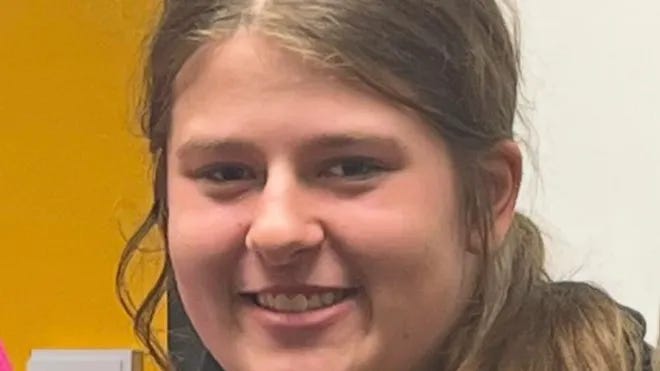
Shaylee Marie Snyder
Date of Birth May 10, 2009
Age at Death 15 years old
Last Seen Feb. 10, 2025 — Beech Grove area, S. 17th Ave., Indianapolis
Body Discovered Feb. 22, 2025 — 1800 S. Sigsbee St., west side of Indianapolis
Found By Railroad detective — near train tracks
Condition at Scene Bruised head to toe; pants around ankles; partially inside a green sleeping bag; burning vehicle nearby
Jane Doe Period 3 days — family located via Facebook by coroner’s office
Official Cause of Death Combined intoxication — methamphetamine and heroin (ruled accidental)
IMPD Classification Declared runaway — never classified as endangered
Current Status Open investigation — Overdose Death Task Force. No arrests.
A Girl Who Cared About Everybody
To understand the weight of what was lost on February 22, 2025, you have to understand who Shaylee Snyder was. Her aunt Laura Davis does not struggle to describe her — the words come quickly, the way they do when you are talking about someone you loved completely.
Laura Davis — Shaylee’s Aunt
“Shaylee was very, very caring. She always cared about everybody’s feelings. She was always there to help you. She was funny, and she was very athletic. She played basketball for a long time for Indy Hoops.”
Shaylee Marie Snyder was born on May 10, 2009, at Hendricks Regional Hospital in Danville, Indiana. She was a freshman at Mooresville High School, a basketball player and track-and-field athlete, a maker of handmade bracelets that her friends and family still wear today. She was the kind of teenager who lit up a room — funny, empathetic, physically gifted, and deeply connected to the people around her.
She was also a teenager going through something hard. In the period before her disappearance, Shaylee had been struggling with recurring trauma memories, and her family had enrolled her in counseling to help her work through them. She was on medications — a process of trial and error that is exhaustingly common for adolescents dealing with mental health — and those medications were not yet working. Compounding the trauma was a situation at school that Laura describes with a particular kind of hurt: Shaylee was being bullied. Not by strangers, but by girls she had grown up with. Girls she had played basketball with. People who should have been her people.
Laura Davis
“She was getting bullied at school all the time by some girls that were with her her entire life. Like, they grew up together. They played basketball together. So it didn’t make any sense that they always were bullying her and making fun of her.”
This is the context in which Shaylee became vulnerable to what came next. A girl who cared deeply about others, who was in pain, who was isolated socially, who was searching for connection — and who found what she thought was connection online, with people who turned out to be her predators.
The Grooming: Burner Phones Beneath the Floorboards
Laura Davis is careful and precise when she talks about what the family knew — and didn’t know — about Shaylee’s online life before she disappeared. The picture that emerges is of a family doing everything right, and of a predator doing everything possible to circumvent them.
The family was aware that Shaylee was talking to people online — on Facebook, Instagram, Roblox, WhatsApp, Minecraft, and other platforms. When they became concerned, they did what parents do: they took the phones. They took the games. They took the computers. Shaylee was required to do her schoolwork on the living room floor, in front of everyone, so that her digital activity could be monitored.
Laura Davis
“She had to sit in the living room floor and do her schoolwork in front of everybody.”
Interviewer
“So how did they gain access?”
Laura Davis
“After she left, we found several burner phones in her room. At least three or four phones in her room. And like, they were — one of them was like almost underneath the floorboard. It was on the carpet and the wall.”
Three or four burner phones. Hidden in a teenager’s bedroom — one wedged under a floorboard, tucked against the wall where no casual search would find it. This is not the behavior of a child who spontaneously decided to run away. This is evidence of a sustained, deliberate, sophisticated grooming operation. Someone — or a network of people — had been in ongoing communication with Shaylee for long enough to require multiple separate devices. They had provided those devices to her. They had helped her hide them. They had been patient, and methodical, and they had been building toward something.
The evidence of premeditation does not end with the phones. Approximately two weeks before Shaylee disappeared for the last time, there was an incident that Laura now believes was a dry run — or a moment where Shaylee got scared and called for help, only to be pulled back in.
Laura Davis
“I should mention that Shaylee had called me two weeks prior from her cell phone. She had went into her mom’s room and got her phone. At one o’clock in the morning. She was only out for two hours because she called me to come pick her up — on South Keystone. At three o’clock in the morning.”
South Keystone Avenue. Three in the morning. A fifteen-year-old girl who had slipped out to meet someone, who found herself somewhere she didn’t want to be, who called her aunt to come get her. Laura came. Shaylee came home. And two weeks later, she was gone again — this time without calling anyone.
Laura’s interpretation of that earlier incident is chilling in its clarity:
Laura Davis
“I believe that whoever she was with at that moment gained enough trust of hers that they told her, ‘You don’t need anything, just come with me’ — and set the whole thing up.”
The person or persons grooming Shaylee learned from that first outing. They had nearly had her — and then she’d called her aunt. So the next time, they made sure she wouldn’t. They told her not to bring anything. No phone. No money. No bags. And on the morning of February 10, 2025, she walked out the door with nothing but the clothes on her back, exactly as she had been instructed.
Evidence of Premeditated Grooming
Three to four burner phones found hidden in Shaylee’s room after her disappearance — one wedged beneath a floorboard
Family had confiscated all known devices; phones were secretly provided by outside parties
Shaylee was in contact with unknown individuals across multiple platforms: Facebook, Instagram, WhatsApp, Roblox, Minecraft
Approximately two weeks before her disappearance, Shaylee left at 1 AM and called her aunt at 3 AM from South Keystone Ave. to be picked up
That earlier incident is consistent with a groomer testing boundaries and building trust after an initial scare
On Feb. 10, Shaylee left with no medications, no phone, no money, no bags — consistent with being instructed to bring nothing
This pattern mirrors textbook online grooming methodology used by predators targeting vulnerable adolescents
“She’s Probably Bipolar. There Ain’t Nothing We Can Do.”
When Shaylee failed to come home on February 10, 2025, her family did not wait. They went to police. They brought everything — Shaylee’s computer, her Nintendo Switch, phones they had found, her entire medical folder documenting her mental health history and medications. They came prepared. They came desperate. They came with evidence.
What they received in return is one of the most damning moments of institutional failure in this entire case.
After being made to wait 48 hours before they could speak to a missing persons detective — a 48-hour wait for a missing fifteen-year-old — the family finally sat down with an IMPD detective assigned to the case. Laura Davis recounts what happened in that meeting with a clarity that comes from a wound that has not healed.
Laura Davis
“We took Shaylee’s computer, her Nintendo Switch, the phone, you know, a phone or two that we had found. We took her medical folder and everything that she was going through. And she kind of laughed at us and said — her exact words were — ‘Well, she’s probably bipolar. There ain’t nothing we can do about it.’”
A missing persons detective, presented with a missing fifteen-year-old’s electronic devices, her medical records, the physical evidence of her disappearance, and a family clearly terrified — laughed. And said there was nothing that could be done.
Laura pressed. She asked about alternatives. She asked whether an ambulance could be involved. She reminded the detective that this was a fifteen-year-old who did not have her medications, who was in contact with people she should not have been, who they feared was in danger.
Laura Davis
“I said, well, can we find an ambulance or something? She’s 15 years old, and we know that she’s talking to people she shouldn’t be. She doesn’t have her medications, and we are fearful that something is going to happen.”
The response from IMPD’s official account diverges entirely from this. The department later told media that at the February 12 meeting, investigators “did not gather any information that indicated Snyder was in immediate danger or had known medical conditions” — and that the family had reported no such concerns. Shaylee’s mother explicitly told IndyStar this was false, that she had communicated both the mental health history and the possibility of Shaylee being with an adult man.
Someone is not telling the truth. The family brought a medical folder to that meeting. They brought devices. They described a teenager with a history of mental illness, no medications, and contact with potentially dangerous adults. The official record does not reflect any of that.
The “runaway” classification stood. No public alert was issued. No media notification went out. No AMBER Alert. No endangered missing designation. The family was told, in effect, to keep hanging flyers.
“She’s probably bipolar. There ain’t nothing we can do about it.”
— IMPD Missing Persons Detective, to Shaylee’s family, February 12, 2025
Fifteen Days. No Callbacks. No Emails. No Replies.
For fifteen days, Shaylee Snyder’s family carried the investigation themselves. They made the flyers. They distributed them across the city. They posted on social media. They called anyone who might know anything. They sent emails to the police department. They sent messages. They called again. And again.
Nothing came back.
No returned calls. No replies to emails. No replies to messages. No updates from detectives. The family that had hand-delivered electronic devices, medical records, and security camera information to the police — who had two eyewitnesses describing seeing Shaylee with a specific vehicle — heard nothing from law enforcement for the entirety of those fifteen days, except for the knock on the door in the middle of the night that told them their child was dead.
Much of what the public knew about Shaylee during the search came entirely from the family’s own social media activity. IMPD never issued a public statement about her disappearance during those fifteen days. When IndyStar later asked the department whether they had released any information about Shaylee to the public or media during that period, IMPD did not answer the question.
~2 Weeks Before Feb. 10
The First Incident — South Keystone
Shaylee slips out at 1 AM to meet someone. At 3 AM she calls her aunt Laura from South Keystone Ave. to be picked up. Laura comes and brings her home. In retrospect, the family believes this was Shaylee’s groomer testing her and rebuilding trust for the final luring.
February 10, 2025 — Morning
Shaylee disappears
Last seen in the Beech Grove area near S. 17th Ave. Leaves without medications, phone, money, bags, or clothing — consistent with being told by her groomer to bring nothing. Captured on a security camera.
February 10, 2025 — ~2:00 PM
Family reports Shaylee missing
Family contacts IMPD and Beech Grove PD. Brings Shaylee’s computer, Nintendo Switch, phones, and her complete medical folder. Reports she has no medications, may be with an adult man, is in contact with unknown online individuals. IMPD classifies her as a runaway.
February 11, 2025
Case assigned to detective — 24 hours later
The case is assigned to an IMPD Missing Persons detective. The family has still not spoken with an investigator.
February 12, 2025
The meeting — 48 hours after report
Family finally meets with the IMPD Missing Persons detective. Detective reportedly laughs at the family’s concerns and states: “She’s probably bipolar. There ain’t nothing we can do about it.” IMPD’s official account of this meeting directly contradicts the family’s. No public alert is issued. No media notification goes out.
February 12 – 22, 2025
Ten days of silence
No returned calls. No replies to emails or messages. No updates from investigators. The family runs the search operation independently. Law enforcement makes no public statement about Shaylee’s disappearance during this entire period.
February 22, 2025 — ~2:12 PM
Shaylee’s body is found
A railroad detective finds a body near the tracks at 1800 S. Sigsbee Street — the west side of Indianapolis, the opposite side of the city from where Shaylee was last seen. Her body bears bruises from head to toe. Her pants are around her ankles. She is partially inside a green sleeping bag. Beside her: a deliberately burned 2016 black Chevrolet sedan. IMPD responds and begins a death investigation.
February 22 – 25, 2025
Three days as Jane Doe
Despite an active missing persons report on file, Shaylee is not identified for 72 hours. Her family — who have been searching for her — do not know she is dead. The Marion County Coroner’s Office eventually locates the family on Facebook.
Just after midnight, February 25, 2025
The knock on the door
Police arrive at the family home in the early hours to deliver the notification. The last time they had spoken with the family in any meaningful capacity was the February 12 meeting. Shaylee is gone.
May 2025
Coroner rules death accidental
Marion County Coroner’s Office rules cause of death “combined intoxication by methamphetamine and heroin,” manner accidental. Case transferred to Overdose Death Task Force. No arrests. No named suspects. Family disputes the framing.
What Was Found at the Scene
At 2:12 on the afternoon of February 22, a railroad detective found a body near the tracks at 1800 South Sigsbee Street — an isolated stretch of road on the city’s west side, near the Indianapolis airport. It was miles from Beech Grove, where Shaylee had last been seen. It was the opposite side of the city.
IMPD’s official reports describe the discovery in clinical terms: a death investigation, a body near railroad tracks, a burned vehicle nearby. The family’s account of the scene adds details that the official record has never adequately addressed.
Shaylee was bruised from head to toe. Her pants were around her ankles. She was half inside, half outside a green sleeping bag. And beside her, still burning or freshly burned, was a 2016 black Chevrolet sedan — a vehicle that matched the description of the car that two eyewitnesses had reported seeing in connection with Shaylee during the period of her disappearance.
Laura Davis
“When they found her, she was bruised from head to toe. She had bruises everywhere. And so her pants were around her ankles, and she was like half in a sleeping bag and half out of a green sleeping bag.”
These details do not describe a girl who overdosed accidentally and was found where she fell. They describe a scene. They describe the aftermath of violence, of disposal, of deliberate destruction of evidence. The burning of the vehicle — a vehicle that eyewitnesses connected to Shaylee — is not an incidental detail. It is an act. Someone set that car on fire. Someone made a decision, at some point, to destroy whatever that vehicle contained.
“We figure the car that was found burning had something to do with her death,” Shaylee’s grandfather told Fox 59. The police have not confirmed that connection publicly. The family has never received an adequate explanation for how IMPD investigated the relationship between the burned vehicle, the eyewitness accounts, and Shaylee’s death.
The Scene — What the Physical Evidence Suggests
Shaylee Snyder was found bruised from head to toe, with her pants around her ankles, partially inside a green sleeping bag, near railroad tracks on an isolated road far from where she was last seen. A vehicle was burning nearby. This is not a scene consistent with an unwitnessed, solitary accidental overdose. Someone was with Shaylee. Someone moved her — or she was moved after death. Someone burned a car. Someone left her there. The coroner’s ruling of “accidental” addresses cause of death. It does not address responsibility. It does not address who did this.
Jane Doe. Three Days. Found on Facebook.
When Shaylee’s body was found on February 22, she was not identified. Despite the fact that an active missing persons report had been filed with IMPD twelve days earlier — with a description, photographs, and the family’s contact information — the fifteen-year-old found near those railroad tracks was processed as a Jane Doe.
For three days, she remained unidentified. For three days, her family may still have been holding onto hope. Putting up flyers. Making calls. Waiting for the phone to ring with good news.
It was the Marion County Coroner’s Office that finally connected the dots — not through any coordinated law enforcement data-sharing, not through a system that cross-referenced the unidentified body against the active missing persons file, but through Facebook. The coroner’s office found the family on social media. That is how they learned their daughter, their niece, their granddaughter was dead.
Three days as a Jane Doe. Found on Facebook. This is the sum total of the system’s effort to connect a dead teenager with the family that had been begging for help finding her for two weeks.
Then, at just after midnight on February 25, police arrived at the family home. The last meaningful contact they had initiated with the family was the February 12 meeting. In between: nothing. The next thing the family heard from law enforcement was the knock on the door that told them everything was over.
And then — according to Laura and Shaylee’s aunt Alissa Clark, who has also spoken publicly about the case — came information that didn’t add up. Accounts from different authorities that contradicted each other. A picture of Shaylee’s final days that shifted depending on who was talking. Mixed information, the family says, that was haunting. And in their account, IMPD then went to the media with a version of events the family characterizes as fundamentally dishonest.
“The police never made — they didn’t put anything out to the public. They didn’t do anything. They made us wait 48 hours to even be able to speak to a missing persons detective. A 15-year-old. Who does that?”
— Laura Davis, Shaylee’s Aunt
The Coroner’s Ruling and What It Doesn’t Answer
In May 2025, the Marion County Coroner’s Office issued its official determination: Shaylee Snyder died of “combined intoxication by methamphetamine and heroin.” The manner of death was ruled accidental. IMPD announced that the case would be transferred to the Overdose Death Task Force.
The family does not accept this as the end of the story. And they are right not to.
An “accidental overdose” ruling speaks to cause of death. It does not speak to the circumstances surrounding it. It does not tell us who gave a fifteen-year-old girl methamphetamine and heroin. It does not tell us whether she took those substances willingly, or whether they were given to her without her knowledge or consent. It does not tell us who was with her when she died. It does not explain the bruising from head to toe. It does not explain why her pants were around her ankles. It does not explain the burning car. It does not explain who left her in a sleeping bag near railroad tracks on the west side of Indianapolis.
In Indiana, as in most states, providing a controlled substance to a minor that results in their death is a serious crime — potentially charged as dealing resulting in death, reckless homicide, or even murder, depending on the circumstances. The “accidental” designation does not close that door. It simply means the coroner did not find evidence of direct physical violence as the cause of death. It says nothing about the criminal culpability of whoever supplied those drugs, transported Shaylee across the city, disposed of her body, and burned a vehicle at the scene.
Laura Davis is direct about what she believes:
Laura Davis
“Somebody lured her and then did all this to her. And we need to find the person who did this because they might do it again. I’m sure they will. And she was only 15 years old. This is horrifying that somebody could do this.”
She is right. The person or persons who groomed Shaylee Snyder — who supplied her with hidden burner phones, who convinced her not to bring anything when she left, who had her in their company for twelve days, who was present at or responsible for the scene where she was found — is, as far as the public record reflects, still unidentified and uncharged.
Questions That Remain Unanswered
Who groomed Shaylee online and provided her with burner phones?
Who was she with the night two weeks earlier on South Keystone Ave.?
Who was she with during the twelve days she was missing?
Who gave her methamphetamine and heroin — and was it administered without her consent?
What explains the bruising covering her entire body?
What explains the condition in which her body was found?
Who burned the 2016 black Chevrolet found at the scene?
Is that vehicle the same one two eyewitnesses connected to Shaylee during her disappearance?
Who transported Shaylee to the west side of the city — opposite from where she disappeared?
Who left her beside the railroad tracks at 1800 S. Sigsbee Street?
Why was she a Jane Doe for three days despite an active missing persons report?
What “mixed information” did the family receive — and what was accurate?
Has IMPD investigated the link between the burned vehicle and the eyewitness accounts?
Will anyone be held criminally responsible for Shaylee’s death?
The Runaway Label: How Law Enforcement Loses Children
The “runaway” classification is not a neutral administrative label. In practice, it is a decision — one that shapes every subsequent choice an investigation makes about urgency, resources, public communication, and the seriousness with which a family’s concerns are treated. And it is a decision that, in documented case after case, costs children their lives.
Research drawn from over a hundred case reviews by the AMBER Alert Training and Technical Assistance Program found that when first responders failed to properly assess circumstances or missed early evidence, the successful recovery rate of missing children dropped dramatically. The same research estimates that approximately 71 percent of runaways are endangered during their disappearance — more than two-thirds of the children we write off as having chosen to leave are actually in danger. Yet the classification continues to function as a reason to do less.
The National Child Protection Task Force has articulated the failure plainly: labeling a case as a “runaway” can unintentionally reduce urgency and limit investigative momentum. “When a child leaves home, it’s often seen as a behavioral issue or a family problem,” the organization has noted. “But for many of these kids, running away is a symptom of something deeper — abuse, neglect, coercion, or online grooming.” Studies show that approximately one in six endangered runaways are likely victims of child sex trafficking. One in six.
Federal law has attempted to address the problem directly. The National Child Search Assistance Act explicitly prohibits law enforcement from establishing any waiting period before accepting a missing child report. It mandates immediate entry of the child’s information into the FBI’s National Crime Information Center. A 48-hour wait before meeting with the family of a missing fifteen-year-old — a fifteen-year-old who left without medications, without a phone, without any money, in the possible company of an adult male predator — is not immediate response under any interpretation of that statute.
The “runaway” label meant no AMBER Alert. No endangered missing classification. No press release. No media notification. No public appeal for information. No amplification of the family’s search. The result was that the only people actively looking for Shaylee Snyder during the fifteen days she was missing were the people who loved her — the same people who had been told, by the detective assigned to her case, that there was “nothing we can do.”
Meanwhile, whoever had taken Shaylee had twelve uninterrupted days to do whatever they did to her.
Grief, Fear, and the Fight for Accountability
Shaylee Snyder’s life celebration was held on March 8, 2025, at Chapel Rock Christian Church on North Girls School Road in Indianapolis. Her community came to say goodbye to a girl who had made them bracelets, who had played basketball with their children, who had been funny and caring and full of life. She was entombed at Washington Park East Cemetery.
What her family lives with now is not just grief — though the grief is enormous, the kind that produces panic attacks and nightmares and a pain that does not lift. It is also a particular, relentless anger that comes from knowing that what happened to Shaylee did not have to happen — that there were moments, windows, decisions that could have changed the outcome, and that the people entrusted with protecting her chose, or failed, to act.
Some family members remain afraid to speak publicly by name. They fear the person or persons responsible for Shaylee’s death. That fear — that a grieving family in the United States cannot safely demand justice for their dead child — is its own indictment of how this case has been handled.
Shaylee’s aunt Alissa Clark created a GoFundMe to help the family through the financial devastation that accompanies this kind of loss. Shaylee’s mother, Tiffany, had taken weeks off work searching for her daughter. The funeral expenses, the bills, the lost income — these are what a family is left with when a system fails a child and a predator walks free.
Laura Davis, speaking to us directly, is clear about what she wants:
Laura Davis
“We need to find the person who did this because they might do it again. I’m sure they will. And this is she was only 15 years old. This is horrifying that somebody could do this.”
She is right. The person who groomed Shaylee — who spent weeks earning her trust, who put burner phones beneath her bedroom floorboard, who convinced her to walk out the door with nothing — is not someone who stops with one victim. Predators who operate at this level of sophistication have histories. They have methods. They have other targets. The failure to identify and charge this person is not only a failure of justice for Shaylee. It is an ongoing public safety failure.
What Justice for Shaylee Looks Like
Justice for Shaylee Snyder is not abstract. It has a specific shape, and it begins with the Indianapolis Metropolitan Police Department answering, on the record, for what happened.
Why did detectives wait 48 hours to meet with the family of a missing fifteen-year-old? Why was no public alert issued at any point during the fifteen days Shaylee was missing? Why were the family’s calls, emails, and messages left unanswered? What happened to the electronic devices and medical folder the family physically brought to the February 12 meeting — and how does IMPD explain the contradiction between their account of that meeting and the family’s? Why was Shaylee a Jane Doe for three days when her missing persons report was active? What has IMPD done to investigate the connection between the burned vehicle and the eyewitness accounts of a vehicle connected to Shaylee? And what statements did IMPD make to the media that the family characterizes as dishonest?
Beyond the department, the Marion County Prosecutor’s Office should be actively pursuing the question of criminal accountability. An accidental overdose ruling does not end the criminal inquiry. Someone provided a fifteen-year-old child with methamphetamine and heroin. Someone was with her when she died. Someone burned a car. Someone left her beside railroad tracks. Each of those acts carries potential criminal liability. Have those avenues been pursued? Has the Overdose Death Task Force identified a suspect? If so, when will charges be brought? If not, why not?
And beyond Shaylee’s case, this story demands a broader reckoning — with the “runaway” label, with the systemic deprioritization of missing teenagers, with the failure of institutions to recognize online grooming for the sophisticated predatory operation it is. Shaylee was not the first child lost this way. She will not be the last, unless something changes.
She was funny and caring and athletic. She made bracelets for the people she loved. She called her aunt at three in the morning from a street corner because she was scared and wanted to come home. She was fifteen years old.
Her family has been screaming since February 10, 2025. It is time the rest of us joined them.
“Shaylee was so loved and was so loving and we just love her and we miss her.”
— Laura Davis, Shaylee’s Aunt
If You Have Information About Shaylee Snyder
If you had contact with Shaylee after February 10, 2025 — or if you have any information about the people she was communicating with online, the vehicle found at the scene, or the circumstances of her disappearance or death — please come forward. The investigation remains open. Your information could be critical.
Tips may be submitted directly or anonymously.
◆ Det. Shem Ragsdale — IMPD Homicide: (317) 327-3475
◆ Email: Shem.Ragsdale@indy.gov
◆ Anonymous — Crimestoppers Indianapolis: (317) 262-8477
◆ Anonymous — National Hotline: 1-800-222-8477
◆ Online: crimestoppersindy.com
Note on SourcingThis article draws on an exclusive interview with Laura Davis, Shaylee’s aunt, conducted by The Cold Cases. Additional sourcing includes Fox 59, WISH-TV News 8, IndyStar, WIBC, Latin Times, CafeMom, Marion County Coroner’s Office public records, IMPD public statements, and Carlisle-Branson Funeral Service. Research on systemic missing child policy failures draws on the AMBER Alert Training & Technical Assistance Program, the National Child Protection Task Force, and the National Center for Missing & Exploited Children. Quotes from the interview transcript are reproduced as spoken, with minor edits for readability. The Cold Cases does not name the IMPD detective referenced by Laura Davis at this time, consistent with journalistic practice while the investigation remains open.


