



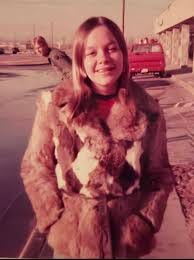
The Girl Who Trusted Her Friends
Her name was Jimmie Retha Brown, and she was sixteen years old, full of the kind of energy that makes adults smile and shake their heads. She was a cheerleader. A basketball player. A youth coach who gave her time to kids younger than herself at El Paso’s Northeast Athletic Club. She was the kind of teenager who showed up, who participated, who mattered to the people around her.
In the summer of 1977, Jimmie had recently relocated to San Diego with her mother, but El Paso was still home in the way that only the city of your childhood can be. She came back that summer to visit relatives — a normal thing, a good thing. El Paso was familiar. El Paso was safe. She knew the streets, the neighborhoods, the hangout spots. She knew people.
She was supposed to go back to San Diego. She never made it.
What happened to Jimmie Retha Brown in the early hours of August 10, 1977, has never been answered in a court of law. No one has ever been charged. No one has ever been tried. But for those who have followed this case across the decades — investigators, journalists, family members, and those drawn to cold cases that burn with injustice — one name has always stood near the center of the story.
Ronald Papaleo.
He was the man in the van. A married man in his 20s who made a habit of spending his evenings among 16 and 17-year-olds at a fast-food restaurant in Northeast El Paso. The last known person to see Jimmie Brown alive. The man whose coat, according to family sources, was found on Jimmie Brown’s body when she was discovered dead in the New Mexico desert days later.
And he was the man that Ricardo Gonzalez — Jimmie’s friend — personally vouched for on the night she disappeared, telling her he was a good guy and that it was safe to accept a ride from him.
Ricardo Gonzalez would spend the remaining days of his life knowing what that assurance had cost her.
This is the story of what we know, what was lost, and what may still be waiting to be found.
The Summer of ‘77
El Paso in August 1977 was a city alive with the particular heat and restlessness of a border town at the height of summer. The temperature routinely crested 100 degrees by midday, and by night, young people gravitated toward anywhere with air conditioning, bright lights, and the kind of low-stakes social energy that passes for excitement at sixteen.
For teenagers in the Northeast part of the city, the McDonald’s on Dyer Street was that place. It wasn’t glamorous — it was a fast-food restaurant in the way that all fast-food restaurants are, with fluorescent lights, vinyl booths, and the smell of fry oil — but it was open late, it was lively, and in the pre-internet era of 1977, it served the function that social media serves now: it was where you went to see and be seen, to make plans and kill time, to exist in the presence of other young people who were equally bored and equally alive.
Jimmie Brown was a regular presence there that summer. She was sociable and well-liked, known to many of the teenagers who circulated through that part of town. She was visiting from San Diego, yes, but she was an El Paso kid at heart — born and raised in the city, shaped by it. She fit in easily, slipping back into the rhythms of the neighborhood as though she had never left.
She was not the only one who had found a home in that McDonald’s crowd. Ronald Papaleo was there too — regularly, conspicuously, and by any reasonable measure, inexplicably.
Papaleo was not a teenager. He was a man in his 20s. He was married. And yet he returned, night after night, to a gathering spot populated almost entirely by 16 and 17-year-olds. In hindsight, that pattern is not the behavior of someone who simply enjoyed the atmosphere. It is the behavior of someone who was there for the young people themselves — someone who cultivated familiarity and trust among adolescents who had not yet developed the instincts to question why a grown man with a wife at home was spending his evenings at a fast-food restaurant with teenagers.
In the language of modern child safety, we have a name for that kind of patient, deliberate cultivation of access to young people. In the summer of 1977 in Northeast El Paso, it was simply accepted as part of the landscape.
Jimmie Brown knew Papaleo the way you know anyone who is a fixture in your social world — as a familiar face, a known quantity, someone vouched for by the people around you. She had no particular reason to distrust him. She had every reason to believe he was exactly what he presented himself as.
On the night of August 9, 1977, Jimmie was at McDonald’s with friends. It was an ordinary night by every external measure. People came and went. Conversations were had. The hours ticked past midnight and into the early morning.
At some point, Jimmie needed a ride home.
He’s a Good Guy
What happened next begins not with Ronald Papaleo, but with Ricardo Gonzalez.
Gonzalez was 18 years old that summer, part of the same social circle that gathered at the McDonald’s on Dyer Street. He knew Jimmie Brown. He knew Ronald Papaleo. And on the night of August 9, when Jimmie needed to get home and Papaleo offered to take her, it was Ricardo Gonzalez who bridged the gap between her hesitation and her decision.
He’s a good guy, Gonzalez told her. You can trust him.
It was the kind of assurance that teenagers give each other constantly — a social endorsement, a vouching, the casual transfer of trust that flows through friend groups. Gonzalez knew Papaleo. He had been around him. He believed what he said.
Jimmie Brown got in the van.
It is worth pausing here to consider what that moment must have looked like to everyone present. A teenage girl needing a ride home late at night. A familiar face — a married man in his 20s, yes, but a known quantity in their social world — offering to take her. A friend saying, essentially, don’t worry. And a young woman making the perfectly reasonable decision to accept help from someone her community had implicitly approved.
There was nothing reckless about what Jimmie did. She did not take a ride from a stranger. She took a ride from a man her friend personally vouched for, in a social circle where that vouching carried weight. She trusted the people around her, and the people around her trusted Papaleo.
That trust, as Ricardo Gonzalez would spend the rest of his short life understanding, was catastrophically misplaced.
The Van, the Demand, the Coat
According to Papaleo’s statement to investigators, the ride was brief. He said that shortly after Jimmie got into his van, she demanded to be let out. He claimed he complied. He told investigators that because a rainstorm was moving in, he gave her his coat before she stepped out. And then, according to Papaleo, he drove away — and that was the end of it.
It is a story that deserves to be examined with great care.
The first thing to note is what is embedded in Papaleo’s own account: Jimmie Brown demanded to get out of his vehicle. Not asked. Not requested. Demanded. That is the language of someone who felt unsafe — a young woman who had gotten into a van with a man she thought she knew and had encountered something that made her want out immediately. Whatever happened in that van in the minutes after she got in, it was enough to override whatever social comfort she had felt when Ricardo Gonzalez vouched for Papaleo and she accepted the ride.
She demanded to get out. That detail comes from Papaleo himself.
The second thing to note is the coat. Papaleo told investigators he gave Jimmie his coat when he dropped her off — a gesture he framed as consideration, a man giving a young woman something against the oncoming rain before releasing her safely into the night.
But according to a family member with direct knowledge of the case, when Jimmie Brown’s body was recovered from the desert off O’Hara Gap Road in Doña Ana County, New Mexico, she was still wearing that coat.
Ronald Papaleo’s coat was on Jimmie Brown’s body.
The Coat as Evidence
Let the weight of that settle.
If Papaleo’s account were true — if he dropped Jimmie off alive on a street corner in Northeast El Paso and drove away — the coat might have ended up anywhere. She might have been wearing it when she encountered whoever killed her. She might have had it on her when she was taken. It might have traveled with her body to the desert through a chain of events entirely disconnected from Papaleo.
That chain of events, however, requires a second perpetrator, a second encounter, a remarkable and unexplained series of coincidences — all in the middle of the night, in a city where a teenage girl had just demanded to be let out of one man’s van.
The simpler explanation — the explanation that requires no additional unknown actors, no improbable sequence of events — is that Ronald Papaleo never let Jimmie Brown out of his van at all.
In forensic terms, a garment recovered from a homicide victim — a garment belonging to a named individual who admitted to being the last person to see that victim alive — is among the most significant categories of physical evidence available to investigators. In 1977, fiber analysis, trace evidence examination, and biological material recovery from fabric were all viable investigative tools. Hair recovered from the coat’s interior could have been compared to a known sample. Fibers from Papaleo’s vehicle or residence could have been matched to the garment’s composition. Biological material — sweat, skin cells — could have been typed using the blood group analysis available at the time.
Whether those analyses were performed, and what they showed, is not part of the public record. What is part of the record — preserved now in the account of Jimmie Brown’s own family — is that the coat was there. On her body. In the desert. Miles from where Papaleo claimed to have left her alive.
Discovery in the Desert
On August 11, 1977, the friends who had last seen Jimmie at McDonald’s reported her missing to police. The report initiated a search, but El Paso in 1977 was a large and sprawling city, and a teenager failing to return home in the hours after midnight might have a dozen explanations. Investigators had little to go on.
Four days later, on August 15, the search ended in the worst possible way.
A body was found in Doña Ana County, New Mexico — just across the Texas state line — off O’Hara Gap Road near the small community of Anthony. The location was remote, a desert arroyo, the kind of place where scrub brush and dry earth absorb secrets without complaint. The body was badly decomposed, exposed to August desert heat for days before anyone knew to look there.
The victim was identified through dental records as Jimmie Retha Brown. She was wearing a coat.
The details of her death were both clinical in their documentation and devastating in their implications. Her feet had been bound with rope. Rope had also been wrapped tightly around her neck — four times, tied in a knot. The decomposition of the body prevented a precise cause of death determination, but the physical evidence pointed unmistakably to strangulation: her larynx had been crushed.
There were no other obvious wounds. Authorities sent blood samples to the FBI laboratory for toxicology analysis, testing for drugs or poison that might have incapacitated her before death. Those tests came back inconclusive.
Despite the lack of a clean medical finding, law enforcement was unambiguous: this was a homicide. The binding, the ligature, the crushed larynx — none of these were consistent with any explanation other than deliberate killing.
Investigators noted that the body appeared to have been killed elsewhere and transported to the site. Someone had thought about where to leave her. They had chosen a remote stretch of desert in another state, more than 25 miles from the streets of Northeast El Paso, down a road that required deliberate, purposeful navigation to reach. And when they left her there, she was wearing a coat that belonged to Ronald Papaleo.
Ricardo Gonzalez Names a Name
Twelve days after Jimmie Brown’s body was found, the case lurched into something that felt like it might finally break it open — and then slammed shut in the most brutal possible way.
On the night of August 22, 1977, an 18-year-old named Ricardo Gonzalez died by suicide following a police pursuit through the streets of Northeast El Paso.
Consider what Ricardo Gonzalez had been living with since Jimmie Brown’s body was found.
He was the one who had told her Papaleo was a good guy. He was the one who had vouched for the man, bridged her hesitation, helped place her in that van. Whatever he knew or came to know in the weeks after her death, he carried it layered beneath the unbearable knowledge that his own words — he’s a good guy, you can trust him — had been the mechanism by which Jimmie Brown ended up dead in the New Mexico desert.
That is not a weight that a person carries quietly. And Ricardo Gonzalez did not carry it quietly. He told people what he knew. And according to a family member with direct knowledge of what Gonzalez said in those final days, he was not vague or indirect about it.
He said Ronald did it.
Not a description. Not a rumor. Not a first name passed along secondhand to investigators who couldn’t place it. He named Ronald Papaleo as the person responsible for Jimmie Brown’s death. He said it to people who heard him, people who carried that statement forward across the decades, people who have never forgotten it.
Gonzalez also said he intended to confront Papaleo — to “get him” — before killing himself. He was not making a metaphor. He was making a plan shaped by grief, guilt, and a rage that had nowhere left to go.
On August 22, that plan unfolded — but only partially.
Earlier that day, Gonzalez had been attempting to purchase a car. That evening, he pulled alongside a police patrol car at a traffic light and began speaking erratically to the officers, telling them he had been following them. When he drove off and officers attempted a traffic stop, Gonzalez fled.
The pursuit was brief. It ended when Gonzalez crashed into another vehicle, injuring a woman and her young daughter. In the moments after the crash, with officers present and watching, Gonzalez reached into his vehicle, retrieved a .22-caliber rifle, placed the muzzle against his head, and fired. He was pronounced dead at a nearby hospital. A second loaded weapon was found in the car.
Police were told that Gonzalez had given a first name when speaking of the killer. They said they investigated it and found nothing to advance the case.
But what Gonzalez actually said — preserved in the memory of those who heard him — was not a generic first name offered to secondhand sources. He said Ronald did it. He said the name of the man he had personally vouched for on the night Jimmie Brown disappeared. The man whose coat was found on her body. The man who had been spending his evenings among teenagers at the McDonald’s on Dyer Street while married and in his 20s.
Ricardo Gonzalez was eighteen years old, carrying the guilt of a well-intentioned recommendation that had preceded a murder, and so certain of who was responsible that he was willing to die over it. He named the name. And then he died. And the name, for nearly half a century, went nowhere.
The Predatory Pattern
Return now to Ronald Papaleo’s presence among the teenagers of Northeast El Paso — because it does not make sense as the behavior of an innocent man, and it never did.
He was in his 20s. He was married. He had, by any reasonable expectation, an adult life with adult responsibilities and adult social circles. And yet he was a regular fixture at the McDonald’s on Dyer Street, a gathering spot for 16 and 17-year-olds, night after night.
This is not a cultural artifact of the era. Adults who spend their leisure hours cultivating familiarity with adolescents — who become known quantities in teenage social circles, who are vouched for by the teenagers themselves, who are present enough that a young woman would accept a late-night ride from them — are not simply sociable people who happen to like young company. They are people who have identified a vulnerability and positioned themselves to exploit it.
The pattern that Papaleo established in that McDonald’s parking lot — the patient accumulation of trust among teenagers, the integration into a social world where he did not belong, the cultivation of familiarity that would eventually make a girl feel safe enough to get in his van — is precisely the pattern that makes predatory behavior so difficult to recognize in real time and so obvious in retrospect.
Ricardo Gonzalez had known Papaleo well enough to vouch for him. That means Papaleo had spent significant time around Gonzalez and the people in his circle. He had been present enough, friendly enough, familiar enough, that a teenager felt confident recommending him to a friend in need of a ride. That level of integration does not happen accidentally. It is cultivated.
And on the night of August 9, 1977, the cultivation paid off in the worst possible way. A teenage girl needed to get home. A trusted figure in her social world offered to take her. A friend said he was safe. And she got in the van.
The Desert Speaks Again
Four months after Jimmie Retha Brown’s body was found off O’Hara Gap Road, the same stretch of desert gave up another secret.
On December 15, 1977, a Doña Ana County road crew worker — the same man who had discovered Brown’s remains in August — found another body less than a mile east of the first site. The victim was George Lyman Jones, 27 years old. His feet were bound with electrical cord. A nylon rope was wrapped around his neck. An autopsy determined he had been shot four times.
Two bodies, within a mile of each other, on the same remote desert road, within four months. Both victims bound. Both with ligature around the neck. Doña Ana County Sheriff Tony Gonzales publicly stated that the killings appeared to follow “the same pattern.” A third victim, Dana Thompson, was also believed by some sources to have been found in the same general area under similarly violent circumstances.
A theory emerged that all three victims had some connection to the Bandidos Motorcycle Club, whose national headquarters was based in El Paso during that period. The Bandidos of the late 1970s were deeply involved in drug trafficking, extortion, and violence.
Friends and family of Jimmie Brown pushed back firmly on any suggestion of gang involvement. She was a wholesome, athletic 16-year-old with no connection to motorcycle club circles. The McDonald’s on Dyer Street was not, they insisted, a Bandidos gathering spot.
They may be entirely right. But the question of whether Ronald Papaleo had connections to that world — whether the man who spent his evenings among teenagers on Dyer Street moved in circles that extended into organized violence — is one the historical record does not clearly answer. What is known is that whoever left Jimmie Brown in that arroyo knew the road, knew the desert, and knew exactly how far from the nearest eyes they needed to go.
What the Decades Have Taken — And What They Haven’t
One of the cruelest dimensions of cold cases is the way time erodes the material record.
DNA analysis did not exist as a forensic discipline in 1977. The techniques that allow investigators to build genetic profiles from microscopic biological material were not developed until the 1980s. In 1977, investigators had blood typing, toxicology, and traditional physical evidence — fibers, impressions, objects.
The coat recovered from Jimmie Brown’s body may be the most significant surviving thread of physical evidence in this case. If that garment was preserved — if it was logged into evidence in 1977 and maintained in the intervening decades — it may hold biological material that modern forensic science could analyze in ways that were impossible at the time. DNA recovered from a coat belonging to a named individual, found on a murder victim, would represent powerful evidence. Touch DNA recovery, advanced fiber analysis, and familial DNA searching are all tools that did not exist when this case was first worked.
The question of whether that coat still exists — whether it was preserved in evidence storage or lost in the decades since — is one that Jimmie Brown’s family and the public deserve a direct answer to from the Doña Ana County Sheriff’s Office.
Beyond the physical evidence, the human record has also been partially preserved across the years. The teenagers who spent the summer of 1977 in Northeast El Paso — who knew Jimmie Brown, who knew Ricardo Gonzalez, who knew Ronald Papaleo and observed his presence in their social world — are in their 60s now. Some of them heard Gonzalez say what he said in the days before his death. Some of them knew things that were never told to police, or that were told and not adequately pursued. Some of them have carried the weight of that summer across five decades.
Fifty years is a long time to carry something. And some things, carried long enough, become too heavy to hold.
The Convergence
Step back and look at what the record now shows — not as isolated fragments, but as a coherent and damning pattern.
Ronald Papaleo was a married man in his 20s who made a habit of spending his evenings among 16 and 17-year-olds at a McDonald’s in Northeast El Paso — cultivating familiarity, building trust, becoming known.
On the night of August 9, 1977, Jimmie Brown needed a ride home. Ricardo Gonzalez told her Papaleo was a good guy. She got in the van.
Papaleo’s own account to investigators acknowledged that Jimmie demanded to be let out of his vehicle — the language of a young woman who felt unsafe. He said he gave her his coat and left her on a street corner.
That coat was found on her body in the New Mexico desert.
Ricardo Gonzalez — the young man who had vouched for Papaleo, who spent the weeks after Jimmie’s death consumed by what he knew and by the guilt of his own role in placing her in danger — told people directly: Ronald did it. He named the name. He died before investigators could act on it.
Jimmie Brown’s body was found more than 25 miles from where Papaleo claimed to have left her, across a state line, in a remote desert location that required deliberate navigation to reach.
No arrest was ever made.
Each of these facts, taken alone, might be argued away. Together, they form a picture that is very difficult to look at and see anything other than what it is.
The Girl in the Arroyo
Jimmie Retha Brown was buried at Fort Bliss National Cemetery in El Paso. She was sixteen years old. She had been a cheerleader, a basketball player, a girl who coached younger kids because she genuinely cared about them. She had gone to visit relatives in the city where she was born, in the summer before whatever the rest of her life was supposed to be.
She got in a van because a friend told her it was safe. She demanded to get out because something inside that van told her otherwise. She was found in the desert wearing the coat of the man who had been the last to see her alive.
Ricardo Gonzalez vouched for Ronald Papaleo and spent the remaining twelve days of his life knowing what that vouching had cost. He named the name. He took a rifle from his car and made sure that he would never have to live with it again.
These are the facts as they have been preserved — by family, by memory, by the stubborn refusal of some truths to disappear entirely even when the institutions tasked with pursuing them have long moved on.
Jimmie Retha Brown deserved better than what happened to her. She deserved better than what happened to her case. And her family deserves, after nearly 50 years, to have every available tool of modern forensic science and investigative journalism brought to bear on the question of who left their daughter, their sister, their cousin, their friend, bound and strangled in a desert arroyo with a man’s coat on her shoulders.
If you were in Northeast El Paso in the summer of 1977. If you knew Jimmie, or Ricardo, or Ronald Papaleo. If you heard something — in a car, at a gathering, across a McDonald’s table — that you have never told anyone: now is the time.
Jimmie Retha Brown was somebody. She mattered. And the truth about what happened to her is still out there, waiting.
If you have information about the murder of Jimmie Retha Brown, contact the Doña Ana County Sheriff’s Office at 575-525-1911. Tips may also be submitted anonymously.
Ronald Papaleo is identified in this article as a suspect based on information provided by sources familiar with the investigation, including family members of the victim. He has not been charged with or convicted of any crime in connection with this case. All individuals are presumed innocent unless proven guilty in a court of law.


