



Includes exclusive interview with Kale Green, father of Elizibeth Green
Editor’s note: The allegations in this report regarding assault, sexual exploitation, and specific individuals’ conduct are drawn exclusively from statements made by Kale Green, Elizibeth’s father, in a recorded interview. This publication has not been able to independently verify these claims. They are presented here as the account of a family member and are not findings of guilt. The Juab County Sheriff’s Office has not publicly named any suspects or persons of interest. Readers are encouraged to contact law enforcement with any relevant information.
A New Beginning in the Desert
The morning of April 17, 2024 began like any other in Callao, Utah — a community so sparse and isolated that its entire population could fit inside a single school bus. Situated roughly three hours from the nearest major city in the bleak, wind-scoured expanse of the West Desert of Juab County, Callao is the kind of place that exists on maps more as a curiosity than a destination. Its roughly 50 residents live among scattered ranches, dirt roads, and a horizon that seems to go on forever.
Elizibeth Green — known to nearly everyone as Lizzy — woke up that morning with something she hadn’t felt in a while: excitement. The 21-year-old had secured her first day of work at a neighboring ranch, just a short walk from the home she shared with her mother, Vanessa Simmons, her stepfather, and her brothers. It was a modest opportunity, but in Callao, where work is scarce and life can feel suffocating, it was a start.
By the accounts of those who knew her, Elizibeth was a creative, compassionate young woman. She had grown up partly in Salt Lake City before her family relocated to Callao, and she struggled with the isolation that came with that move. She had a talent for crafts and a love of social media. Her father, Kale Green, who lives in Illinois and with whom Lizzy lived before she moved to Utah, describes a daughter who was resourceful and adaptable — someone who found ways to generate her own income and independence in an environment that offered very little of either.
Among those efforts, Kale revealed in a recorded interview for this report, was the creation of adult content. Elizibeth had been producing and selling that content online. Kale disclosed this not as a source of shame, but as an important piece of investigative context: it meant she had a digital presence and an online income stream that extended well beyond what her family or local law enforcement may have initially been aware of, and it likely connected her to a wider network of online contacts whose identities remain unknown.
She had not always stayed in Callao. She had previously moved away to attend Job Corps, a government-funded career training program, before returning home. At the time of her disappearance, she had been living back in Callao for approximately seven months.
“She finished my coffee and walked out the door and I didn’t see her again.” — Vanessa Simmons, Elizibeth’s mother, describing the last moment she saw her daughter
That morning, Vanessa noticed something small but unusual: Lizzy offered to make her mother a cup of coffee before she left. She seemed light — happy, even. She insisted on walking to the ranch rather than getting a ride, telling her mother not to worry. Vanessa watched her daughter step out into the dry desert air and disappear down the road.
She was never seen again.
The Hours No One Can Account For
The ranch was not far. In a town as small as Callao, distances are measured in minutes, not miles. But as the morning turned to afternoon and afternoon turned to evening, the family began to sense something was wrong. By around six o’clock, someone went to check at the ranch. She wasn’t there. She hadn’t been there at all.
Community members organized an informal search that same night. The following morning, April 18, 2024, the Juab County Sheriff’s Office was called in. Search and Rescue teams arrived and conducted a thorough grid search of the area between the Green family’s home and the ranch. Helicopters swept overhead. K-9 units were deployed.
The dogs found no scent trail. The searchers found no footprints. No clothing. No bag. No sign that Elizibeth Green had walked that path at all.
“We’ve not found clothing, we’ve not found shoes, we’ve not found her bag — it’s just very odd that there’s no trace. There wasn’t even footprints leading anywhere for us to find.” — Vanessa Simmons
A second, more extensive search followed. The Sheriff’s Office brought in additional resources, including the FBI, which became an active partner in the investigation. Drones swept the surrounding desert. Every inch of the route between the two properties was examined. The ranch itself was searched thoroughly. The silence of the landscape yielded nothing.
What She Left Behind — and What the Warrants Revealed
In the absence of physical evidence, investigators turned to the digital world. A search warrant filed by the Juab County Sheriff’s Office authorized access to Elizibeth’s cell phone and multiple social media accounts.
Among the most significant findings: Elizibeth’s wallet was discovered inside the family home, still containing her social security card and birth certificate. The only form of identification believed to be on her was a Job Corps student photo ID. Her mother viewed the abandoned documents as meaningful — if Lizzy had planned to leave voluntarily and build a new life somewhere, these were documents she would have needed.
Investigators were unable to ping Elizibeth’s cell phone. The phone showed as powered off and had not been switched on since the day she went missing. Her social media accounts showed zero activity from the moment she disappeared.
The warrants also revealed that Elizibeth had been active on a dating site accessible only through a concealed link on another profile. Investigators noted she had been communicating with a significant number of people online. The warrant language was stark: authorities were concerned about the possibility that she was “in danger of serious bodily injury or death,” and that “someone that she was communicating with met with her and is holding her against her will.”
However, Kale Green told this reporter something that cuts against the theory of a prearranged online meeting gone wrong. He said that when investigators executed the search warrant on Elizibeth’s devices and digital profiles — including the adult content platform and the dating profiles — the evidence did not indicate she was planning to meet anyone on the day she disappeared. There was no scheduled meet, no recent arrangement, no conversation pointing toward an in-person encounter that morning. In Kale’s reading of what investigators found, the digital evidence points away from a stranger encounter and toward someone already present in her physical world.
“It is unknown if Elizibeth is in danger and lost in the vast desert, or if someone that she was communicating with met with her and is holding her against her will.” — Juab County Sheriff’s Office search warrant
A Town Where Strangers Don’t Go Unnoticed
Kale Green has spent considerable time trying to understand the geography of his daughter’s disappearance — not just the physical terrain, but the social terrain of Callao itself. What he describes is a community with an almost preternatural awareness of who belongs and who doesn’t.
He told this reporter that when he traveled to Callao himself to search for his daughter and seek answers, the community’s informal surveillance network activated almost immediately. The town’s WhatsApp group — through which residents communicate — began lighting up with messages the moment he arrived. People were asking: who is that? An outsider in Callao is not an invisible presence. A stranger is noticed, discussed, and identified within minutes of arriving.
This detail, Kale argues, carries significant investigative weight. If someone from outside Callao had driven in on the morning of April 17, 2024, to pick up or harm Elizibeth, there would almost certainly be witnesses — people who saw an unfamiliar vehicle, an unknown face. The fact that no such witnesses have come forward, Kale believes, tells its own story: whoever was involved was not a stranger to Callao. They were already there.
The physical geography reinforces this. Callao is accessible primarily via long stretches of dirt road. There are no traffic cameras, no gas stations with security footage, no conventional surveillance infrastructure. But what the town lacks in cameras, it compensates for in human awareness. In a community of fewer than 50 people, anonymity is almost impossible — unless you already belong.
When Kale Green arrived in Callao looking for answers, the community WhatsApp group immediately began messaging about the unfamiliar face. In a town that small, he says, an outsider cannot go unnoticed — which means whoever took his daughter was likely already known there.
The K-9s, the FBI, and a Father’s Conclusion
Among the most perplexing details in Elizibeth’s disappearance is the complete failure of K-9 units to establish any scent trail. Dogs were deployed twice. On both occasions, they found nothing — not a direction of travel, not a faint trace. For Kale Green, this absence is not a dead end. It is, he believes, evidence in itself.
In his analysis, the K-9s’ failure to detect a scent trail suggests that Elizibeth did not walk far from where she was last seen under her own power. If she had been taken by vehicle almost immediately after leaving her home, the scent trail would be vanishingly short — potentially too brief even for trained dogs to establish. Her disappearance, in this view, was not a matter of someone intercepting her mid-walk. It may have happened right at or near her point of departure, by someone who knew her route and her schedule.
The FBI’s involvement — acknowledged by the Juab County Sheriff’s Office early in the investigation — underscores the seriousness with which federal authorities have treated the case. The Bureau’s participation typically signals either a suspicion of foul play that may cross jurisdictional lines, or the need for digital forensic capabilities beyond what a small county agency can provide. Neither agency has made public statements about the direction of the investigation.
For Kale, the combined weight of the evidence — the absent scent trail, the unremarkable digital record showing no planned meeting, the near-impossibility of an outsider entering Callao unnoticed, the community’s insularity — points to one conclusion: whoever is responsible for his daughter’s disappearance is someone from within that community. Someone who knew her. Someone who knew the land.
“I’m not going to give up until she’s found and whoever is responsible faces justice.” — Kale Green, Elizibeth’s father
A History of Harm — and an Alarming Comment
In his interview for this report, Kale Green disclosed two pieces of information that cast a shadow over the household in which Elizibeth was living at the time of her disappearance. This publication presents these as Kale’s allegations and his account of events, not as established findings.
The first concerns Elizibeth’s stepbrother. Kale alleges that the stepbrother had previously sexually assaulted Elizibeth. He further stated that in the weeks before she disappeared, the stepbrother had been present at the Callao home, and that Elizibeth had expressed discomfort during that period. According to Kale, the stepbrother left the area before Elizibeth went missing.
The second concerns Elizibeth’s stepfather. Kale recounted that when he visited Callao in the aftermath of Elizibeth’s disappearance, the stepfather made a comment that Kale found deeply unsettling. According to Kale, the stepfather told him there was an old mine down the road where you could throw a body in and it would simply disappear.
Kale described this comment as one that has stayed with him. Whether it was dark humor, a casual observation about the landscape, or something more deliberate, he cannot say with certainty. But in the context of a missing daughter and a household with its own troubled history, it struck him as worth noting — and worth investigating.
Note on the above allegations: This publication has not independently verified the claims regarding the stepbrother or the stepfather’s comment. Neither individual has been publicly named as a suspect or person of interest by law enforcement. These allegations are presented solely as the account of Kale Green. If law enforcement has investigated these individuals, no findings have been made public. Readers with relevant information are encouraged to contact the Juab County Sheriff’s Office directly.
The Silence of Investigators
The Juab County Sheriff’s Office has consistently declined to comment publicly on the progress of the investigation, citing its active status. When KUTV’s Brian Schnee made repeated inquiries over the course of more than a year, the department did not publish any updates. When Dateline NBC reached out in late 2025, investigators again declined to comment beyond confirming the case remained open.
Case number 24JC0335 is active. The investigative silence, standard in ongoing cases, nonetheless leaves the family — and the public — operating in a vacuum. With no physical evidence, no confirmed person of interest, and no public accounting of where the investigation stands, the case has become a community of concerned people holding knowledge that may or may not be making its way to the right ears.
Kale Green has spoken publicly about his refusal to accept that silence as a verdict. He travels. He makes calls. He speaks to reporters. He pushes. Elizibeth’s aunt has created a dedicated subreddit to keep the case alive, share information, and generate the kind of sustained public pressure that sometimes, in the absence of physical evidence, is the only tool a family has left.
A Father’s Theory — and What It Would Mean
Kale Green’s theory of his daughter’s disappearance is not a vague suspicion. It is built, piece by piece, from the specifics of the evidence as he understands it: the K-9s found nothing because she was taken quickly, by vehicle, by someone who knew her schedule. The community’s social network would have flagged any outsider. The digital evidence shows she was not trying to meet a stranger. The household she lived in had a history of harm. And a man who lived in that household told her father, casually, about a mine down the road where a body could vanish.
If Kale’s theory is correct, it means Elizibeth Green did not walk into the desert and get lost. It means she did not run away, because there is no evidence she was planning to and no sign of her in the nearly two years since. It means someone in or connected to the small world of Callao, Utah — someone who knew her, knew the land, and knew exactly when she would be walking alone — made a deliberate choice.
It also means the answers exist somewhere. In the mine down the road, perhaps. In a device or account that hasn’t yet been examined. In the memory of someone in Callao who saw something that morning and hasn’t yet come forward. In the 50-person WhatsApp group that tracks every unfamiliar face.
Somewhere, someone knows what happened to Elizibeth Green.
Who She Was
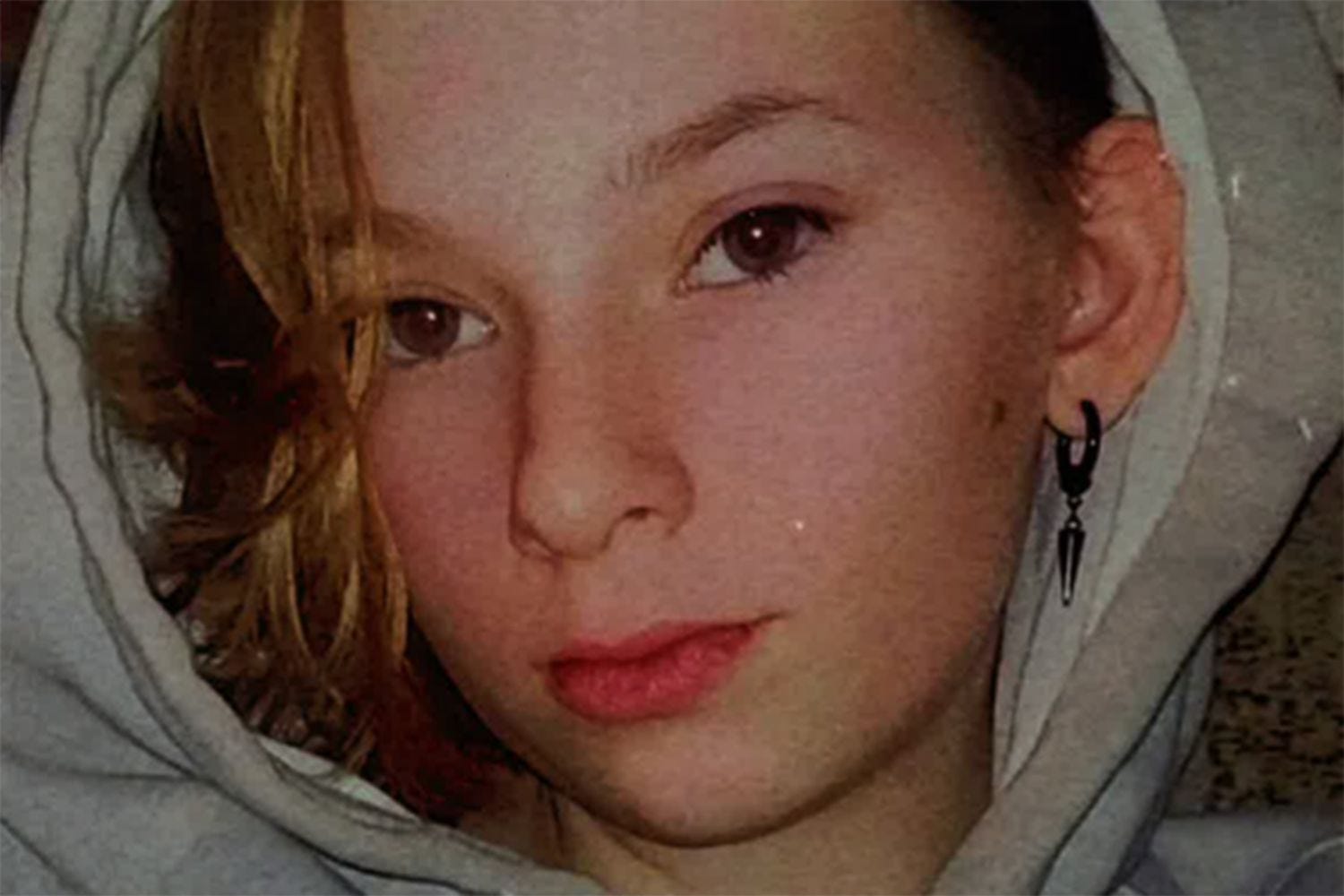
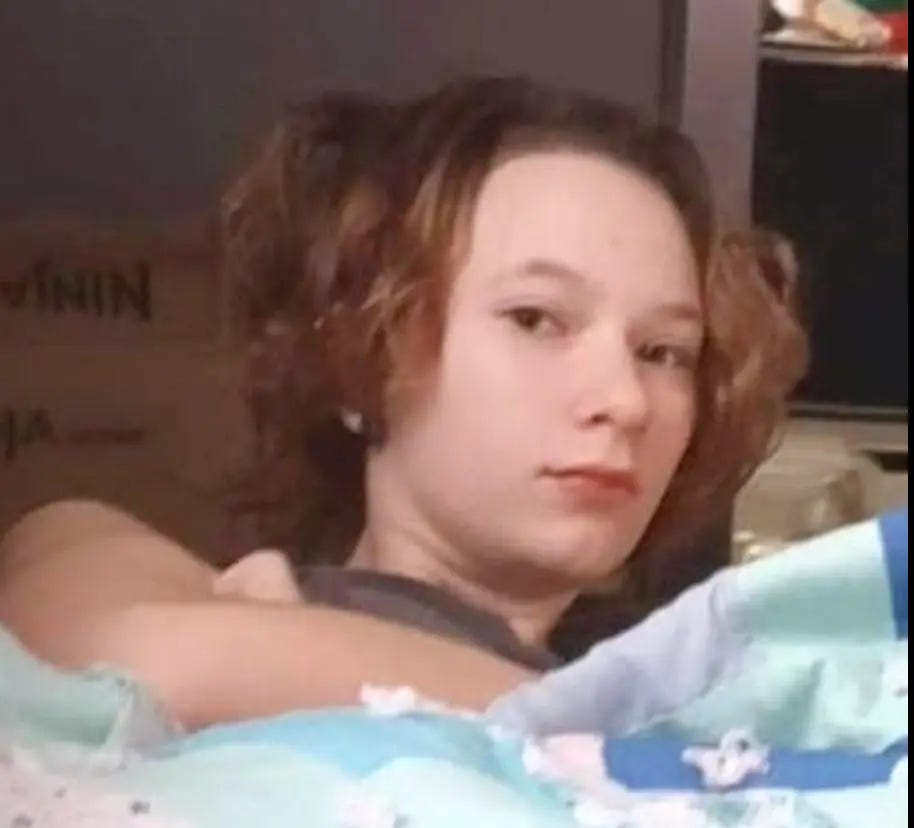
Elizibeth Green would be 23 years old today. She is described as 5 feet 11 inches tall, weighing approximately 125 pounds, with green eyes and light brown hair. She has a mole on her left cheek. On the morning she disappeared, she was wearing a pink tie-dye high-cut hoodie, light blue jeans with rips, black high-top Converse sneakers with white trim, and carrying a white backpack purse decorated with sprinkles. She had her Job Corps student photo ID with her.
She was creative. She crafted with her mother. She was resourceful enough to build her own income in a place that offered almost nothing. She was trying, on the morning she disappeared, to build something new — a job, a routine, a foothold. She was 21 years old, and she had been in Callao for seven months, and she was ready for things to get better.
Her father has not stopped looking. Her mother has not stopped speaking. And the desert, which keeps so many secrets, has not yet given her back.
If you have information about Elizibeth Green’s whereabouts:
Juab County Sheriff’s Office: (435) 856-0358
National Tipline: (801) 794-3970
Reference case number: 24JC0335
Sources
Primary: Recorded interview with Kale Green, father of Elizibeth Green (March 2026).
Secondary: KUTV 2News (multiple reports, 2024–2026); Dateline NBC (December 2025); Newsweek (May 2024); Gephardt Daily (April 2024); Juab County Sheriff’s Office search warrant filings; Reddit/r/ElizibethGreen community.


