


The last confirmed sighting of Deanna Michelle Merryfield lasted only a few minutes. It was around 3:30 in the morning on July 22, 1990 — a hot summer night in Killeen, Texas — and thirteen-year-old Deanna had walked or hitched a ride nearly two miles from her grandmother’s house to visit her twin sister, Becky, at a trailer park on Dimple Street. The sisters whispered through a window. Then their uncle woke up, and Deanna was told she had to go home.
She climbed back into a bronze or brown sedan — two unidentified men inside — and drove away into the dark.
She was never seen again.
What followed was not a thorough investigation into a missing child. It was, by nearly every account, almost nothing at all. Police labeled Deanna a runaway and largely closed the book. For years, then a decade, then decades, her case sat idle — opened and closed and opened again, each time with too little urgency and too many unanswered questions. The men in the car were never identified. No one was ever charged.
In early 2026, TheColdCases.com spoke with Deanna’s younger sister, Melissa Twardowski — the woman who has spent the better part of two decades refusing to let this case die — for the most recent in a series of ongoing check-ins. What she shared was both more hopeful and more haunting than anything that has come before. New witnesses have emerged. New searches have been conducted. And a new theory about the mysterious phone call that shut down the investigation in 1993 may be the most significant lead the case has seen in years.
This is Deanna’s story — and the story of the people who are still fighting for her.
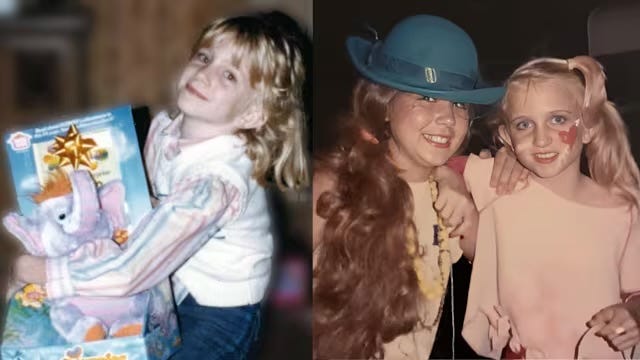
A Family Already Broken
To understand what happened to Deanna Merryfield, you have to understand what was already happening to her before that July night. Her disappearance did not occur in a vacuum. It came at the end of a period of profound crisis — abuse, family separation, institutional failure — that had already stripped away most of the protective scaffolding around a vulnerable child.
Deanna was born in Killeen on February 2, 1977, the second of four sisters. She had an older sister, Amy, a fraternal twin, Becky, and a younger sister, Melissa — who was eleven years old the summer Deanna vanished and who, more than three decades later, has become the most visible and determined advocate for her missing sister’s case.
Killeen, Texas, is a city of transience. Sitting in Bell County, pressed up against the vast perimeter of Fort Hood (now Fort Cavazos), it has long been shaped by the rhythms of the military — arrivals and departures, families in constant rotation. Growing up there meant growing up alongside that kind of impermanence. “A small working-class town where all the locals knew one another,” is how Melissa has described it, though the military’s constant churn gave it an unstable undercurrent.
The Merryfield girls’ home life carried its own form of instability. Their mother, Laurel, struggled with alcoholism throughout their childhood. In December 1986, she married Roy Kaopuiki, a man who was not the biological father of any of the four sisters.
In 1989, while Laurel was hospitalized with alcoholic cirrhosis of the liver, Deanna and her sisters confided in their grandmother, Edith, that Roy had been sexually abusing them. Three of the four sisters made statements. One later recanted — likely out of fear, according to Melissa — and another’s case was determined to lack sufficient evidence. Only Deanna’s disclosure led to criminal charges.
“She was a child doing an incredibly brave and difficult thing. But she did it because she knew the abuse would continue otherwise.”
— Melissa Twardowski
In October 1989, Roy Kaopuiki was convicted of indecency with a child and sentenced to ten years’ probation, with mandatory sex offender registration. It was an inadequate consequence — and for Deanna, the child who had the courage to report him, there was no safety on the other side of it. The family fractured. The sisters were separated. Deanna eventually moved in with her grandmother on Alamo Avenue. Becky went to stay with an uncle at the Oak Springs Trailer Park on Dimple Street, about two miles away. Melissa bounced between relatives before eventually returning to live with her mother and her convicted stepfather.
None of them had a stable home. All of them were traumatized. What held them together was each other — and especially Deanna, who would walk miles in any direction if it meant seeing her sisters. “She’d walk miles both ways — whatever it took,” Melissa has said. “She wanted to keep them close.”
That is not the portrait of a troubled runaway looking for escape. That is the portrait of a child who loved fiercely and refused to give up on the people she loved. Melissa would put it simply in interviews: “She wasn’t a troubled kid. She was a hurt kid.”
The Last Night
On the evening of July 21, 1990, Deanna and her grandmother stayed up late watching movies at their home on Alamo Avenue. Deanna had just finished seventh grade at Manor Middle School. In the fall, she was supposed to begin eighth grade at Fairway Middle School. She was thirteen years old, and the summer stretched ahead of her.
Her grandmother went to bed around 1:00 in the morning. Sometime after that, Deanna slipped out.
She was headed to see Becky. The family believes she was either given a ride from the start, or began walking and was picked up along the way. Melissa has noted that this was characteristic of Deanna — she would walk the full two miles if she had to, and she may well have accepted a lift from someone she recognized en route.
She arrived at the trailer park around 3:30 a.m. and knocked on Becky’s window. The twins spoke briefly — quietly, so as not to wake their uncle. But their voices did wake him. He came to the door and told Deanna she needed to go home.
She went back to the car. Becky watched her leave.
The vehicle was bronze or brown, and inside were two males described as white or Hispanic — likely older teenagers, possibly high schoolers. Becky later described them as “preppy teenagers.” She did not recognize either of them. Their names, their connection to Deanna, and their whereabouts that night have never been publicly established. In our 2026 interview with Melissa, she confirmed that new witnesses have now come forward to corroborate that Deanna was seen in that vehicle — the first outside confirmation of Becky’s account in 35 years.
Deanna left with two unidentified men in a bronze or brown sedan at 3:30 a.m. on July 22, 1990. Witnesses have now confirmed she was seen in that vehicle. Those men remain publicly unidentified to this day.
The next morning, her grandmother waited for her to wake up. When she went to check on her and found an empty room, she called Deanna’s mother. When no one knew where she was, she called the police.
Deanna had not left a note. She had not taken any belongings. She had no money. Her social security number would never be used again. There would be no verified sightings of her — not then, not ever.
The Label That Ended the Investigation
When Deanna’s grandmother reported her missing, police classified the case as a runaway.
That single word — runaway — would shape the next three and a half decades of this case. It determined how much effort was expended in finding her, how quickly the file was closed, and how long her family was left without answers. By every measure, the hallmarks of a runaway were absent. She took nothing with her. She left no note. She had been seen getting into a car with two unidentified older males at three-thirty in the morning. Her stepfather, who had been convicted of sexually abusing her less than a year earlier, had not been interviewed.
And yet, the case sat.
“Police didn’t really investigate runaways back then,” Melissa would say years later. Then she added the line that has become a quiet rallying cry for the family: “But it doesn’t matter how they left. If a child is missing, they need to be found.”
A Phone Call That Closed Everything — and a New Theory About Who Made It
In 1993 — three years after Deanna disappeared — someone called the Killeen Police Department and reported that Deanna was home and safe. The caller was described as female. No one followed up to verify the claim. No one confirmed that Deanna was actually present and alive. The case was simply closed.
The family says they were not notified. They were not consulted. The case was just gone.
For years, speculation about that call focused on Deanna’s own family. But in our 2026 interview, a new theory emerged — one that Melissa said she had never previously considered.
What if the caller wasn’t connected to Deanna’s family at all? What if she was someone else’s mother — or girlfriend, or sister — trying to protect one of the men in that car? Someone who knew what had happened, who knew the police were looking, and who made a deliberate decision to shut down the investigation before it could reach her door.
The theory has real weight. Whoever made that call in 1993 knew Deanna was being looked for. They knew the right agency to contact. They were deliberate enough to place the call and composed enough to deliver a convincing story. That call bought more than a decade of inaction. It was not a coincidence. It was an intervention — and someone out there knows who made it.
When we raised this with Melissa, she stopped. “That is very possible,” she said. “And that’s something I hadn’t thought about. I’m going to have to share that with the detective, because I think that’s really worth looking into.”
“Even if it wasn’t necessarily our mother... if it was somebody else’s mother in general — that is very possible, and that’s something I hadn’t thought about.”
— Melissa Twardowski, interview with TheColdCases.com, 2026
Silence in the Family
Meanwhile, Deanna’s absence was being actively suppressed within the family. Melissa — only eleven when her sister disappeared — grew up in a household where asking about Deanna was not permitted. Her mother would become angry. The narrative, she says, was that the grandmother had coaxed the girls into making false abuse allegations and had either helped Deanna run away or sent her to relatives. Melissa carried that story into adulthood.
She did not learn the truth about the abuse in her home until 2006. When she finally did, everything reframed. “It was kind of like, well, if they lied to me about that, what the hell happened to Deanna?”
Deanna’s grandmother, Edith — the only adult who consistently advocated for the case — followed up with detectives in 1995 and pushed for the file to be reopened. It was reclassified as a missing person case. Then closed again within a month, “due to a lack of information.” For more than twelve years after that, no one with official authority was looking for Deanna Merryfield.
False Leads, Fading Trails, and a Name: Tony
When Melissa convinced police to reopen the case in 2007, investigators returned to a trail that had gone cold in the worst possible way. Memories had faded. Documents were incomplete. The initial lack of investigation had left enormous gaps where evidence should have been. What they found instead was a tangle of unverified leads — none of which could be confirmed, some of which may have been deliberately misleading.
The Name “Tony” and the Yearbook Search
Among the most significant leads currently being pursued is a name: Tony. It was Becky — the last person to see Deanna alive — who suggested that one of the men in the car may have gone by that name, or something close to it. The description of the men as “preppy teenagers,” possibly high schoolers, led investigators to focus on Killeen’s local school population from 1990.
The family and their investigative team have gone through area yearbooks, combing for any Tony who might be connected to Deanna’s social world that summer. So far, no confirmed link has been established. “We have gone through school books,” Melissa told us in 2026. “We have not been able to link a Tony to Deanna as far as that night. We’re not sure if it was a mistaken identity type of thing, or if it was a Tony and we just haven’t been able to find him.” She added that the detective has devoted significant resources to the lead. It hasn’t yielded an answer yet — but the search is ongoing.
If you went to school in Killeen in 1990, knew someone named Tony who ran with older teenage crowds, or remember anything about older high school boys who drove a bronze or brown sedan that summer — that is exactly the kind of detail that could break this case open.
The Kentucky Call: Deliberate, Not Random
In 1993, Becky received a collect call. The operator identified the caller as “Deanna.” When Becky accepted, no one spoke. The call was traced to Horse Cave, Kentucky, where the family had distant relatives — but no connection to Deanna was ever confirmed. The incident wasn’t reported to police until 2007, when the case was reopened.
Melissa does not believe the Kentucky call represents a solid lead. “The only family member that had ties to Kentucky was our grandma, Edith,” she said in our 2026 interview. “And she was the one pushing to have Deanna’s case reopened. It doesn’t make a whole lot of sense to me that she would send Deanna off and then try to bring in law enforcement.”
There’s also a logistical dimension worth noting. At the time the call was placed, Becky and the oldest sister were living together in an apartment. To place a collect call to that number, someone would have had to know both sisters were living together and look up their number through directory information. That is specific, deliberate knowledge — not the act of a stranger who happened across a phone number. Melissa believes the caller may have had a connection to the case itself, using the call to deflect or confuse, rather than any genuine connection to Deanna. “We have more solid leads that the detective and the private investigator are following up on,” she said. “If those start to dry up, then maybe we circle back and look into Kentucky a bit more.”
The False Sighting: Discredited, Finally
When investigators began speaking with people from Deanna’s past after 2007, a childhood friend came forward with a striking claim: Deanna had visited them between 2000 and 2002. She had extensive tattoos, including a large one on her neck bearing her own name. She did not want to be found.
The story was never verified. The friend refused to cooperate with investigators. And yet the claim was treated as potentially credible — and Deanna’s official missing person records were updated to include a description of those tattoos. The suggestion that Deanna was alive and hiding shaped how the case was perceived for years, quietly undermining the urgency of finding her.
Melissa never believed it. In 2025, the friend recanted — on two separate occasions, once to Melissa directly and once to law enforcement. The damage, however, had already been done. The unverified tattoo description remains in some databases, and Melissa has been fighting to have it removed ever since.
On the question of who made up these details and why, Melissa has said she cannot speak to it directly — there are aspects of this that remain part of the active investigation. But she has been clear that it troubles her deeply. That someone would fabricate specifics about a missing thirteen-year-old girl — details vivid enough to end up in official records, detailed enough to mislead investigators for over two decades — is not something she can easily make sense of. A child was gone. And instead of helping find her, someone apparently chose to invent a story that made looking for her feel unnecessary. Whatever the motivation, the effect was the same: more years lost, more silence, more nothing.
“It bothers me that someone would make up details like that. I can’t speak on it, but it bothers me.”
— Melissa Twardowski
Roy: The Questions That Remain
Roy Kaopuiki — convicted of sexually abusing Deanna less than a year before she disappeared — was not interviewed by police until 2007. The details of any polygraph examinations he may have taken, and the results of any investigation into his potential involvement, have never been made public.
Melissa speaks carefully about Roy. She would like to believe there was only one monster in their lives. But she doesn’t think the timeline fits. She doesn’t believe he would have known where to find Deanna that night, or been able to slip out and back without detection. Her suspicion points elsewhere — to the men in the car, to whoever made that 1993 phone call, to people who are still out there.
“Oh, I would love it so much if there was only one monster out there. Unfortunately, I think there’s several monsters working with their own agendas.”
— Melissa Twardowski
July 22, 1990
Deanna is last seen leaving the Oak Springs Trailer Park in a bronze or brown vehicle with two unidentified males. Her grandmother reports her missing that morning. Police classify the case as a runaway.
1993
An unidentified female caller contacts Killeen PD and states Deanna is “home safe.” The case is closed without verification or follow-up. A separate collect call identified as “Deanna” is received by Becky from Horse Cave, Kentucky; when accepted, no one speaks.
1995
Deanna’s grandmother Edith pushes for the case to be reopened. It is reclassified as a missing person case, then closed again within a month “due to a lack of information.” A traffic stop in Hurst, Texas flags a similar name; later investigation suggests it was “Diana Merryfield,” spelled differently.
2000–2002
A childhood friend claims Deanna visited them and did not want to be found, claiming she had extensive tattoos. Police cannot verify the story. The claim influences Deanna’s official missing person file for over two decades.
2007
Melissa contacts Killeen PD and forces the case to be reopened. NCMEC assists. DNA entered into national databases. Roy Kaopuiki interviewed by police for the first time — 17 years after Deanna’s disappearance.
2007–2011
Texas Rangers hypnotize Becky in hopes of recovering additional memories from the night Deanna disappeared. Though emotionally difficult, Becky is able to recall some new details.
2025
The childhood friend recants the tattoo story on two separate occasions — once to Melissa, once to law enforcement. A town hall organized by Killeen PD in May brings community members together with the family. Three additional ground searches are conducted with Team Texas K9s. New witnesses come forward confirming Deanna was seen in the vehicle.
January 10, 2026
Family members and volunteers from Mark 9 and Alpha Search and Recovery search approximately 50 acres in Killeen with trained canines. Certain areas are marked off. The case remains active.
Who Was Deanna Merryfield?
In the decades since her disappearance, Deanna has sometimes been reduced to a case file, a label, a set of conflicting reports. She was classified as a runaway. She was described as troubled. She was associated with unverified tattoos she may never have had. Each characterization served to diminish her — to make her disappearance seem less urgent, less worthy of investigation, less like the loss of a real person with people who loved her.
She was called “Prissy” when she was little, because she was such a girly girl. Her twin sister described her as a “free spirit” — “loud, obnoxious, wild, and only nice to me.” She loved Def Leppard, Whitesnake, and Ozzy Osbourne. She loved riding bikes and exploring the creek near their home. She and her sisters played with Barbies and woke up on Saturday mornings to watch cartoons.
She was placed in the gifted program in elementary school. Her teachers called her very bright. Then the trauma of her home life began to show in her schoolwork, and by fifth grade the notes on her report cards changed — she was no longer “applying herself.” She began acting out, smoking, spending time with a rougher crowd. She was thirteen years old and had already survived more than most adults ever will.
“She wasn’t a troubled kid. She was a hurt kid. In reality, she was rebelling against abuse. She was considered troubled because she had been shown by adults that they weren’t going to protect her.”
— Melissa Twardowski
Her older sister Amy called her “our sunshine.” Always smiling, always joking, always bringing energy into a room. Melissa, when asked about their childhood despite everything, remembered water fights and Saturday cartoons and playing restaurant. Four sisters who could almost always find a way to have fun, even when the world around them offered very little.
Deanna was also their protector — fiercely, instinctively protective of her sisters, the one who would do whatever it took to keep them close. It was Deanna who came forward to report the abuse. It was Deanna who walked miles just to see her twin. It was Deanna who had the most to lose — and who lost everything.
She would be 48 years old today. She was 5’4” and 115 pounds, with blonde hair and hazel-blue eyes, and a small scar on her upper lip.
A Sister Who Never Stopped
Melissa Twardowski was eleven years old when her sister disappeared. She grew up being told not to ask about it. She carried that silence into adulthood, until 2006, when she learned the truth about the abuse in her childhood home and everything she thought she knew collapsed.
She has been fighting for Deanna ever since.
In 2007, she contacted the Killeen Police Department and forced the case to be reopened. She reached out to NCMEC. She hired a private investigator — who now volunteers with Private Investigations for the Missing. She has appeared on multiple podcasts, given interviews to local news, maintained a Facebook page and the website FindingDeanna.com, and connected with a network of advocates and other families of the missing.
She has also done the painstaking human work of going back through Deanna’s life — talking to her grandmother, her sisters, her uncle, anyone who knew Deanna in Killeen in 1990. She has been trying to reconstruct a world that no one fully documented at the time. “I’ve connected with podcasters, reporters, other families,” she told us. “Social media has been a game changer. It really helps keep her name out there.”
In May 2025, a town hall organized by the Killeen Police Department brought community members together with the family to demand renewed attention. Three additional ground searches followed that summer with Team Texas K9s. In January 2026, volunteers from Mark 9 and Alpha Search and Recovery searched approximately 50 acres of Killeen land with trained canines, marking off areas as they went.
The searches have not yet produced answers. But something has changed. “There was a long time where the case was just quiet,” Melissa told KCENTV. “Now, I do feel like detectives are trying when they can.” When TheColdCases.com spoke with her in 2026, she put it more directly: things are moving. Witnesses have come forward. Evidence is being followed. For the first time in a long time, she feels like the case is actually being worked.
“There have been witnesses to confirm that Deanna was seen in that vehicle. There is movement. There are things going on.”
— Melissa Twardowski, interview with TheColdCases.com, 2026
What Melissa wants is simple, and devastating in its simplicity. She does not want prosecution. She does not want revenge. She wants to know where her sister is. “I have no desire to pursue criminal justice as far as Deanna goes,” she said in our 2026 interview. “I just wanna know where she is. I wanna bring her home and put her to rest in the way that she deserves.”
“Deanna was failed so very much as a child. And I think for me, the least we could do is give her the dignity of putting her to rest.”
— Melissa Twardowski
She is also carrying a message for anyone who has stayed quiet out of fear of getting in trouble. The case is 36 years old. The family is not seeking criminal prosecution. “There’s probably no reason to be afraid at this point,” she said. “I just want Deanna home.”
Becky, Deanna’s twin, has never fully recovered from that night. “It’s not because she doesn’t care,” Melissa has said. “It’s because her trauma runs very deep. It’s just not something she can handle.” She carries the memory of that window, those minutes, the car driving away. She is the last person who saw her sister alive, and she has lived with that every day for 35 years.
Analysis
What the Evidence Suggests
After more than three decades, the case of Deanna Merryfield remains officially unsolved. But the family’s theory — shaped by Melissa’s years of research, the private investigator’s work, and the Killeen detective now actively collaborating with the family — is coherent and grounded in what the evidence actually shows.
Melissa believes Deanna was making her way to see Becky when someone she recognized offered her a ride. She believes those two men were acquaintances — older teenagers from Killeen’s social world, possibly from a higher grade at a local school. She believes something happened to Deanna on the way home — possibly an accident, possibly something deliberate — and that Deanna did not survive. She believes her remains are somewhere in or around Killeen, and the recent searches are not misguided.
Several things support this. Deanna was streetwise; she would not have gotten into a car with strangers. But she might have accepted a ride from someone she knew — an older kid from school, someone from the neighborhood. The description of “preppy teenagers” places them in a specific social milieu, not the world of strangers. The detective’s ongoing search for a “Tony” connected to her circles is aimed precisely at this theory.
The phone calls — the 1993 call to police claiming Deanna was home, the Kentucky collect call that went silent — suggest that someone was working to shut down any inquiry. The new theory raised in our 2026 interview — that the 1993 call may have come from a family member of one of the men in the car — is worth taking seriously. It would explain the female voice, the specific knowledge that police were looking for Deanna, and the motive for making the call at all.
The Killeen Police Department has confirmed this is the only runaway case on their record that has never been solved. New witnesses have come forward in 2025. Searches are ongoing. For the first time, the family, a private investigator, and an active detective are working in genuine coordination.
Whether 36 years of silence can still be broken depends, in part, on someone in Killeen deciding that now is the time to speak. Melissa put it plainly in our interview: “I just think there are people out there who know something and they’re staying quiet. And you know, even some of the people who may have done something may already be dead. There’s no use in continuing to protect them. They’re not worth protecting. Whoever did this — they’re awful people.”
She is not wrong.
The Runaway Label and the Children It Erases
Deanna Merryfield’s case is not unique. Across the country in the 1980s and 1990s, children classified as runaways by law enforcement often received little or no investigative attention. The label carried an implicit judgment — that the child had chosen to leave, that they were difficult or troubled, that the situation was at some level their own fault. It disproportionately affected the most vulnerable children: those from unstable homes, those with complicated family situations, those who had already been failed by the systems meant to protect them.
Deanna had been sexually abused by her stepfather. She had survived the fragmentation of her family. She had been moved from home to home, placed with relatives who could only keep her for short periods at a time. She was thirteen years old, doing the best she could with what she had. And when she went missing, the label “runaway” effectively told the world: this child is not worth looking for.
Reform has come slowly. The federal AMBER Alert system was established in 1996 — six years after Deanna disappeared. Protections for missing children have expanded in the decades since. But cases like Deanna’s are a reminder of how much was lost in the years before those protections existed, and how many families are still waiting for investigations that should have happened long ago.
Melissa has said it clearly, and it bears repeating: it doesn’t matter how a child left. If a child is missing, they need to be found.
· · ·
Someone in Killeen Knows Something
Deanna’s family and the Killeen Police Department believe this case is solvable. They are asking anyone with information — no matter how small or seemingly insignificant — to come forward. Old friends. Former classmates. Anyone who was in Killeen in the summer of 1990 and remembers something about Deanna, about those two men, about that car. Anyone who knew — or knows — someone named Tony who matched that description.
Melissa is asking directly: if people knew Deanna, assume she doesn’t already know it. Tell her anyway. A memory, a name, a detail about where Deanna spent time that summer — any of it could matter.
Killeen Police Department: 254-501-8891
Texas Dept. of Public Safety – Missing Persons Clearinghouse: 512-424-5074
Finding Deanna (family-run tip line): 512-818-5601
Email: info@findingdeanna.com
Website: FindingDeanna.com
NCMEC: 1-800-THE-LOST (1-800-843-5678)
Anonymous tips can also be submitted to Bell County Crime Stoppers or through TheColdCases.com.


