



On the morning of April 5, 2018, Phyllis Jones tried to get her granddaughter to come to her senses but that never happened. Her granddaughter, Maryah Hope Allen, had just been released from the Galveston County Jail after a brief detention stemming from an altercation with her boyfriend. Phyllis knew Maryah was out. She was on her way to get her. But Maryah was gone before she arrived — and in the seven years since that morning, no one has been able to say with certainty where she went.
Maryah was 17 years old.
This is not a story about a girl who simply ran away. According to Phyllis Jones, who raised Maryah from a young age and spoke at length about her granddaughter’s final known days, the circumstances surrounding Maryah’s disappearance involve a deeply troubling relationship, drug dependency, financial desperation, and a series of decisions — some made by Maryah, some made by the system — that left a vulnerable teenager completely alone at one of the most dangerous moments of her young life.

A GRANDMOTHER WHO RAISED HER
Phyllis Jones is the woman who raised Maryah Hope Allen. Not her mother — her grandmother. In many households across America, grandparents step into that role quietly, without fanfare, shouldering the responsibility of raising a child who needed a steady home. Phyllis was that person for Maryah.
“She was my granddaughter and I raised her,” Phyllis said. “I knew that girl. I knew what she was going through.”
It is that intimacy — the knowledge of a caretaker, of someone who watched Maryah grow up — that makes Phyllis’s account of the months leading up to April 2018 so significant, and so heartbreaking. She did not learn about her granddaughter’s troubles through rumor or second-hand gossip. She watched them unfold.
THE BOYFRIEND: AN ILLEGAL RELATIONSHIP FROM THE START
At the center of Maryah’s story is a man significantly older than she was. According to Phyllis Jones, the relationship between Maryah and her boyfriend began when Maryah was just 16 years old — and he was 23.
That seven-year age gap, at those ages, is not simply a matter of maturity. Under Texas law, sexual contact between a 23-year-old adult and a 16-year-old minor constitutes a criminal offense. Phyllis says that did not stop the relationship from forming, deepening, and ultimately consuming her granddaughter’s life.
“He got with her when she was 16 and he was 23,” Phyllis said. “That’s against the law. That’s not right. And look where it led.”
“He got with her when she was 16 and he was 23. That’s against the law. That’s not right. And look where it led.” — Phyllis Jones, Maryah’s grandmother
According to Phyllis, the boyfriend introduced Maryah to drugs. What began as a relationship between a teenager and a grown man who should have known better became, in Phyllis’s account, a relationship shaped by dependency — emotional and chemical.
By the time Maryah was 17, she was, according to her grandmother, addicted. The boyfriend, Phyllis says, was at the center of that addiction.
DEBT, A DRUG DEALER, AND A CAR WITH NO TITLE
As Maryah’s situation deteriorated, the financial entanglements around her grew more dangerous. Phyllis Jones recounts that by early 2018, her granddaughter had accumulated a debt to a drug dealer — a debt serious enough that the dealer had taken the title to Maryah’s car as collateral or payment.
For a 17-year-old girl, losing the title to her vehicle is not merely an inconvenience. It is a loss of mobility, of escape, of independence. In the world Maryah had been drawn into, it also represented a form of control — a tether that kept her connected to dangerous people and dangerous situations she may have desperately wanted to leave.
Phyllis watched all of this happening. She says she tried to reach her granddaughter, to pull her back. But addiction and an abusive relationship are not easily broken from the outside.
THE ARREST AND THE NIGHT EVERYTHING CHANGED
On April 4, 2018, Maryah Hope Allen was arrested in Galveston County on a charge of assault causing bodily injury — family violence. The altercation, according to public records, involved her boyfriend. She was booked into the Galveston County Jail with a bond set at $5,000.
Somewhere in that jail cell, Maryah had time to think. And when she was able to make a phone call, she called her grandmother.
The conversation that followed would be the last exchange Phyllis Jones would ever have with her granddaughter.
Maryah told Phyllis she needed $800. Not for herself — for the boyfriend. She wanted to get him out of jail.
“She called me and said she needed $800 to get him out. I told her I’d do no such thing. I told her I was coming to get her.” — Phyllis Jones
“She called me and said she needed $800 to get him out,” Phyllis recounted. “I told her I’d do no such thing. I told her I was coming to get her.”
Phyllis Jones was not cruel in that moment — she was a grandmother trying to save her granddaughter’s life. The boyfriend, in her view, was the source of Maryah’s addiction, her legal trouble, and her danger. Refusing to bail him out was an act of love, an attempt to create a break — a moment of separation that might give Maryah a chance.
But Maryah was released before Phyllis could reach her.
RELEASED ALONE — AND GONE
On April 5, 2018, Maryah Hope Allen walked out of the Galveston County Jail. She was 17 years old, which in Texas is legally treated as an adult for criminal justice purposes. There was no legal requirement that a parent or guardian be present for her release. No notification was mandated. She simply walked out.
And she was never seen again.
Where did she go? Did someone pick her up outside the jail? Did she try to find the boyfriend? Did she go looking for the drug dealer who held the title to her car? Did she reach out to anyone else? The public record does not say. Her case file, listed on the Doe Network — a volunteer organization that tracks missing persons and unidentified remains — notes that her clothing and jewelry at the time of disappearance are listed as unknown. Her dental records, fingerprints, and DNA are on file, which means investigators have the tools to identify her if she surfaces — or if remains are ever found.
That last detail is one that no family member should have to sit with.
A SYSTEM THAT LETS TEENAGERS FALL THROUGH THE CRACKS
Maryah’s case is not unique in its tragedy, but it illustrates a gap that advocates and families across Texas have long identified: when a minor — even one legally classified as an adult — is released from custody into circumstances of known danger, the system often has no mechanism to intervene.
In Texas, 17-year-olds are processed through the adult criminal justice system. That means no mandatory parental notification upon release, no welfare check, no safety net between the jail door and whatever waits outside it. For a teenager entangled in drug dependency and a volatile relationship, that gap can be fatal.
Investigative reporting by KXAN has documented the broader problem: Texas’s missing persons tracking systems are fragmented, often incomplete, and sometimes contain errors in basic identifying information that can hinder the matching of missing persons to unidentified remains. The Houston-Galveston region, where Maryah disappeared, accounts for a disproportionate share of the state’s missing adults — according to the Texas Center for the Missing, 34 percent of all missing Texas adults in recent years have come from that 14-county region.
Maryah Hope Allen is one of those cases. A teenager, a ward of her grandmother, released alone into a world that had already shown it meant her harm.
SEVEN YEARS OF SILENCE
Phyllis Jones has lived with this silence for seven years. She raised Maryah. She answered the phone when Maryah called from jail. She said she was coming. And then her granddaughter was gone.
There are questions that haunt this case that only the public — people who may have known Maryah, known her boyfriend, known the drug dealer who held her car title, or seen her in the hours and days after her release — may be able to answer. Did anyone see her leave the jail? Did anyone give her a ride? Was she in contact with anyone in the days that followed? Has anyone seen her since?
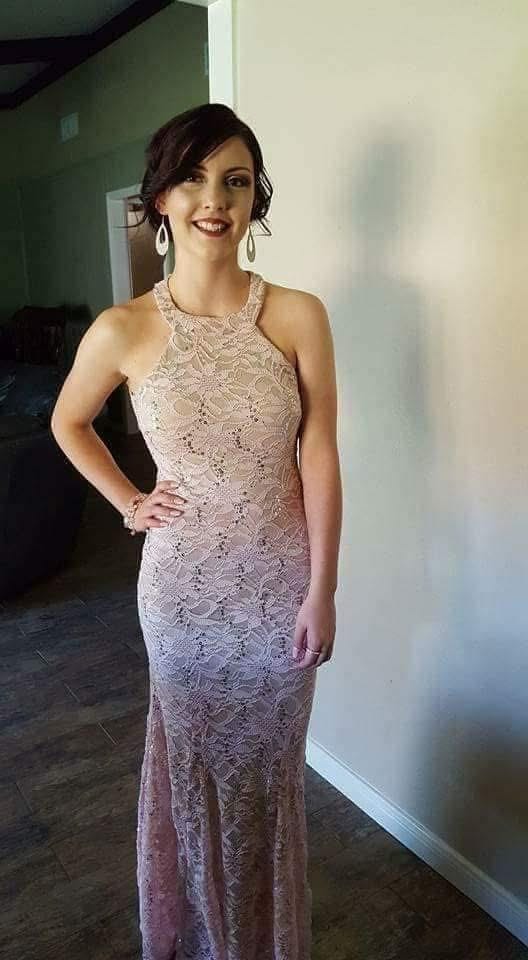
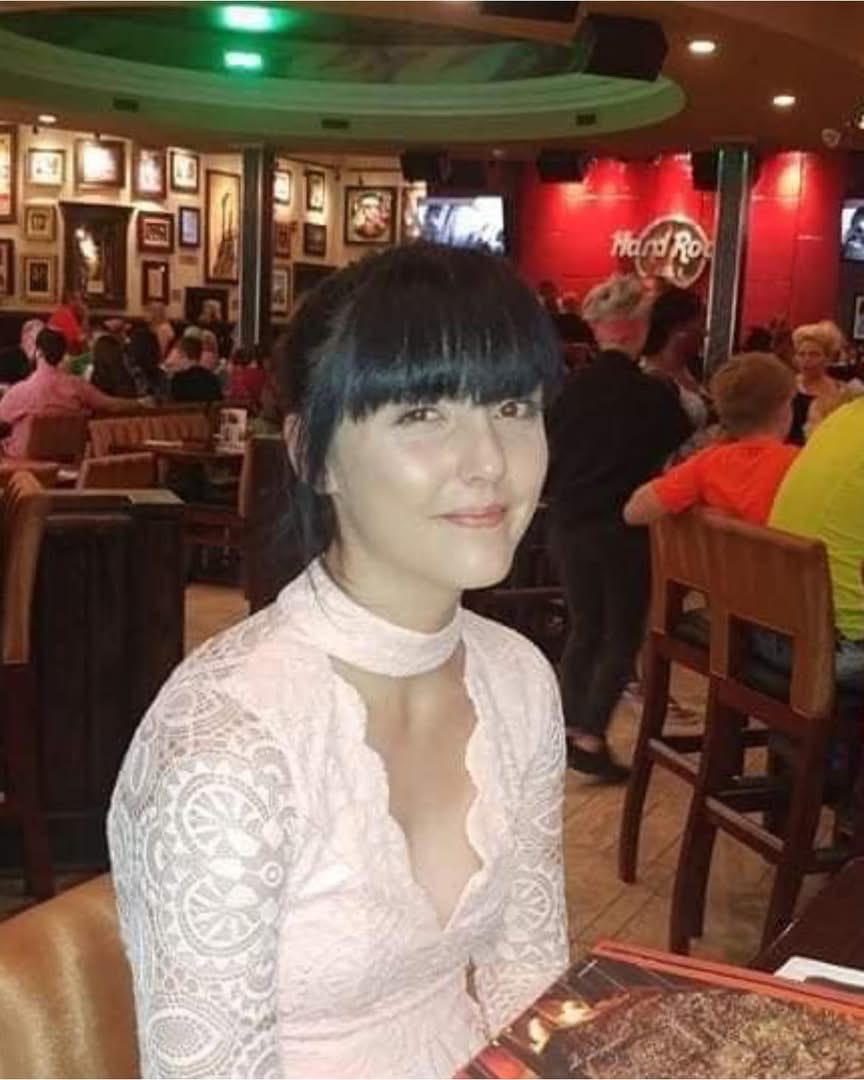
Maryah Hope Allen is described as a white female, born November 11, 2000. She would be 24 years old today. She was last seen in the Alvin/Galveston County, Texas area on April 5, 2018.
Maryah Hope Allen. Born November 11, 2000. Last seen April 5, 2018. She would be 24 years old today.
IF YOU HAVE INFORMATION
If you have any information about the whereabouts of Maryah Hope Allen — whether you knew her, knew her boyfriend, knew the people she was associated with in 2018, or have seen or heard from her at any point since her disappearance — please contact law enforcement immediately.
Galveston County Sheriff’s Office: (409) 766-2300
Texas Department of Public Safety Missing Persons Clearinghouse: (512) 424-5074
National Missing and Unidentified Persons System (NamUs): 1-833-942-0167
This article is based on a firsthand interview with Phyllis Jones, Maryah’s grandmother and primary caregiver, conducted for the purpose of raising public awareness. Statements attributed to Phyllis Jones reflect her personal account and recollection of events. Anyone with information is urged to contact law enforcement directly.


