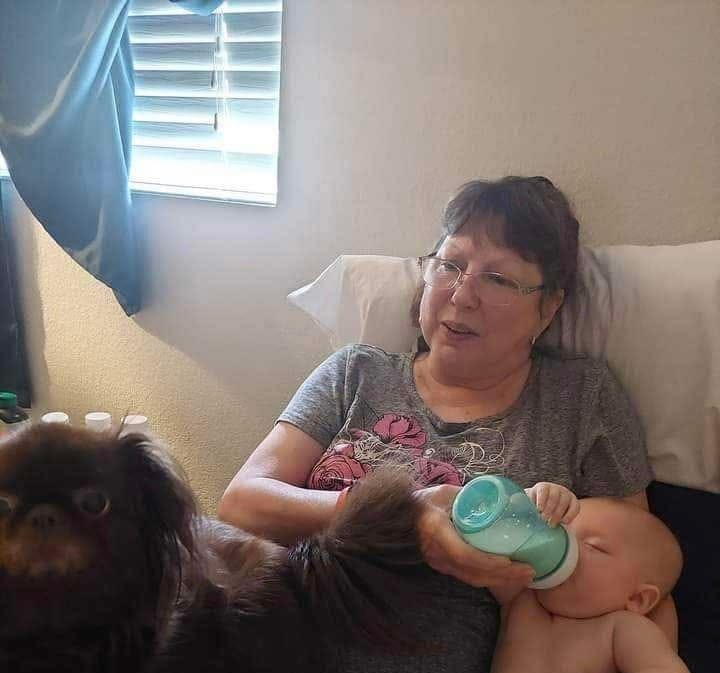
Philadelphia, September 25, 2023. Hotel staff at the Philadelphia Airport Marriott finally push open the door to room on the 4th floor. Inside, they find Diana Ramos — 66 years old, a 25-year veteran of the American Airlines cabin, a grandmother who FaceTimed her family after every landing — dead. A cloth lodged in her mouth. Silent for two days.
No forced entry. No visible struggle. No weapon. No surveillance cameras in the hallway. No answers.
What followed was not a swift and thorough investigation. It was, according to the family, a cascade of silence — from the airline that left her unreported, from the hotel that left her undiscovered, and from law enforcement that never called the one person who knew her daily life better than anyone: her grandson.
This is Diana’s story. And it is far from over.
Who Was Diana Ramos?
Diana Ramos was, by every account, a woman defined by devotion — to her passengers, her family, and her country. A Las Vegas resident flying out of the Los Angeles base, she accumulated more than 25 years of service with American Airlines, making her one of the most experienced flight attendants on her crew.
She was warm-hearted and dependable, say former colleagues. She treated the cabin like her second home and the passengers in it like guests she was personally responsible for. To her grandchildren, she was something else entirely: the grandmother who always remembered birthdays, who brought back souvenirs from every city, who called from the tarmac before the wheels even stopped rolling.
“She always wanted us to be better than we were yesterday. That was her. She lifted everyone.” — Diana’s Grandson
At 66, she was not winding down. She was still leading crews across the country as a senior flight attendant, still stepping forward where others hesitated — a habit she had cultivated, her grandson recalls, since the darkest day American aviation ever faced.
A Woman Who Flew Back After 9/11
In the weeks after the September 11 attacks, the aviation industry froze. Flight crews across the country were shaken, uncertain, and understandably afraid. The skies that had once felt like home now felt like a target.
Diana Ramos did not hesitate.
“After 9/11, when everyone was afraid, my grandmother didn’t hesitate. She was one of the first flight attendants to volunteer to fly again — she even went out of Miami when others were still too scared to go back in the air.” — Diana’s Grandson
It is a detail that tells you everything about who she was. Not reckless. Not indifferent to fear. Simply unwilling to let fear win — whether in the sky or on the ground. That courage, her grandson says, never left her. It was the thread that ran through her entire career.
Until the last layover she would ever take.
The Night Everything Went Wrong
On September 23, 2023, Diana Ramos checked into the Philadelphia Airport Marriott as part of a routine American Airlines crew layover. She was the lead flight attendant on a Los Angeles-based team that had just completed a cross-country journey to Philadelphia. The layover was supposed to be ordinary.
According to keycard logs later reviewed by investigators, Diana left her room once. She returned once. After that, the data goes quiet.
She was scheduled to fly back to Los Angeles as the lead on the return flight. When she failed to appear at the departure gate, no immediate wellness check was ordered by American Airlines. The hours stretched on. Then an entire day. Then two.
It was hotel staff — responding to what the family describes as a belated wellness check — who finally entered her room on September 25th. They found her unresponsive. A sock or cloth was lodged in her mouth.
She was pronounced dead at 10:40 p.m.
Philadelphia police classified the death as suspicious. The homicide unit opened an investigation. Two days after Diana Ramos stopped responding to the world, the world finally started paying attention.
The Scene That Raised More Questions Than Answers
What investigators found inside that room has since fueled intense public speculation and private anguish for Diana’s family. The evidence is a study in contradiction.
There were no signs of forced entry. No signs of a struggle. No weapon was recovered. Several prescription medication bottles — sealed — were found nearby. The cloth in her mouth could indicate a dozen things, or one very specific one. No official cause of death has been publicly confirmed as of this writing.
The keycard logs add another layer of confusion. According to what the family was told, Diana’s room was accessed only twice: her departure and her return. There are no logs indicating a visitor, no record of unauthorized entry. Yet the scene was deemed suspicious enough for homicide detectives to take the case.
How does someone die with a cloth in their mouth, in a locked room, with no evidence of intrusion, with no witnesses, and no cameras to tell the story? That question remains unanswered. And for Diana’s family, it is the question that defines their grief.
The Floor That Nobody Was Watching
Among the most disturbing revelations to emerge from our exclusive interview with Diana’s grandson is what was — and wasn’t — in place to protect guests on the 4th floor of the Philadelphia Airport Marriott.
“They told us there are no hallway cameras on that floor. None.” — Diana’s Grandson
No CCTV. No footage. No visual record of anyone entering or leaving the corridor where Diana and her fellow crew members were staying. In a hotel connected to a major international airport — a facility where American Airlines routinely houses its flight crews — an entire floor had zero surveillance coverage in its hallways.
Combined with the keycard logs that showed no unauthorized entry, investigators are left with an evidentiary void. If someone entered that room, they did so either with a key they were entitled to use, or through means that left no trace. And without cameras, there is no way to know who walked those hallways in the 48 hours before Diana’s body was found.
The absence of footage has not just complicated the investigation. It has deepened the family’s despair. There is no image to study. No timestamp to scrutinize. Just a blank hallway and a closed door and a woman who never came home.
The Call That Never Came
In the days after Diana’s body was discovered, her grandson waited. He had lived with her for years. He knew her routines, her health history, her habits, and her fears. He was, in many ways, the person best positioned to help investigators understand the full picture of Diana’s life in the days before her death.
They never called.
“I lived with her. I saw her every day.” — Diana’s Grandson
According to the family, investigators never reached out to him in the critical early days of the investigation — a window when witness memory is sharpest and context is most valuable. Whether that was a procedural oversight, an investigative choice, or something else entirely, the family does not know. What they know is that a primary source of information about Diana Ramos was never consulted.
In cold case investigations and active suspicious death inquiries alike, proximity to the victim matters. The people who knew her schedule, who she was in contact with, whether anything had seemed off in the preceding days — those are the first questions any investigator should ask. Diana’s grandson is still waiting to be asked.
Diana Ramos with her family.
The Airline and the Union: Fallout at 30,000 Feet
The institutional response to Diana’s death has been, by most accounts, inadequate. The Association of Professional Flight Attendants — the union representing American Airlines cabin crew — moved quickly to condemn the airline’s handling of the situation.
When Diana failed to show up for her return flight as lead flight attendant, no immediate welfare check was ordered. That delay — which allowed her body to remain undiscovered for two days — became the focal point of union fury. The APFA formally requested that American Airlines suspend crew layovers at the Philadelphia Airport Marriott, citing safety concerns for flight attendants at the property.
American Airlines refused.
The union then escalated, delivering a letter of no confidence in Brady Byrnes, Senior Vice President of Inflight Services, accusing airline leadership of a dismissive attitude toward the safety and wellbeing of flight crews. The letter formalized what many flight attendants had long felt but struggled to articulate: that the people who move millions of passengers safely through the sky are not always treated as though their own safety matters.
Anonymous flight attendants reached out in the wake of Diana’s death, many expressing feelings of vulnerability during layovers and a sense of being unsupported by management when safety concerns arise. “We’re expected to show up, smile, and fly,” one told us. “But who’s watching our backs?”
Diana Ramos spent 25 years watching everyone else’s back. The system did not return the favor.
Theories and Unanswered Questions
Because no cause of death has been officially confirmed and no suspects have been named, speculation has filled the vacuum left by institutional silence. Three broad theories have emerged in the months since Diana’s death.
The first is deliberate foul play. Someone — whether a fellow crew member, a hotel employee, an outside party, or an unknown individual — entered her room and caused her death. The cloth in her mouth is the central exhibit in this theory. It is not easily explained as an accident.
The second is a medical emergency complicated or concealed by other factors. The sealed prescription bottles found in the room have prompted questions about whether Diana suffered a medical crisis and whether anyone in a position to help either did not know or did not act.
The third is institutional negligence — not necessarily the cause of her death, but potentially a contributing factor in the failure to find her sooner. If someone had noticed she was missing on the first day, or the second morning, would the outcome have been different? That question haunts the family.
None of these theories is confirmed. All of them demand a thorough, transparent investigation — which the family says, as of this writing, they have not received.
Where the Case Stands Today
As of May 2025, the Philadelphia Police Department’s Homicide Unit continues to investigate Diana’s death. No cause of death has been publicly confirmed by the medical examiner. No suspects or persons of interest have been named. No arrests have been made.
The hotel has not commented substantively on the case. American Airlines has stated it is cooperating fully with the investigation.
Diana’s family has retained legal counsel and is actively exploring all available avenues, including potential civil litigation. They are not waiting. They are not giving up.
Diana Ramos with her first Great Grandson.
A Legacy That Demands Justice
Diana Ramos flew for 25 years. She volunteered to go back up after September 11 when others could not. She called her family after every landing. She remembered every birthday. She lifted everyone, her grandson says, and she meant it — not as a figure of speech, but as a practice, a daily discipline of making the people around her feel seen.
She deserved to come home.
Instead, she lay in a hotel room for two days while the airline she served for a quarter century failed to notice she was missing, while a floor without cameras offered no answers, and while the grandson who knew her best waited by a phone that never rang.
The aviation industry is watching this case — or it should be. Flight crews are housed in unfamiliar hotels, on floors that may or may not be surveilled, in cities far from home, relying on the institutions that employ them to care whether they live or die. Diana Ramos’s case is a referendum on whether that care is real.
Her family is asking for answers. They are asking for transparency. They are asking for the investigation this woman’s life demanded from the moment hotel staff opened that door.
Diana Ramos flew back after the darkest day in American aviation history because she believed in something. Justice, in her memory, means believing in something too.
DO YOU HAVE INFORMATION?
If you have any information about the circumstances of Diana Ramos’s death, contact the Philadelphia Police Homicide Division or submit an anonymous tip at phillypolice.com.
#JusticeForDianaRamos
“She always wanted us to be better than we were yesterday. That was her. She lifted everyone.” 🧑🦱❤️
American Airlines Flight Attendant Diana Ramos Celebrating with Family.
Discussion about this video
The Cold Cases
The Cold Cases is a dedicated archive of lesser-known cold cases — the ones that slipped through the cracks of mainstream attention but are no less deserving of answers. We investigate, document, & educate.
The Cold Cases is a dedicated archive of lesser-known cold cases — the ones that slipped through the cracks of mainstream attention but are no less deserving of answers. We investigate, document, & educate.