



Update: 03/30/2026 Devan Sanders was a case that left family and loved ones searching for answers following his death. After an extensive investigation, law enforcement eventually reached back out with significant developments — authorities informed those close to Devan that they had identified the individual believed to be responsible for his death. However, the suspected perpetrator had also since passed away, meaning no criminal charges or prosecution could move forward. As a result, law enforcement officially closed the case, bringing a bittersweet and complicated sense of closure to those who had long sought justice for Devan Sanders.
He worked two jobs. He drove relief supplies to Flint, Michigan, a city drowning in its own water crisis. He stopped to help homeless people on the street — not with a dollar bill, but with his time, his presence, and what everyone around him described as a patience for people that most would walk past without a second glance.
He found prepaid phones in a dumpster outside a shutting-down Sears and brought them to a nonprofit so that people who couldn’t afford a phone might have one in an emergency. One of those phones was later activated for an elderly woman with no power and no Wi-Fi who lived next to a police officer. That same night, she had a heart attack — alone and bedridden — and she used Devan’s phone to call for help. It saved her life.
The officer wrote Devan a formal letter of commendation for what his generosity had set in motion. After Devan was murdered, his family found that commendation tucked inside his Bible, on the nightstand beside his bed.
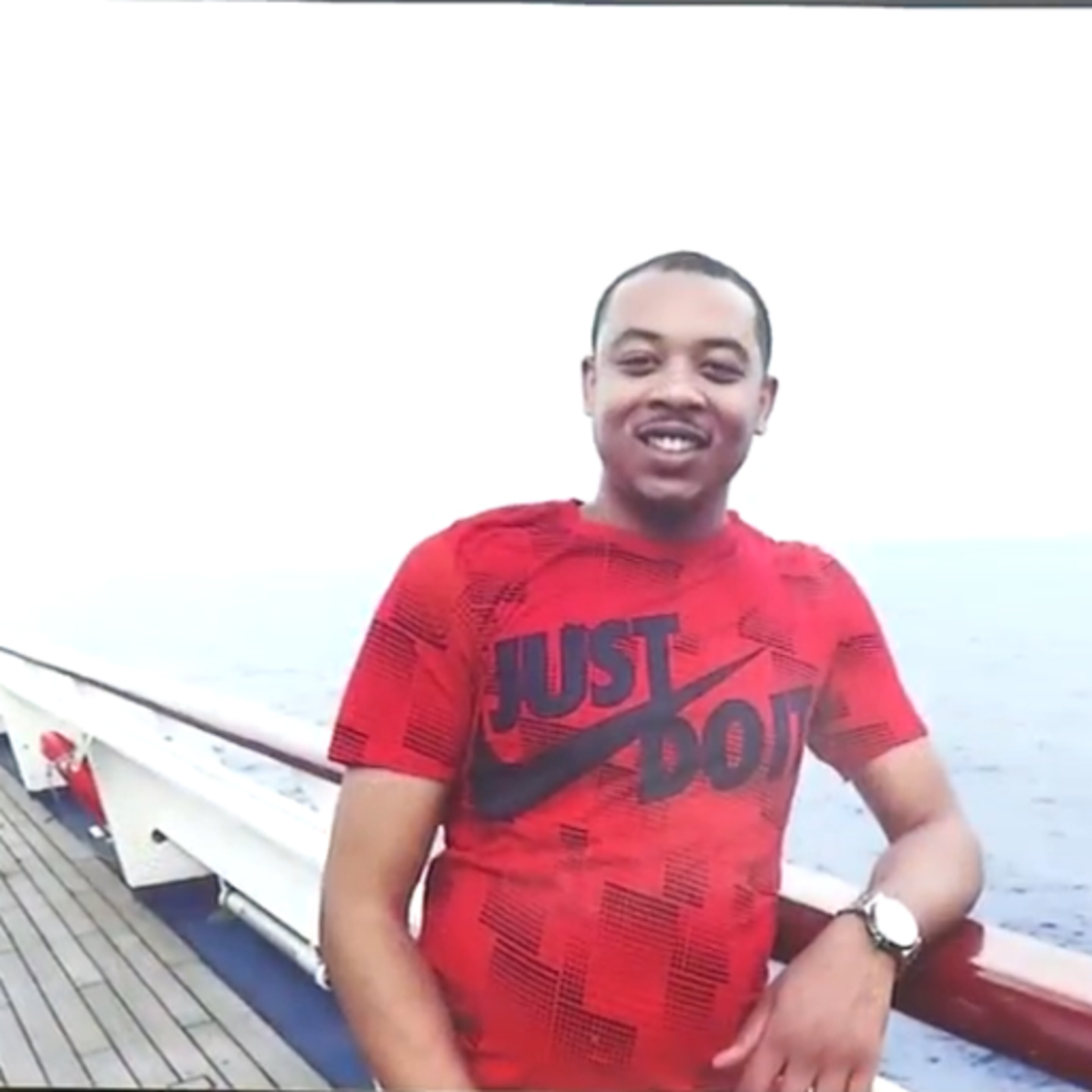
Devan Sanders was 25 years old. His mother called him an angel who walked the earth. His grandmother said his kindness was something you simply could not believe. His former supervisor at a local nonprofit, Marcia Elmers, said the real tragedy isn’t just the loss of a friend — it’s how much the entire community was robbed.
“How much work would he have been doing as an adult?” Elmers told TheColdCases.com in an exclusive interview. “He was so young when he passed. Making his way in the world included taking care of his community and those people in it.”
On the morning of Tuesday, August 7, 2018, Devan Sanders was found shot to death on the side of his own home in the 1600 block of West Grand Avenue in Dayton, Ohio. His mother, Sabrina Sanders, found him. The screaming that followed woke his sister, who called 911.
“My mom found him this morning,” the caller told the dispatcher. “She woke me up screaming and crying.”
More than seven years have now passed. No one has been arrested. No one has been charged. The case remains open and cold — one more unsolved homicide in a city that has long struggled to bring killers to justice, and one more family left to absorb a grief that never fully lands, because there is no ending, no courtroom, no verdict, no closure to press against it.
TheColdCases.com has attempted to contact the Dayton Police Department about this case. Our calls have not been returned.
The Commendation in the Bible
Before getting to the night of August 7, it is worth sitting with one detail that Marcia Elmers shared — because it says more about who Devan Sanders was than anything else in this story.
Devan had been a teenager when he first came to work at Good Neighbor House, a nonprofit in Montgomery County. He was part of a county-run program that paid young people 14 and older to work in the nonprofit sector — an effort to connect youth to community service and give them real work experience. Marcia Elmers was his supervisor.
“He was just dynamic,” she said. “Fun loving. Nothing was too hard for him. He never said no to any job or task. The clients loved him. The staff loved him.”
When Devan graduated out of the program and finished high school, he didn’t disappear. He kept coming back.
“He would still stop by the nonprofit just to see how I was doing,” Elmers recalled. “And then he would donate back.”
It was during this period — working retail, trying to make his way in the world — that Devan discovered the phones. He was working at a Sears store in a local mall that was closing down. He found prepaid phones in the dumpsters that had never been activated.
“He brought them to my place,” Elmers said, “because he said, you know, there’s people that come in to utilize your services who might not be able to afford a phone.”
Elmers passed the phones on to a friend in law enforcement to distribute to people he encountered in his work. One phone went to an elderly woman living next door to that officer — a neighbor with no Wi-Fi, no power, and no way to call for help if something went wrong.
Something did go wrong. That very night, she had a heart attack.
“She was bedridden and was able to call for help,” Elmers said. “She spent several weeks in the hospital, but it saved her life.”
The officer wrote Devan a formal letter of commendation for what his act of generosity had made possible. Devan kept it. When he was killed, his family found the commendation in his Bible, by his nightstand.
That is who was shot to death in the side yard of his own home in Dayton, Ohio, on August 7, 2018. A young man who saved a stranger’s life by rescuing phones from a dumpster — and who kept the commendation honoring that act next to his Bible.
The Night He Died
The night of August 6 into the early morning of August 7 was stormy. Marcia Elmers went to the Sanders home the very next morning, and she recounted what Sabrina Sanders told her about what happened.
Devan had come home that night after work, arriving at the family home he shared with his mother, his sister, and his brother at around 11 p.m. Sabrina heard him come in. She kept the television running loud — a habit born of the noise level in the neighborhood. With a storm raging outside, thunder and lightning masking the sounds of the street, the world outside was easy to lose track of.
At some point after coming home, Devan went back outside. What drew him out — a phone call, a knock, a voice — has never been established publicly. What is known is that he did not go far. His brother found him on the side of the house in the early morning hours. The family called police.
By the time anyone reached him, Devan Sanders was dead.
This sequence raises a question that has never been publicly answered: who or what called Devan back outside that night?
“Did they investigate who called him right before he left?” TheColdCases.com asked Elmers.
“I don’t know the depth of law enforcement’s involvement,” she said. “I don’t know how deep that went. I had brought it to the attention of somebody who was in law enforcement a while later and said, hey, where does this stand? And I hadn’t gotten any clear answer.”
TheColdCases.com attempted to contact the Dayton Police Department directly to ask this question. Our calls were not returned.
The Man They Remembered
Ten days after Devan was killed, dozens of his friends, neighbors, and family members gathered outside the Grand Avenue home for a prayer vigil. What emerged that evening — and what Marcia Elmers has continued to carry in the years since — is the portrait of a young man whose generosity was not occasional or performative. It was a way of living.
Beyond the phones and the Flint water runs, Elmers described another example of Devan’s creative giving spirit. While working at a retail job, Devan used his own money to buy gift cards, then used them as raffle prizes to encourage customers to donate to the nonprofit. He built a small fundraising engine out of nothing but his own initiative and his own paycheck.
“He had just this giving spirit,” Elmers said. “He was a caring soul. He was extremely creative.”
His best friend, who spoke to local media in the days following the shooting, said Devan was the kind of person you measured yourself against — someone who made you want to be better. The Flint water trip was not a one-time gesture. It was characteristic of how Devan moved through the world.
At the vigil, Sabrina Sanders found words for the incomprehensible. She had something she wanted to say directly to whoever killed her son. Her words were not what you might expect from a grieving mother.
“Whoever did this to Devan,” she said, “I forgive you — but I ain’t going to forget you. You took my baby. Took all of our baby away from us for no reason.”
A forgiveness offered in public, to an unknown face. Seven years later, it has still not been answered by justice.
His grandmother, Ina Green, spoke that night with the full weight of what it means to outlive a grandchild. “He was a wonderful grandson,” she said. “He had the patience and the kindness that you just cannot believe.” And then: “It is a hurt that you just cannot believe. But I know we’re going to get through this because God is with us.”
At the vigil, there were women present who had lost their own sons to violence in Dayton. They understood something about that grief that only the bereaved can. “Me too — my son was murdered,” one woman said. “I know how it feels to miss a child.” Another told the family: “It’s an everyday struggle. Just know you’re not alone.”
West Dayton and the Weight of Unsolved Violence
The 1600 block of West Grand Avenue sits on the west side of Dayton — a part of the city that has, for decades, borne a disproportionate share of its violence.
Dayton police data show that most homicides, aggravated assaults, and shootings into habitations occur in the department’s West District, and that most violent crime victims are Black. Through the mid-2010s and into the following decade, Dayton consistently ranked among the most dangerous cities in the United States relative to its population. In 2018, the year Devan was killed, the city recorded one of its deadlier recent years.
Compounding the violence is a homicide clearance rate that has long troubled Dayton. Studies going back to the early 2000s found Dayton among the worst in the nation for solving murders. A Scripps Howard News Service analysis singled out the city specifically. Even when cases are technically “cleared,” that does not always mean a killer was convicted — or even charged. Too many Dayton families know the particular limbo of a case that sits open for years with no movement and no answers.
For families like Devan’s, these statistics are not abstractions. They are the silence on the other end of the phone when they call for updates. They are the years that accumulate. They are a police commendation sitting in a dead man’s Bible while his killer remains free.
“I haven’t felt closure yet because there is no resolution,” Marcia Elmers told us. “And I don’t know why that is, or what we can do.”
She paused, then added what gets to the core of why cases like this matter beyond the individual:
“Violent crime, no matter what community you live in, it affects all of us. It doesn’t just affect the person you might have an issue with. It affects multiple layers. It affects the whole.”
What Is Known, and What Is Not
The publicly available record of the investigation into Devan Sanders’ death is limited. What is known:
Victim: Devan Sanders, 25, of Dayton, Ohio.
Date: Tuesday, August 7, 2018.
Location: 1600 block of West Grand Avenue, Dayton — on the side of the family home he shared with his mother, sister, and brother.
Discovery: Devan was found by his brother in the early morning hours. He had come home from work around 11 p.m. the night before and at some point left the house again. He was found close to home. The family called police.
Cause of death: Gunshot wound, confirmed by the Montgomery County Coroner’s Office.
Time of death: The exact time of the shooting has not been made public. Police were working in the initial days to establish a timetable.
Motive: No motive has been publicly identified or confirmed.
Suspects: No arrests have ever been made. No suspect has been publicly named.
Key unanswered question: Something or someone drew Devan back outside after he had already come home for the night. Whether that was a phone call, a visitor, or something else has never been confirmed. Whether law enforcement investigated that question and to what depth remains unknown. Marcia Elmers raised it directly with a law enforcement contact and received no clear answer.
Law enforcement response: TheColdCases.com attempted to contact the Dayton Police Department for this story. Our calls were not returned.
A Community Still Waiting
Marcia Elmers has kept Devan’s memory alive in the years since his death. She is not someone who has made peace with the silence surrounding this case, and she welcomed the chance to speak with TheColdCases.com.
“I think you’re taking some steps in the right direction in keeping it out there,” she said. “Making people know that violence, it doesn’t just affect the person you might have an issue with. It affects multiple layers.”
Sabrina Sanders forgave her son’s killer at a prayer vigil seven years ago — publicly, out loud, in front of her neighbors and community. She has never had the chance to do it in a courtroom.
Somewhere in Dayton, someone knows what happened on West Grand Avenue on the night of August 6, 2018. Someone knows what drew Devan Sanders back outside into a stormy night after he had already come home. Someone knows who fired the shot that killed him steps from his own front door.
Seven years is a long time. But it is not too late.
If You Have Information
Dayton Police Department — Homicide Unit 📞 937-333-COPS (2677)
Miami Valley Crime Stoppers 📞 937-222-STOP (7867) 🌐 miamivalleycrimestoppers.com
Tips to Crime Stoppers can be made anonymously. Cash rewards may be available for information leading to an arrest.
TheColdCases.com covers unsolved homicides across the United States. If you have a case you would like us to investigate, contact our editorial team.
Case At a Glance
Victim: Devan Sanders, age 25
Date: August 7, 2018
Location: 1600 block of West Grand Avenue, Dayton, Ohio
Cause of death: Gunshot wound
Status: Unsolved — no arrests made
Investigating agency: Dayton Police Department, Homicide Unit
Tip line: 937-333-COPS (2677)


