


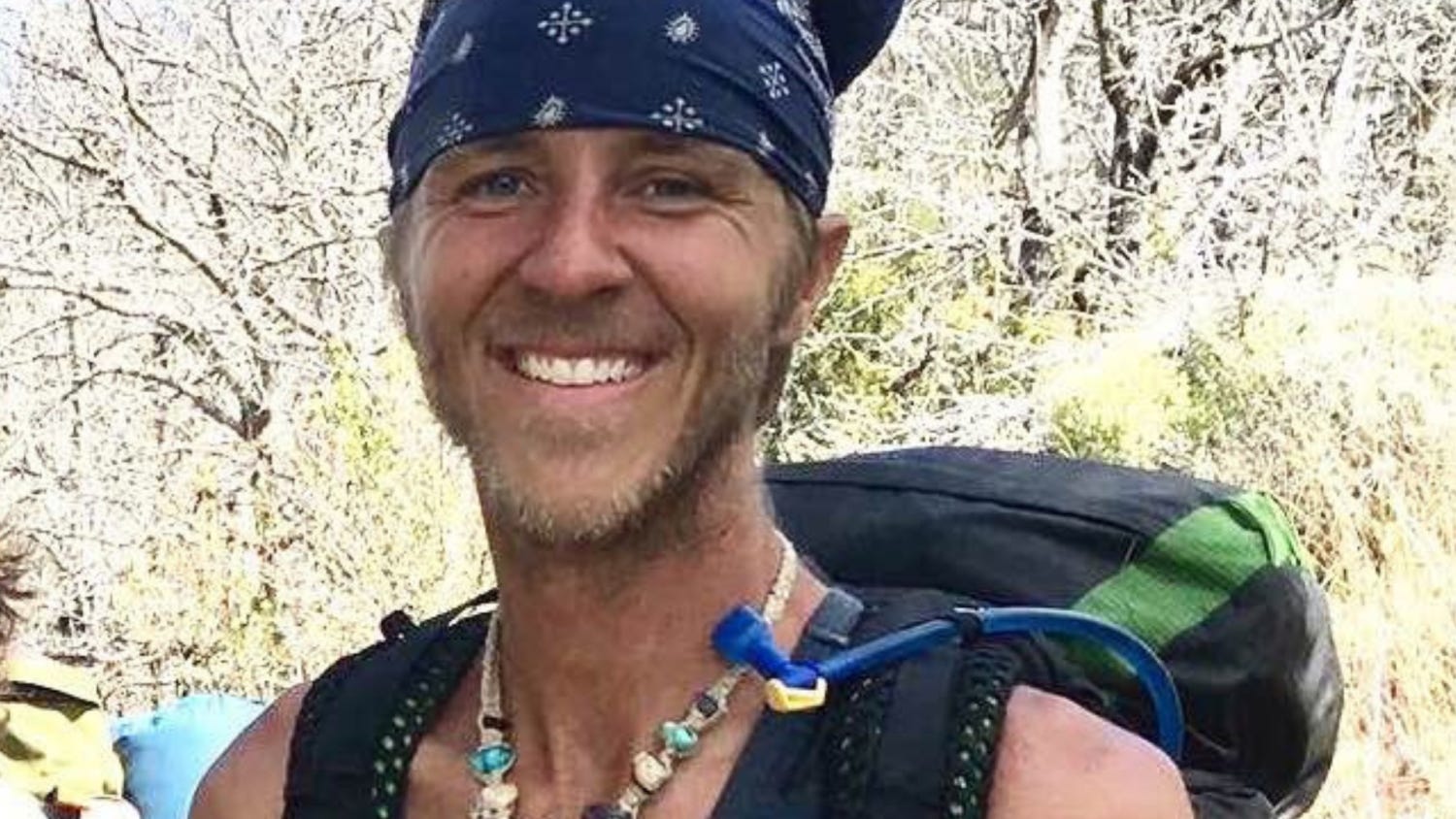
The Vanishing of Kris Fowler: When the Trail Goes Cold
The Pacific Crest Trail stretches 2,653 miles from Mexico to Canada, winding through some of America’s most spectacular and unforgiving wilderness. For thousands of hikers each year, completing this epic journey represents the ultimate achievement—a test of endurance, self-discovery, and connection with nature. But for Kris Fowler, known affectionately as “Sherpa” to his fellow thru-hikers, the trail would become something far more sinister: the place where he simply vanished into thin air.
The Man Behind the Trail Name
Kris Fowler wasn’t your typical adventure seeker. Born in 1982 in Norfolk, Virginia, he grew up as an only child in Beavercreek, Ohio, after his family moved back to the Dayton area when he was two. Life had already dealt him difficult cards—his mother died when he was just twelve, leaving a void that would shape his contemplative nature. His father remarried the following year to Sally Guyton, who would become a devoted stepmother and lifelong advocate.
From an early age, Kris displayed an almost supernatural athletic ability. He never played organized football, yet at twelve, he entered a local Punt, Pass, and Kick competition on a whim and won his age group two years running, advancing to semifinals at the Cincinnati Bengals stadium. This natural talent extended to everything he attempted—when Kris set his mind to something, he succeeded.
After earning a degree in Business Marketing and Communications, Kris built a conventional life. He worked in logistics for a trucking company, got married, and settled into adulthood. But 2016 would bring a series of life-altering changes: an amicable but painful divorce and his company’s relocation, which he chose not to follow. At 34, Kris found himself at a crossroads that would lead him to one of America’s most iconic trails.
The Journey Begins
In May 2016, Kris stood at the southern terminus of the Pacific Crest Trail in Campo, California, filled with the optimism that characterizes every thru-hiker’s first steps. He had trained with a friend in Colorado, meticulously planned his resupply points, and arranged for packages to be sent to various checkpoints along the route. His trail name “Sherpa” quickly stuck, a nod to his helpful nature and the way he seemed born to carry heavy loads through difficult terrain.
The PCT became Kris’s therapy. After years of personal struggles and loss, the trail offered something civilization couldn’t: simplicity, purpose, and healing. He kept his promise to check in with family every two weeks, maintaining consistent communication that would later prove crucial in establishing his timeline.
Through the scorching Mojave Desert, the majestic Sierra Nevada, and the verdant forests of Oregon and Washington, Kris documented his journey with the spiritual undertones that defined his outlook. Social media posts showed a man finding peace in isolation, strength in struggle, and meaning in every mile. He wasn’t just hiking toward Canada; he was hiking toward a new version of himself.
The Final Stretch
By October 2016, Kris had conquered over 2,200 miles of the most challenging terrain North America offers. With less than 400 miles remaining, he was so close to completing his life-changing journey that he could almost taste the victory. Washington’s Cascade Range lay before him, beautiful but potentially deadly as winter approached.
Kris had developed friendships along the trail, including a woman he’d been hiking with who left the trail in early October but remained in contact. These relationships were typical of the PCT community—a network of kindred spirits who understood the transformative power of long-distance hiking.
On September 30, 2016, Kris spoke to his stepmother Sally for the last time. He sounded tired but optimistic, confirming his intention to reach Canada and complete his journey. He mentioned having some phone trouble but seemed unconcerned, a common issue on the trail where charging opportunities are scarce and weather can damage electronics.
October 12, 2016: The Last Confirmed Sighting
The timeline of Kris Fowler’s final day is both detailed and frustratingly incomplete. On October 12, 2016, he was dropped off at the Kracker Barrel convenience store near White Pass in Yakima County, Washington. The store, located just off U.S. Highway 12, serves as a popular resupply point for PCT hikers, offering hot food, supplies, and a brief taste of civilization.
Store clerks remembered Kris clearly. He purchased coffee and supplies, appearing to be in good spirits despite the ominous weather forecast. A major storm was approaching—what would become known as the biggest storm to hit Washington in 15-20 years, spawned by the remnants of Typhoon Songda. Most hikers were evacuating the trail or arranging alternate transportation to bypass the dangerous conditions.
But Kris seemed determined to continue. Witnesses reported seeing him walk out of the store, presumably heading back to the trail. His phone records show he attempted to call his father that day, but the call went unanswered as his father was at work. Approximately one hour after leaving the store, Kris’s phone went dark. No calls, no texts, no pings—just silence.
The Storm Hits
The weather system that bore down on the Cascades that October wasn’t just another Pacific Northwest storm. It was a meteorological monster that would dump feet of snow at higher elevations and bring hurricane-force winds to exposed ridges. For hikers caught in the backcountry, survival would depend on proper gear, experience, and luck.
Kris was reportedly wearing Chaco sandals—a popular choice among thru-hikers for their comfort and durability on well-maintained trail sections. But sandals provide no protection against snow, ice, or freezing temperatures. His gear, while adequate for three-season hiking, likely lacked the specialized equipment needed for winter mountaineering: crampons, ice axe, four-season tent, and appropriate cold-weather clothing.
The Goat Rocks Wilderness, where Kris was heading, represents one of the most spectacular and dangerous sections of the entire PCT. The trail follows narrow ridges with thousand-foot drop-offs on either side, crossing avalanche-prone slopes and navigating fields of unstable volcanic rock. In good weather, it’s breathtaking. In a storm, it’s potentially fatal.
The Search Begins
By October 21, Kris’s family knew something was wrong. He had missed his regular check-in, and his father Mike’s worry grew into alarm. They began calling everyone they could think of—other hikers, family members, anyone who might have heard from Kris. His hiking partner confirmed receiving a text from him on October 12, mentioning phone trouble and his attempt to get a new charger. This would be the last confirmed communication from Kris Fowler.
Sally Fowler transformed into a detective, using bank records and package pickup logs to retrace her stepson’s journey. She discovered that Kris had never picked up his next resupply package, a crucial clue that helped establish his last known location. By October 23, it was clear to the family that Kris was missing, but convincing authorities proved challenging from 2,000 miles away.
Finally, on October 31, 2016, after the family presented their evidence, authorities in Washington agreed to list Kris as missing. Sergeant Randy Briscoe of the Yakima County Sheriff’s Office took the call but knew immediately they were fighting against time. The massive storm had already swept through, potentially covering any evidence under feet of snow.
The Massive Search Effort
What followed was one of the most extensive search operations in Washington state history. Multiple agencies coordinated ground searches, helicopter sweeps, and volunteer efforts that would span weeks and cover hundreds of square miles of some of America’s most challenging terrain.
Search and rescue teams faced conditions nearly as dangerous as those Kris likely encountered. Fresh snow made foot travel treacherous, while high winds and poor visibility hampered aerial searches. Volunteers wore “Bring Home Sherpa” hats as they scoured the trails between White Pass and Chinook Pass, methodically working through areas where a hiker might have sought shelter or fallen.
The search revealed frustrating contradictions. Bear hunters came forward claiming to have seen Kris hiking near Blowout Mountain, approximately 60 miles north of White Pass, on October 22. This sighting, if accurate, would mean Kris had somehow survived the initial storm and continued hiking for ten days after his last confirmed contact. But search teams found nothing in the redirected search area, and investigators eventually deemed these reports unreliable due to inconsistencies in the hunters’ stories.
The Theories
As days turned to weeks and weeks to months without a single trace of Kris Fowler, theories about his disappearance multiplied. Each seemed plausible yet flawed, supported by some evidence but contradicted by others.
The Accidental Death Theory: This remains the official explanation favored by authorities. Sergeant Briscoe and other investigators believe Kris, under-equipped for winter conditions and facing a historic storm, succumbed to hypothermia somewhere in the vast wilderness. His body and gear could be buried under snow, hidden in a ravine, or covered by seasonal vegetation. In the Goat Rocks Wilderness, a person could disappear into a crevasse or under a rock slide, remaining undiscovered for decades.
The theory makes sense logically. Kris was hiking alone into a dangerous storm with inadequate gear. Phone records show he knew the weather was coming—he’d been discussing with other hikers whether to push forward or wait it out. His determination to finish the trail might have overridden his survival instincts.
But this theory has one major flaw: no physical evidence has ever been found. Not a backpack, tent, shoe, article of clothing, or bone. Nothing. In the years since his disappearance, hikers, hunters, and searchers have covered the area extensively. While the wilderness can certainly hide remains, it’s unusual for every trace to vanish permanently.
The Intentional Disappearance Theory: Some believe Kris chose to vanish and start a new life. He was spiritual, introspective, and had recently experienced significant life changes—divorce, job loss, and the emotional journey of the trail. Perhaps the solitude convinced him to walk away from everything and live off-grid.
Supporters of this theory point to his phone going dark as potential evidence of a deliberate break. He could have arranged to meet someone, staged his disappearance, and begun a new life elsewhere. The PCT community includes people who have chosen to live alternative lifestyles, and the trail’s culture of anonymity could facilitate such a transformation.
However, this theory contradicts everything known about Kris’s character and plans. He had spoken excitedly about finishing the trail, seeing his father, and rebuilding his life afterward. He had arranged for post-trail employment and maintained regular contact with family throughout his journey. People who choose to disappear don’t typically maintain detailed contact logs and resupply schedules.
The Foul Play Theory: The Pacific Crest Trail, while generally safe, has seen incidents of violence over the years. Remote locations, exhausted hikers carrying valuable gear, and the transient nature of trail relationships can create opportunities for criminal activity.
Some speculate that Kris might have encountered someone with harmful intentions—a fellow hiker, someone at the convenience store, or someone he met on the road. The trail’s isolation means crimes can go undetected, and bodies can be hidden where they might never be found.
Yet there’s no evidence supporting this theory. No signs of struggle, no suspicious witnesses, no reports of concerning individuals in the area. While not impossible, it remains pure speculation without any factual basis.
The Psychological Break Theory: Long-distance hiking can have profound psychological effects. The combination of physical exhaustion, nutritional deficiencies, sleep deprivation, and isolation can trigger mental health crises even in stable individuals. Some hikers experience what they call “trail madness”—periods of confusion, poor decision-making, or dissociative states.
Perhaps Kris experienced such a break, wandered off-trail in a confused state, and succumbed to exposure in an area far from where searchers looked. This could explain the lack of evidence near the trail and the failure to find any trace despite extensive searches.
The Family’s Unending Quest
No theory provides comfort to Kris’s family, particularly his stepmother Sally, who has become the public face of the search effort. She traveled to Washington with family members, spending eleven days following leads and retracing Kris’s final steps. She organized volunteer searches, maintained media contact, and kept hope alive when official efforts scaled back.
The tragedy compounded when Kris’s father Mike died in 2017 from cancer, never knowing what happened to his son. The double loss devastated the family, but Sally refused to give up. She established the Fowler-O’Sullivan Foundation to help other families of missing persons, turning personal tragedy into support for others facing similar nightmares.
Sally’s dedication extends beyond her own family. She has become a resource for other families of missing hikers, using the knowledge gained from Kris’s case to help others navigate the complex world of search and rescue, media relations, and investigation procedures. Her work ensures that Kris’s legacy includes helping prevent similar disappearances and improving responses when they occur.
The Digital Age Investigation
Kris Fowler’s case has attracted significant attention from online investigators, true crime enthusiasts, and hiking communities. Reddit threads, Facebook groups, YouTube channels, and blogs have analyzed every available detail, creating crowdsourced investigations that supplement official efforts.
Digital flyers still circulate among hikers on the PCT, asking anyone who might have been on the trail in October 2016 to check photos, journals, or memories for any mention of “Sherpa.” The hiking community has embraced Kris’s case as a cautionary tale and a call to action for improved safety measures.
Some investigators have suggested using new technologies—drone mapping, ground-penetrating radar, thermal imaging, and LIDAR scanning—to search areas that ground teams cannot safely access. These tools might penetrate snow, vegetation, or rock formations to reveal hidden evidence.
Weather pattern analysis has also provided insights. Researchers have reconstructed the exact conditions Kris faced, creating detailed models of wind, temperature, and precipitation that help narrow search areas. These scientific approaches might succeed where traditional methods have failed.
The Ongoing Mystery
Nearly nine years after Kris Fowler vanished, his case remains one of the Pacific Crest Trail’s most haunting mysteries. The trail that was supposed to provide healing and transformation instead became the site of an inexplicable disappearance that defies easy explanation.
Every hiking season brings new hope that someone will discover a clue—a piece of gear, a bone fragment, a campsite, anything that might provide answers. experienced hikers know that the wilderness can hide secrets for decades, only to reveal them when conditions align perfectly. A melting snowfield, a shifted boulder, a fallen tree might someday expose what careful searches have missed.
Until that day comes, Kris’s story serves multiple purposes. It’s a cautionary tale about the importance of proper preparation, weather awareness, and emergency communication in wilderness areas. It’s a reminder that even experienced hikers can fall victim to nature’s unpredictability. And it’s a testament to a family’s love and determination to find answers, no matter how long it takes.
The Pacific Crest Trail continues to call adventurers seeking their own transformations. Hikers still pass through White Pass, probably unaware that they’re following in the footsteps of a man who entered the wilderness and never returned. Some leave small memorials—stones arranged in the shape of “Sherpa,” notes tucked into trail registers, prayers whispered into mountain winds.
Kris Fowler’s journey ended somewhere in those magnificent, treacherous mountains. Whether he fell victim to the storm, chose to disappear, met with foul play, or experienced a psychological crisis, his story reminds us that some mysteries may never be solved. The wilderness keeps its secrets, and sometimes the trail goes cold in the most literal sense.
For Sally Fowler and the rest of Kris’s family, the search continues in different forms. They maintain hope that answers will come, whether through a hiker’s discovery, new technology, or someone finally coming forward with crucial information. Until then, Kris remains not just a missing person case number, but a son, brother, and friend whose spirit continues hiking somewhere in the great unknown.
The Pacific Crest Trail gives many gifts to those who attempt its length: strength, wisdom, perspective, and connection with something greater than themselves. But for Kris “Sherpa” Fowler, it apparently offered something else entirely—a path to another place entirely, one where no search party, however dedicated, has yet been able to follow.
If you have any information about Kris Fowler’s disappearance, please contact the Yakima County Sheriff’s Office at (509) 574-2500. Even seemingly insignificant details might help solve this enduring mystery.


