

Who Killed Emily Pike? One Year Later, the Brutal Murder of a 14-Year-Old San Carlos Apache Girl Remains Unsolved

Who Killed Emily Pike? One Year Later, the Brutal Murder of a 14-Year-Old San Carlos Apache Girl Remains Unsolved
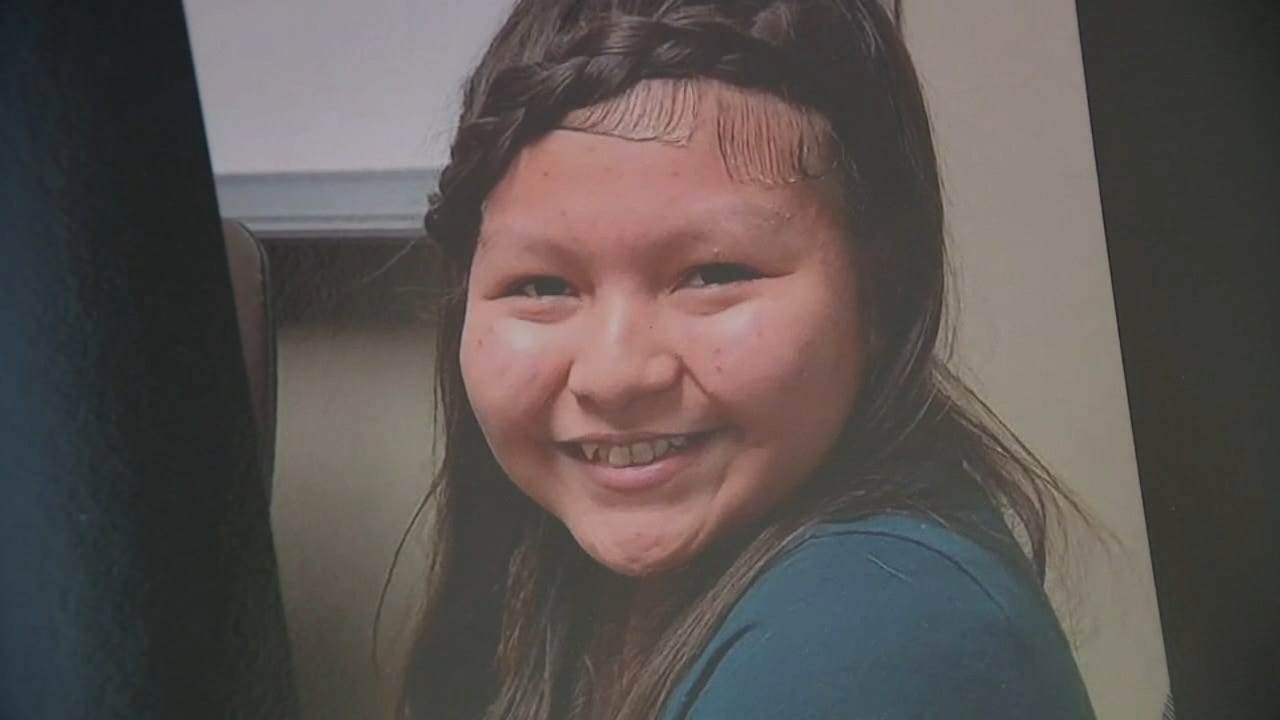
One year after 14-year-old Emily Pike vanished from a Mesa, Arizona group home, her killer remains free—and the questions surrounding her death continue to haunt a family, a tribe, and a state that failed to protect one of its most vulnerable children.
The Disappearance
Emily Pike was never supposed to be in Mesa. A member of the San Carlos Apache Tribe, Emily lived most of her life on the reservation in southeastern Arizona. But in September 2023, following a sexual assault by a relative and a subsequent suicide attempt, tribal social services placed her in a group home nearly 100 miles away from her family. She was 14 years old.
The group home, operated by Sacred Journey, was located on the corner of Mesa Drive and McKellips Road in a busy Phoenix suburb—a world away from the tight-knit Apache community Emily called home. She hated it there. According to police records, Emily had run away from the facility four times between September and November 2023.
Body camera footage from one of those incidents reveals the depth of her desperation. In September 2023, officers found Emily walking along a canal and pleaded with her to return. “I just want to see my mom,” she told them. “I don’t want to go back to that f---ing group home. I hate it there.”
Despite her protests, officers returned her to the facility.
On the evening of January 27, 2025, Emily slipped out again. This time, she wouldn’t come back. At approximately 8:30 p.m., staff discovered a kicked-out screen window and an open gate. Emily was last seen wearing a pink and gray striped long-sleeved shirt.
According to a former roommate, Emily left during a visit from a church group that provided a distraction. Her goal wasn’t to run away forever, the friend told AZ Family—she wanted to see a boy she’d met at guitar lessons, then hitchhike home to the reservation to see her mother and siblings.
“That was always her intention, to go back home to her mom,” her aunt, Carolyn Pike-Bender, told People magazine. “Her mindset was not to go run off to go do something like any other teenager would do. Her mom and her siblings were all that she had on her mind.”
Emily’s case manager didn’t notify her mother, Stephanie Dosela, that her daughter was missing until a week later.
The Horrifying Discovery
Seventeen days after she vanished, hikers made a gruesome discovery in the Tonto National Forest near Globe, Arizona—just 19 miles north of the San Carlos Apache Reservation where Emily had tried so desperately to return.
On February 14, 2025—Valentine’s Day—contractor trash bags were found along Forest Road 355, near milepost 277 on Highway 60. Inside were Emily’s dismembered remains. An autopsy determined she died from “homicidal violence with blunt head trauma.” Her arms and hands were never recovered.
She had been found less than 30 minutes from the home she had been trying to reach.
A Case Without Answers
A year later, no one has been arrested. No suspects have been publicly named. The Gila County Sheriff’s Office leads the investigation with assistance from the FBI and San Carlos Apache Police Department, but progress has been frustratingly elusive.
In September 2025, tribal police were forced to dispel social media rumors that an arrest had been made after a TikTok influencer falsely claimed a suspect was in custody. “All the information in the video was false,” said tribal police spokesman Ricardo Alvarado. “When you have disinformation, especially something like this, it’s volatile.”
The false rumors dealt another blow to a family already shattered by grief.
“It’s very dangerous to just throw names out there. Someone can get hurt,” said Emily’s uncle, Allred Pike Jr. “It gives false hope.”
According to her mother, three potential suspects were being questioned as of early 2025, but no breakthroughs have been announced. The autopsy and medical examination reports remain sealed by the Gila County Attorney’s Office.
Systemic Failures
Emily Pike’s death has become a flashpoint for conversations about Arizona’s treatment of Indigenous children in foster care and the broader epidemic of Missing and Murdered Indigenous People (MMIP).
Emily was placed in the group home after reporting sexual assault. Rather than arresting her abuser, tribal game and fish rangers responded to the report, and the case was dropped. Emily was removed from her home instead.
State data shows that children in group homes are more likely to run away, with 97 teens fleeing Arizona group homes in September 2025 alone. Emily’s murder, along with the killing of another teen, Zariah Dodd, prompted state lawmakers to propose reforms including “critical information packets” for law enforcement when children go missing and improved communication between tribes, the Department of Child Safety, and police.
Critics point to what they see as a fundamental devaluing of Indigenous lives. “If this was a different privileged girl, it would have been handled differently,” said Delvina Charley, a Diné peer support mentor, after Emily’s roadside memorial was abruptly removed by a property owner in January 2026.
Emily’s Legacy
In the wake of her murder, Arizona Governor Katie Hobbs signed “Emily’s Law,” creating the Turquoise Alert system for missing Indigenous people under 65 who don’t meet the criteria for Amber or Silver alerts. It’s a tool Emily’s family hopes will prevent other families from experiencing their pain.
The community has refused to let Emily be forgotten. Despite the removal of the original memorial at Mesa Drive and McKellips Road, advocates quickly rebuilt it with photos, stuffed animals, flowers, and red ribbons—the markers of the MMIP movement. A permanent memorial is planned for Fitch Park in Mesa, including a bench and tree. The Arizona Department of Transportation will erect a highway sign at milepost 277, where Emily was found.
The FBI and San Carlos Apache Tribe continue to offer a combined $200,000 reward for information leading to an arrest.
Remembering Emily
To her family, Emily wasn’t a statistic or a cautionary tale—she was a girl who loved pink, sparkly things, shopping, art, and her cat. She was caught between childhood and adolescence, trying to find herself while shouldering the burden of being a big sister to younger siblings.
“She was just leaving the little girl stage, going into the preteen stage,” Pike-Bender said. “She was trying to find herself, but she was also trying to be a mother and a big sister.”
Her family describes her as happy, with a big smile and an unwavering love for her mother.
At a vigil marking the one-year anniversary of her disappearance, more than 100 people gathered at the corner where she was last seen. Traditional songs were sung. Candles were lit. And a community renewed its vow to find justice for the 14-year-old girl who just wanted to go home.
“I just refuse to lose hope,” Pike-Bender said. “She didn’t leave this world for nothing, and whoever took her life, is going to get that judgment one day.”