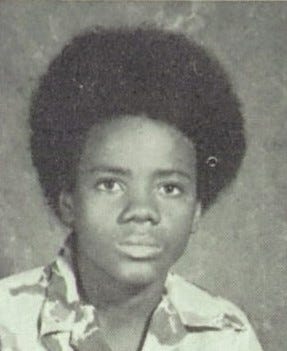
■ Official Case File Summary
Victim Anthony Maurice Guillory
Date Found July 12, 1986 — 4:26 a.m.
Location 627 N. Boulder Avenue, Tulsa, Oklahoma
Cause of Death Multiple stab wounds
Age at Death 26 years old
Last Known Residence House of Prayer / Rescue Home, 739 N. Main, Tulsa
Investigating Agency Tulsa Police Department
TPD Non-Emergency (918) 596-9222
Cold Case Contact TPDColdCaseHomicide@cityoftulsa.org
Per OklahomaColdCases.org
The call came in at 4:26 in the morning. Sometime before the sun rose over the Arkansas River on Saturday, July 12, 1986, Anthony Maurice Guillory — twenty-six years old, a resident of a North Tulsa shelter and church — was found dead in the street at 627 North Boulder Avenue. He had been stabbed multiple times. No one has been charged with his murder. Thirty-nine years have passed, and Anthony Guillory remains one of hundreds of victims whose names populate the Tulsa Police Department’s cold case registry, waiting for the person who took his life to finally be held to account.
The facts of the case, as publicly documented, are spare. A body. A street. An early Saturday morning. Multiple stab wounds. But behind those clinical details is a man with a name, a life, a history — and someone, somewhere, who knows what happened to him.
A Shelter in North Tulsa
At the time of his death, Anthony Guillory was living at 739 North Main Street in Tulsa — an address that carried significant meaning in the city’s landscape of social services. That building had been purchased in 1981 by Evangelist Grace Tucker, a widely beloved community figure who used it as both a church and a shelter for Tulsa’s most vulnerable citizens, calling it the “Rescue Home.” Tucker, who ran the Revival Center House of Prayer and dedicated more than five decades of her life to ministering to the poor and homeless, received a $40,000 donation in 1986 — the very year Anthony Guillory was killed — that enabled her to expand her operations to a former country club on Tulsa’s west side.
That Anthony was residing at a shelter tells us something about his circumstances. It speaks not of failure, but of a man navigating the hardships that faced many in North Tulsa in the mid-1980s — a period of significant economic strain and, as the decade wore on, escalating street violence. He was part of a community of people who, for whatever reason, had found themselves without stable housing, turning to a place of faith and compassion to get back on their feet. Whatever had brought Anthony to 739 North Main, he had found a roof and a congregation. He deserved the chance to find his way forward. He never got it.
The Street Where He Died
The 600 block of North Boulder Avenue sits in the inner core of North Tulsa, not far from downtown — within walking distance, in fact, of the shelter on North Main where Anthony had been sleeping. The proximity raises a question that investigators likely wrestled with in 1986: Was Anthony simply traveling on foot between the shelter and somewhere else when he encountered his killer? Did he know whoever stabbed him? Was this a robbery, a dispute, a targeted attack?
The nature of a stabbing — unlike a shooting — tends to be intimate. It requires proximity. It often suggests either a sudden, explosive altercation or a close enough relationship between perpetrator and victim that the killer could get within arm’s reach. The fact that Anthony suffered multiple stab wounds indicates something beyond a single impulsive blow. Someone was determined to end his life.
The nature of a stabbing requires proximity. It often suggests either a sudden altercation or a relationship close enough that the killer could get within arm’s reach.
In July 1986, Tulsa was a city in the early stages of a violent decade. Gang graffiti had begun appearing on walls that year, and drive-by shootings were starting to occur on late nights. Tulsa experienced elevated levels of gang violence in the late 1980s and early 1990s, when crack cocaine flooded neighborhoods in North Tulsa. Whether Anthony’s death was connected to any of those broader dynamics, or whether it was something entirely personal and unrelated to street gang activity, is not publicly known. But the environment in which he died was one of mounting danger for people living on the margins — precisely the people Anthony Guillory was among.
A City That Has Not Forgotten
The Tulsa Police Department maintains an active cold case program, and Anthony Guillory’s name appears on its official unsolved homicide registry alongside dozens of other victims stretching back to the 1960s. The Tulsa Police Department has on record cases dating back as far as 1968, and its cold case division has demonstrated that “cold does not mean forgotten” — even decades-old cases have found resolution.
In recent years, the tools available to cold case investigators have expanded dramatically. Tulsa’s Cold Case Task Force has taken a fresh look at old case files, prioritizing them by solvability and searching specifically for biological evidence that could be tested using new technology. Following the massive breakthrough in the Golden State Killer case, law enforcement agencies across the country — including in Tulsa — began exploring the use of forensic genealogy, which involves uploading DNA profiles to genetic databases and mapping family trees to identify unknown suspects. The Tulsa Police Homicide Unit has acknowledged using grants to fund DNA testing in cold cases, with investigators noting that genealogical databases are “solving cold case homicides all over the country.”
Whether physical evidence from Anthony’s 1986 crime scene survived the intervening decades — and whether it is suitable for modern forensic testing — is not publicly known. Stabbing cases can yield DNA from blood evidence, from the weapon, or from trace material on the victim’s clothing. In cases this old, the condition of preserved evidence varies enormously. But the science that exists today would have seemed miraculous to the detectives who first stood over Anthony Guillory’s body on a July morning nearly four decades ago.
Someone Knows
Tulsa in the mid-1980s was not a city of strangers. Neighborhoods, shelters, and congregations like the one at 739 North Main were tight-knit worlds where people knew each other’s names, habits, and troubles. A violent confrontation in the early hours of a Saturday morning, on a residential street, does not happen entirely without witnesses. Someone may have seen Anthony that night — where he was going, who he was with, whether he seemed afraid. Someone may have heard raised voices or sounds of a struggle in those pre-dawn hours. Someone may have seen a person leave the scene in a hurry.
And there is the killer themselves. Forty years is a long time to carry a secret. People talk. They tell someone they trust. They let things slip in moments of anger or guilt. They move away and distance softens their caution. Cold cases are solved every year in this country not just by DNA, but by someone finally deciding that the truth matters more than the secret — a family member, a former friend, a cellmate, an ex-partner who heard a confession long ago and never came forward.
Anthony Maurice Guillory was twenty-six years old when he died. He was a person who had found himself in reduced circumstances but was still living, still part of a community, still presumably hoping for better days. He was someone’s son, perhaps someone’s brother or friend. The people who knew him have now aged into their fifties, sixties, and seventies. The person who killed him — if still alive — carries the weight of what they did to a young man on a dark North Tulsa street.
Forty years is a long time to carry a secret. Cold cases are solved every year by someone finally deciding that the truth matters more than silence.
What Justice Looks Like
For Anthony’s family — wherever they are, whatever they know or don’t know about the circumstances of his death — the decades of silence must be a particular kind of grief. To lose someone to violence is devastating. To lose them and never know why, or who, or whether anyone cares enough to find out, compounds that grief immeasurably. Cold case units exist precisely because investigators understand that families deserve answers, regardless of how much time has passed.
The truth about each case is out there; someone knows who committed the murder — that straightforward statement from the Tulsa County Cold Case Task Force applies as directly to Anthony Guillory’s case as to any other. The investigation belongs to the Tulsa Police Department’s Cold Case Homicide Unit. Any information, however small it may seem, however old the memory, is worth sharing. There is no statute of limitations on murder in Oklahoma. An arrest can still be made. A trial can still be held. Justice for Anthony Maurice Guillory is still possible.
He was found in the street on a July morning in 1986. He was twenty-six years old. He had a name. He deserves an answer.
■ If You Have Information
If you have any information about the murder of Anthony Maurice Guillory — no matter how small or how long ago — please contact the Tulsa Police Department. Tips can be submitted anonymously, and a reward may be available for information leading to an arrest and conviction.
You do not need to give your name. You do not need to have been a witness. If you heard something, saw something, or were told something — it matters. Call.
Tulsa Police Department Cold Case Homicide Unit
Non-Emergency: (918) 596-9222
Email: TPDColdCaseHomicide@cityoftulsa.org
Crime Stoppers (anonymous): (918) 596-2677