

Toronto Cold Case Unit Identifies Serial Killer Who Murdered Three Women Between 1982-1997
Toronto Cold Case Unit Thawing Cold Cases

Justice After Decades: Toronto Cold Case Unit Identifies Serial Killer Who Murdered Three Women Between 1982-1997

In a breakthrough that demonstrates the power of modern forensic technology and unwavering police determination, Toronto cold case investigators have finally identified the serial killer responsible for the brutal murders of three women over a fifteen-year period spanning from 1982 to 1997. The announcement, made December 11, 2025, brings closure to families who have waited decades for answers, even as the perpetrator himself escaped earthly justice by dying in 2019.
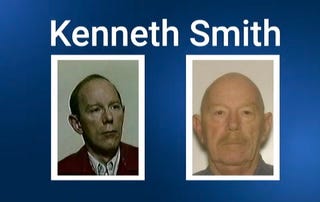
Kenneth Leslie Smith, who passed away at age 72 in Windsor, Ontario, has been conclusively identified through advanced DNA analysis and genetic genealogy as the man responsible for killing Christine Prince, Claire Samson, and Gracelynn Greenidge. The identification marks the culmination of an eight-year investigation that began when forensic scientists first discovered links between two of the cases in 2016, expanding to include a third victim in 2017.
The investigation represents a landmark achievement in Canadian cold case methodology, showcasing how cutting-edge DNA technology can solve crimes that have stumped investigators for generations. Toronto Police Service Detective Sergeant Steve Smith, who heads the cold case unit, described the breakthrough as “a testament to the perseverance of our investigators and the incredible advances in forensic science.”
The Victims: Three Lives Cut Short
The serial killer’s first known victim was 25-year-old Christine Prince, a Welsh nanny who had come to Toronto seeking adventure and opportunity. On the night of June 20, 1982, Prince was last seen walking home from a social gathering in the Wychwood Avenue area near St. Clair Avenue West and Bathurst Street. She had exited a streetcar around 1 a.m. and was making her way to her residence when she encountered her killer.
Prince’s body was discovered two days later in the Rouge River in northeast Toronto, her identification found separately on the edge of Highway 401. The young woman had been sexually assaulted, struck on the head, and ultimately died from drowning. Her death sent shockwaves through Toronto’s close-knit nanny community and left her family in Wales devastated.
“Christine was a vulnerable member of our community who was set upon by a predator,” Detective Sergeant Smith told reporters. “She was sexually assaulted, murdered, and discarded without a second thought.”
Just over a year later, in September 1983, the killer struck again. Claire Samson, a 23-year-old woman who sometimes worked as an escort, was last seen alive on September 1, 1983, in front of the former Essex Hotel at 300 Jarvis Street. Witnesses reported seeing her get into a large, beige-colored sedan driven by a balding older man.
Samson’s body was discovered the following afternoon by a beekeeper in a wooded area off Oro Sideroad 20/21 near Highway 93, approximately 120 kilometers north of Toronto in Oro-Medonte Township. She had been shot twice in the head with what investigators believe was a small-caliber handgun. Ontario Provincial Police believed she hadn’t been dead for long when discovered.
The final confirmed victim was Gracelynn Greenidge, a 41-year-old nursing assistant who had immigrated to Canada from the Bahamas. Greenidge was found murdered in her apartment at 50 Driftwood Avenue on July 29, 1997, having made it only as far as her doorway before succumbing to blunt-force trauma injuries. She had left her job at a downtown seniors’ facility around 11 p.m. the previous night and appeared to have arrived home safely.
When Greenidge failed to show up for work the following day, a concerned colleague went to check on her and made the horrific discovery. Friends and investigators were baffled by the circumstances, as Greenidge was known to be cautious about letting even acquaintances into her apartment, let alone strangers.
“We have never been sure how he got into Gracelynn’s apartment,” Detective Sergeant Smith admitted. “There’s no way she would have let him into the apartment. She was reluctant to let people she knew inside, let alone some random guy.”
The Investigation: From Cold Cases to Breakthrough
For decades, these three murders remained separate, unsolved cases with no apparent connections between them. The victims came from different backgrounds, were killed in different manners, and their bodies were discovered in different locations across the Greater Toronto Area. The investigations went cold shortly after they began, with no viable suspects identified despite extensive police work.
The breakthrough came in 2016 when forensic scientists discovered a DNA link between the Prince and Samson cases through Canada’s national DNA database. This revelation prompted Toronto Police Service and Ontario Provincial Police to launch a joint investigation, pooling resources and expertise to pursue the connection.
In 2017, the investigation took another dramatic turn when forensic evidence linked the first two murders to Gracelynn Greenidge’s 1997 killing. The discovery that one perpetrator was responsible for all three deaths spanning fifteen years transformed three cold cases into a serial killer investigation.
However, the DNA samples were minimal and degraded, presenting significant challenges for traditional forensic analysis. The amount of usable DNA was so small that conventional testing methods couldn’t provide a complete genetic profile. Investigators turned to phenotyping, which revealed the killer was a white male, but this alone wasn’t enough to identify a suspect.
The investigation reached a critical juncture when detectives decided to take a calculated risk and submit the limited DNA evidence to Othram, a cutting-edge laboratory in Texas that specializes in genetic genealogy and has helped solve hundreds of cold cases worldwide. Othram’s advanced technology can work with minimal DNA samples and has revolutionized cold case investigations globally.
Using genetic genealogy techniques similar to those that unmasked California’s Golden State Killer, investigators were able to build a family tree that eventually led them to Kenneth Leslie Smith. The process involved comparing the killer’s DNA profile to public genealogy databases and tracing familial connections to identify potential suspects.
The Killer: A Life of Violence
Kenneth Leslie Smith was originally from South Porcupine, a community outside Timmins in northern Ontario, before moving to the Toronto area. He lived and worked in Toronto during the periods when all three murders occurred, providing him with opportunity and familiarity with the locations where the crimes took place.
Smith had an extensive criminal history that included multiple sexual assault convictions. He was incarcerated before the first murder in 1982 and served additional prison terms following subsequent convictions. His criminal record painted a picture of a violent sexual predator whose behavior escalated over time.
For unknown reasons, after his final prison term, Smith relocated to Windsor, Ontario, in 2013. He died there in 2019 at age 72, never having been suspected in the three murders that haunted Toronto investigators for decades.
Police emphasize that Smith did not know any of his victims personally, at least as far as investigators can determine. The killings appear to have been random acts of violence against vulnerable women who happened to cross paths with a predator.
“There was nothing to connect any of the three cases,” Detective Sergeant Smith explained. “They were all crimes of opportunity.”
The Science: DNA Technology Solves the Impossible
The resolution of these cold cases represents a triumph of modern forensic science over the limitations of earlier investigative techniques. When the murders occurred in the 1980s and 1990s, DNA technology was in its infancy, and the small amounts of biological evidence collected at the scenes couldn’t be effectively analyzed.
Over the decades, DNA analysis technology has advanced exponentially, allowing forensic scientists to extract meaningful genetic information from samples that would have been useless just years earlier. The development of genetic genealogy has added another powerful tool to the investigator’s arsenal, enabling the identification of suspects through family connections even when their own DNA isn’t in criminal databases.
The successful resolution of these cases demonstrates that no cold case should be considered truly closed, as technological advances may eventually provide the breakthrough needed to identify perpetrators and bring closure to victims’ families.
The Aftermath: Closure Without Justice
While the identification of Kenneth Smith as the serial killer provides long-awaited answers for the victims’ families, it also represents a bittersweet conclusion to decades of waiting. Smith’s death in 2019 means he will never face trial for his crimes or answer for the pain and suffering he caused.
“His death means that he will never be held to account in a court of law, and we recognize the impact that has on families who have waited so long for justice,” acknowledged OPP Chief Superintendent Karen Gonneau during the announcement.
Despite this limitation, family members have expressed relief at finally knowing what happened to their loved ones after decades of uncertainty. The identification provides a form of closure, even if it cannot provide the full measure of justice they deserved.
The Continuing Investigation: Searching for More Victims
Toronto police and OPP investigators believe that Kenneth Smith may have been responsible for additional murders that have not yet been identified. The fifteen-year gap between his first and last known killings, combined with his apparent comfort with extreme violence, suggests he may have claimed other victims during periods when he wasn’t incarcerated.
Detectives are now working to reconstruct Smith’s entire life history, mapping his movements, activities, and potential opportunities to commit additional crimes. They are reviewing unsolved murder cases from the 1980s and 1990s, looking for any that might match his modus operandi or could be connected through forensic evidence.
“We believe there may be additional victims that have not been identified,” Detective Sergeant Smith confirmed. “This investigation does not end here. We know that there are unanswered questions and we hope that anyone with information will come forward and help us complete the story.”
The warning serves as a message to other dormant killers that modern technology has made virtually every cold case potentially solvable. Advances in DNA analysis, genetic genealogy, and other forensic techniques mean that perpetrators who believe they’ve escaped justice may still be identified, even decades after their crimes.
The Legacy: Technology and Tenacity
The resolution of these three cold cases represents more than just the identification of a serial killer—it demonstrates the evolution of criminal investigation in the modern era. The collaboration between Toronto Police Service, Ontario Provincial Police, and international forensic laboratories shows how law enforcement agencies can pool resources and expertise to solve seemingly impossible cases.
The investigation also highlights the importance of preserving evidence in cold cases, no matter how much time has passed or how limited the biological samples might be. The small amounts of DNA collected in the 1980s and 1990s, which seemed insufficient for analysis at the time, ultimately provided the key to solving these murders decades later.
For the families of Christine Prince, Claire Samson, and Gracelynn Greenidge, the identification of their killer provides a measure of closure that seemed impossible for so many years. While Kenneth Smith escaped earthly justice, his identification ensures that these three women are not forgotten and that their stories continue to be told.
The breakthrough serves as both a warning to those who believe they’ve escaped justice and a promise to victims’ families that investigators will never stop seeking answers, no matter how much time has passed or how cold the trail may seem. In the age of advanced DNA technology and genetic genealogy, justice may be delayed, but it is no longer denied.