


The Unsolved Murder of Gwendel Greenblatt: A 22-Year Mystery That Haunts West Palm Beach
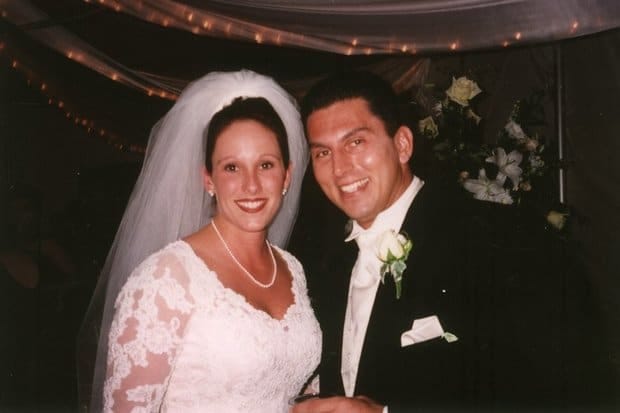
On a warm February afternoon in 2003, 35-year-old Gwendel “Gwen” Greenblatt was living what should have been the prime of her life. A professional dancer turned massage therapist, the Bethlehem, Pennsylvania native had built a beautiful existence in sunny West Palm Beach, Florida. She had recently separated from her husband after discovering his infidelity and was finally reclaiming her independence, planning a future on her own terms. But on February 5, 2003, those dreams would be brutally extinguished in a scenario so chilling that it continues to haunt investigators more than two decades later.
The case of Gwendel Greenblatt represents one of South Florida’s most perplexing unsolved murders—a tangled web of circumstantial evidence, DNA discoveries, and multiple suspects that has left her family searching for justice for twenty-two years. Despite being featured on national television programs, true crime podcasts, and even a deck of playing cards designed to generate new leads, Gwen’s killer remains free, walking among us while her loved ones continue their agonizing wait for closure.
The Final Phone Call
At approximately 3:30 p.m. on that fateful Wednesday afternoon, Gwen Greenblatt was engaged in what seemed like an ordinary phone conversation with her best friend, Christina Vignone. The two women, both navigating the complexities of separation from their husbands, found comfort in their shared experiences. Gwen had just returned home from her job as head massage therapist at the prestigious Breakers Hotel and was likely looking forward to an evening of possibilities in her newfound independence.
But as Gwen entered her apartment at the Royal St. George complex on Brandywine Road, something went terribly wrong. Without warning, Christina heard her best friend let out a scream that would forever be etched in her memory—a sound so primal, so filled with terror, that it immediately signaled something was catastrophically wrong. The phone clattered to the ground, followed by an ominous silence that sent ice through Christina’s veins.
Frantically, Christina dialed Gwen’s home phone, hoping against hope that her friend would answer and explain away the scream as some minor mishap. When no one picked up, she did what any concerned friend would do—she called 911, setting in motion a chain of events that would reveal the horrific truth of what transpired in apartment that afternoon.
A Gruesome Discovery
When West Palm Beach police arrived at Gwen’s residence, they encountered a scene that would trouble even the most seasoned investigators. The apartment door was unlocked, and inside they found evidence of a violent struggle. Gwen’s personal belongings were scattered across the floor, a vase had been knocked over, and her cell phone lay where it had fallen during those final moments of communication with Christina.
But the true horror awaited them in the bedroom. There, crumpled in the walk-in closet bathroom, they found Gwendel Greenblatt—alive but barely clinging to life after being shot twice in the head at close range. The positioning of her body told a heartbreaking story of a woman who had been chased through her own home, desperately seeking safety from an assailant who showed no mercy. She had run into what investigators would later describe as a “dead end,” with nowhere else to turn as her attacker cornered her in the bathroom and delivered the fatal shots.
Gwen was rushed to a nearby hospital, but her injuries were too severe. She died shortly after arrival, leaving behind a grieving family, a devastated best friend who had heard her final screams, and a community struggling to comprehend how such a brutal act could occur in their midst.
The Physical Evidence
From the beginning, investigators believed they had a strong case. The crime scene yielded crucial physical evidence that seemed to point directly to the killer—or killers. Two .380-caliber bullet casings were recovered from the scene, providing clear evidence of the weapon used. But it was three cigarette butts found outside Gwen’s apartment that would become the focal point of the investigation and remain central to the case more than two decades later.
One cigarette was discovered still burning on top of the fire alarm pull box just outside Gwen’s door—a detail so significant that investigators immediately recognized its importance. As Detective William Fraser of the West Palm Beach Police Department later explained, “One of the police officers remarks, ‘Look, the killer left his cigarette butt burning on the fire pull box’ right next to Gwen’s apartment. The killer was just there. I mean it couldn’t have been long if it’s still smoldering.”
This burning cigarette represented a timeline—whoever had been smoking it had been present at the scene mere moments before police arrived, suggesting they had either just committed the murder or were somehow connected to its immediate aftermath. The other two cigarettes were found extinguished on the concrete below, creating a picture of someone—or multiple people—lingering outside Gwen’s apartment around the time of her death.
The Estranged Husband: Matthew Greenblatt
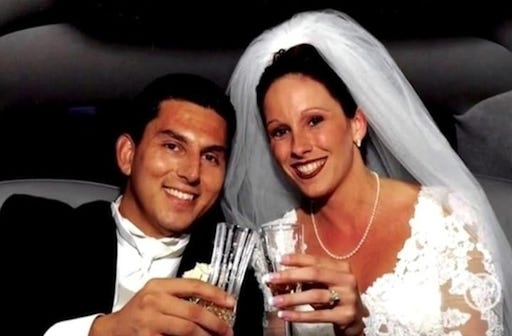
As is often the case in intimate partner homicides, investigators quickly focused their attention on Gwen’s estranged husband, Matthew Thomas Greenblatt. The couple’s marriage, which began with promise on October 11, 1998, had deteriorated after Gwen discovered Matthew’s infidelity. According to her brother, Chad Piotrowski, “A few months after they got married my sister found out that Matthew was cheating on her. They separated. I think he stayed in the house, she got her own condo and they tried to work on it, or at least she did.”
But Gwen had apparently reached a turning point. Christina Vignone recalled a conversation where Gwen told her, “I’m going to be in the same boat as you so we’ll be here together. We’ll make it together.” The implication was clear—Gwen was ready to move forward with divorce proceedings and build a life without Matthew.
This timing proved significant for investigators, who discovered that the couple’s prenuptial agreement contained a clause requiring Matthew to pay Gwen approximately $70,000 in the event of divorce. Here, police believed, was a clear motive—financial gain. If Matthew could eliminate Gwen before the divorce was finalized, he would avoid this substantial financial obligation.
When questioned, Matthew claimed he had been running errands at the time of the murder—getting a haircut, returning a video, picking up pizza. However, investigators found his story problematic. Each time he spoke with detectives, he provided different details, and no witnesses could corroborate his whereabouts during the crucial time window. Perhaps most damningly, he still possessed a key to Gwen’s apartment, providing him with unrestricted access to her home.
The physical evidence against Matthew continued to mount. DNA analysis revealed that one of the extinguished cigarette butts found outside Gwen’s apartment contained Matthew’s genetic material, placing him at the scene. Even more compelling, gunshot residue testing conducted hours after the murder detected “positive for the presence of gunshot residue” on Matthew’s hands—a finding that directly contradicted his claim that he hadn’t fired a weapon in fifteen years.
The Mysterious Richard Engel
Just when investigators believed they had built a solid case against Matthew Greenblatt, DNA analysis of the burning cigarette—the one left smoldering on the fire alarm pull box—revealed a completely different suspect. The genetic material did not match Matthew Greenblatt but instead pointed to a man named Richard Engel, a convicted white-collar criminal who was incarcerated on unrelated federal mail fraud charges when the DNA match was discovered.
The implications were staggering. Here was evidence that a second person had been present outside Gwen’s apartment around the time of her murder—a person with no apparent connection to the victim or her estranged husband. When investigators visited Engel in prison and showed him a photo lineup that included Matthew Greenblatt, Engel claimed he didn’t know any of the individuals pictured. Confronted with the DNA evidence linking him to the burning cigarette, Engel stammered through various explanations but denied any involvement in Gwen’s murder.
The discovery of Engel’s DNA created a complex puzzle for investigators. Was this a case of two men acting in concert? Had Engel been hired by Matthew to assist in the murder? Or was Engel’s presence at the scene merely coincidental, perhaps indicating a completely different scenario than the one investigators had initially constructed?
The Cold Justice Investigation
By 2015, twelve years after Gwen’s murder, her family was desperate for progress in the case. Her brothers, Rob Talijan and Chad Piotrowski, particularly hoped for a breakthrough. Piotrowski, a criminal defense attorney in Miami, understood both the legal complexities of the case and the emotional toll it had taken on their family. When the producers of TNT’s “Cold Justice” expressed interest in featuring Gwen’s case, the family embraced the opportunity.
“Cold Justice,” which pairs former prosecutor Kelly Siegler with former crime scene investigator Yolanda McClary, had established an impressive track record of generating new leads and arrests in cold cases across America. The show’s involvement represented more than just television drama—it brought fresh investigative resources, advanced forensic techniques, and national attention to cases that had languished in local files for years.
The episode featuring Gwen’s case, titled “The Good Life,” aired on June 5, 2015, and presented viewers with a comprehensive examination of the evidence against both Matthew Greenblatt and Richard Engel. The show’s investigators re-interviewed witnesses, re-examined physical evidence, and consulted with prosecutors about the possibility of bringing charges against either suspect.
For Gwen’s family, the experience was both emotionally draining and cautiously optimistic. “We’re hopeful this show can allow an indictment to come to fruition,” Rob Talijan told reporters before the episode aired. “We remain optimistic that we’ll have justice and their level of expertise will let us arrive there.”
The Playing Cards Campaign
In December 2025, the Palm Beach County Crime Stoppers launched an innovative approach to generating new leads in cold cases, including Gwen’s murder. The organization created a special deck of playing cards featuring unsolved homicides, with each card displaying information about a different victim and their case. Gwen Greenblatt became the “Six of Diamonds,” her photograph and case summary distributed throughout the county’s jail system and among the general public.
This creative approach to cold case investigation recognizes that the key to solving long-dormant cases often lies with individuals who possess information but haven’t yet come forward. Perhaps someone who was incarcerated on unrelated charges will recognize Gwen’s case from the playing card and remember a crucial detail. Maybe a former neighbor, coworker, or acquaintance will see the card and finally decide to share what they know.
The playing cards campaign represents both the desperation and determination that characterize cold case investigations. After twenty-two years without an arrest, investigators are willing to try unconventional methods to generate the breakthrough that Gwen’s family so desperately needs.
The Ongoing Investigation
Today, the investigation into Gwen Greenblatt’s murder remains active but unresolved. Detective Aaron Sam of the West Palm Beach Police Department continues to work the case, hoping that advances in forensic technology or changes in witness cooperation might finally provide the evidence needed to bring charges against Matthew Greenblatt, Richard Engel, or perhaps an as-yet-unidentified third party.
The physical evidence that seemed so promising in 2003 has not yielded the definitive results investigators had hoped for. While DNA evidence places both Matthew Greenblatt and Richard Engel at the scene, neither man’s genetic material was found inside Gwen’s apartment, where the actual murder occurred. The gunshot residue on Matthew’s hands, while suspicious, is not conclusive proof that he fired the weapon that killed his estranged wife.
For prosecutors, the case presents a frustrating dilemma. They have motive, they have opportunity, and they have physical evidence placing potential suspects at the scene. But they lack the direct evidence—a confession, eyewitness testimony, or forensic proof definitively linking either man to the murder itself—that would be necessary to secure a conviction in court.
A Family’s Enduring Quest for Justice
For Gwen’s family, the past twenty-two years have been an exercise in patience, faith, and determined advocacy. Her brothers have become amateur detectives in their own right, maintaining active social media campaigns, coordinating with law enforcement, and ensuring that their sister’s case remains in the public consciousness.
Christina Vignone, who heard her best friend’s final screams, has carried the weight of that February afternoon for more than two decades. “A piece of my heart is gone,” she told reporters, her voice still carrying the pain of loss after all these years. The guilt of surviving, of hearing what she heard but being unable to help, is a burden she will carry for the rest of her life.
The family’s persistence has kept Gwen’s case alive when many other cold cases have faded into obscurity. Their willingness to participate in television shows, podcasts, and media interviews reflects both their desperation for justice and their determination to ensure that Gwen is not forgotten.
The Path Forward
As we approach the twenty-third anniversary of Gwen Greenblatt’s murder, the question remains: Who killed Gwen, and why? The evidence points in multiple directions, creating a complex tapestry of suspicion without providing the clarity needed for prosecution.
Was this a case of intimate partner violence escalated to murder, with Matthew Greenblatt eliminating his estranged wife to avoid financial obligations? The DNA evidence placing him outside her apartment, combined with the gunshot residue on his hands and his inconsistent statements to police, certainly supports this theory.
Or was Richard Engel somehow involved, either as a participant in the murder or as an unwitting witness to events he refuses to explain? His DNA on the burning cigarette places him at the scene during the crucial time period, yet his connection to Gwen remains mysterious.
Could both men have been involved, acting in concert for reasons that remain unclear? The possibility of a murder-for-hire scenario, with Matthew enlisting Engel’s assistance, cannot be dismissed given the evidence.
A Call for Justice
The Palm Beach County Crime Stoppers continues to seek information about Gwen Greenblatt’s murder. Anyone with knowledge about the case, no matter how insignificant it might seem, is urged to contact authorities at 1-800-458-8477. Tips can be provided anonymously, and even the smallest detail might prove to be the missing piece that finally brings Gwen’s killer to justice.
For Gwen’s family, every day without answers is another day of incomplete grief. They have endured twenty-two years of holidays without their beloved daughter and sister, twenty-two years of wondering what might have been, twenty-two years of seeing her killer walk free while Gwen lies in her grave.
The murder of Gwendel Greenblatt serves as both a tragedy and a testament—to the persistence of evil, to the dedication of those who seek justice, and to the enduring love of a family that refuses to let their sister’s memory fade into the shadows of unsolved crimes. Until her killer is brought to account, Gwen’s case will remain open, her story unfinished, her justice delayed but never abandoned.
Someone knows what happened in apartment that February afternoon. Someone has the information that could finally close this case and give Gwen Greenblatt the justice she deserves. The question is: Will they find the courage to come forward before another anniversary passes, another year turns, and another family gathering occurs with an empty chair where Gwen should be sitting?
If you have any information about the murder of Gwendel Greenblatt, please contact Crime Stoppers of Palm Beach County at 1-800-458-8477. You can remain anonymous.