


The Murders of Teresa Flores and Martha Mezo
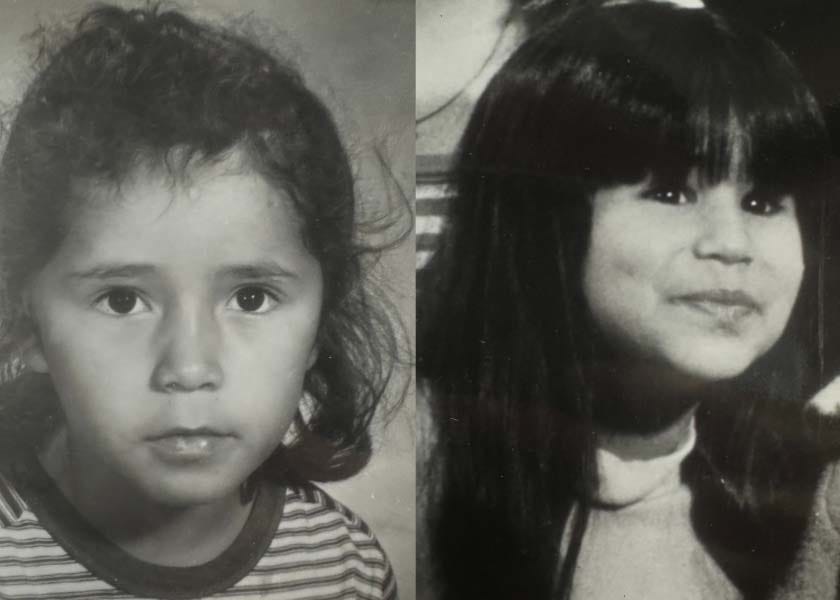
On May 17, 1980, two young girls — five-year-old Teresa Flores and four-year-old Martha Mezo — vanished from the small agricultural town of San Miguel, California. Their abduction and murder shook the community to its core and left a scar that has yet to heal. Despite decades of searching, dozens of persons of interest, multiple investigative pushes, and the rise of forensic science, the killings remain unsolved. Today, however, renewed attention, new DNA analysis, and persistent detective work are bringing the case back into the light.
This article revisits the disappearance, the investigation, the impact, and the renewed hope surrounding one of San Luis Obispo County’s most heartbreaking unsolved crimes.
The Day Teresa and Martha Disappeared
On the morning of May 17, 1980, Teresa and Martha were seen walking together in downtown San Miguel. They had been dropped off near a local market, within walking distance of Martha’s home on Mission Street. Sometime that morning, the girls were reportedly seen stopping briefly at a local bar where a man bought them sodas. After leaving, they were spotted heading toward Martha’s home. That was the last known sighting of them alive.
When the girls didn’t return home, panic set in quickly. The families alerted authorities, triggering an immediate response. Helicopters, patrol cars, horses, and community volunteers blanketed the area. For many older residents, the memory of that chaotic day remains vivid — the sound of helicopters overhead, search dogs barking, and the fear that something terrible had happened.
Despite the massive search effort, no trace of the girls was found that day. As hours turned into days, hope faded.
Discovery of the Bodies
Twelve days later, on May 29, 1980, private contractors working near Camp Roberts stumbled upon a shallow grave in the dry riverbed of the Salinas River. Inside were the bodies of Teresa and Martha.
Investigators confirmed that both children had been murdered. Teresa showed evidence of sexual assault. The brutality of the crime shook even seasoned detectives. Despite this horror, forensic limitations in 1980 presented major challenges. DNA technology was nonexistent, and the evidence available at the time yielded few actionable leads.
The investigation continued, but without strong forensic direction, progress was slow. As months turned into years, the case gradually went cold.
The Early Investigation and Its Challenges
Throughout the 1980s and into the 1990s, the San Luis Obispo County Sheriff’s Office reviewed hundreds of tips and interviewed dozens of potential suspects. Over the years, at least 25 individuals were considered persons of interest. None were ever charged.
The obstacles were enormous:
Minimal forensic capability in 1980. Evidence was collected, but DNA analysis wouldn’t become available for another decade.
Environmental degradation. The bodies had been buried in an outdoor riverbed, likely compromising forensic material.
Witness limitations. Many community members who might have seen something were children at the time, or their memories faded.
Small-town reluctance. Some people may have feared retaliation or didn’t trust law enforcement enough to speak up.
The families suffered deeply as the case stalled. Teresa’s sister Christina visited her sibling’s grave at the San Miguel District Cemetery year after year, praying for answers. Martha’s mother spoke openly about the emotional devastation the murders caused — and how the loss reshaped her entire family.
Their grief only deepened as decades passed without justice.
A Renewed Push: Reopening the Case
In 2019, the case was officially reopened. This time, investigators had something they didn’t have in 1980: modern DNA technology.
Detective Clint Cole of the SLO County Sheriff’s Office began re-examining every detail. Cole and the Cold Case Homicide Unit took a fresh, methodical approach:
• Reviewing old evidence with modern techniques
• Re-interviewing family members and witnesses
• Collecting DNA swabs from past persons of interest
• Contacting individuals now incarcerated who may have been in San Miguel in 1980
• Sending old evidence to private labs for advanced testing
Some of the evidence had been tested previously in 2005, but earlier attempts still produced nothing usable. In recent years, however, new laboratory methods — including improved sensitivity testing — have given investigators hope.
The process hasn’t been easy. A private lab working on key pieces of evidence shut down during the COVID-19 pandemic, slowing momentum. Still, investigators have continued pushing forward, and the case is described as “highly active.”
A Community Reawakens: Billboards, Media, and New Attention
Over 40 years after the murders, a new wave of awareness has emerged.
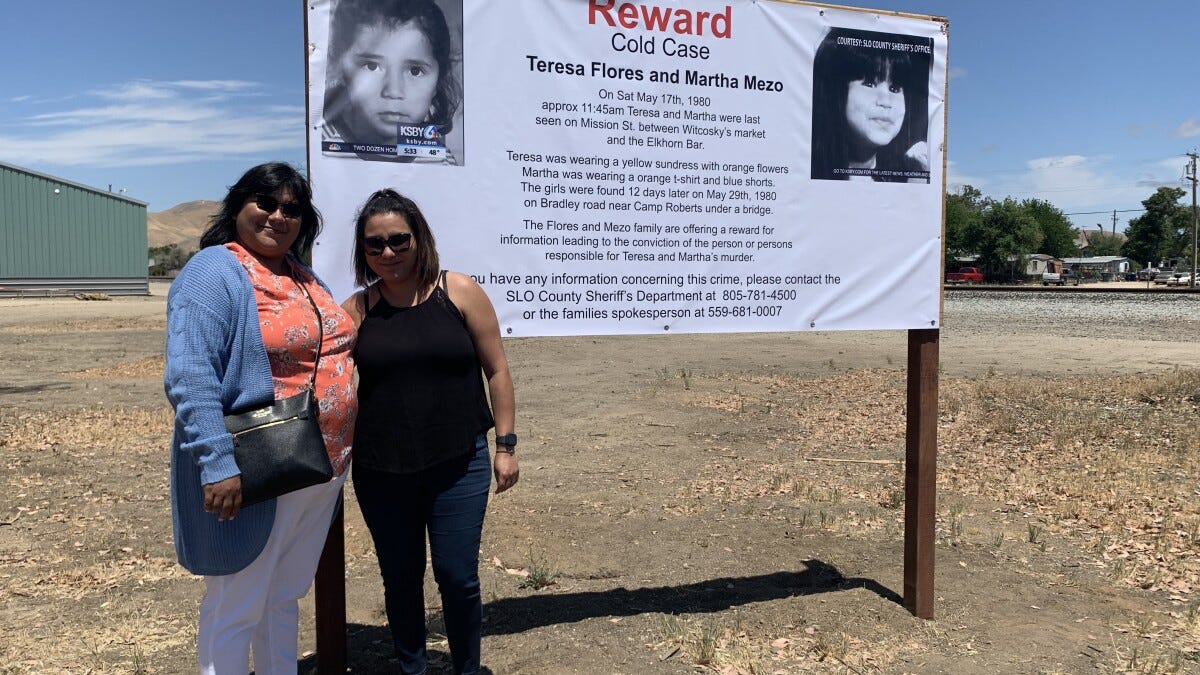
In May 2021, on the 41st anniversary of the girls’ disappearance, the families unveiled a large billboard in San Miguel. It displayed the girls’ photos and asked the public for tips. The purpose was simple: someone, somewhere, remembers something.
The families also began raising funds to offer a $25,000 reward for information.
Around the same time, media coverage surged. Local stations revisited the case, and multiple interviews with Detective Cole were broadcast. In 2025, the true-crime podcast Crime Junkie featured the case, bringing national attention and renewed public pressure for answers.
The combination of media exposure, new forensic analysis, and family advocacy has breathed new life into a case many assumed was permanently stalled.
What We Know Today
After decades of stagnation, several key facts are now clearer:
• The girls were last seen the morning of May 17, 1980, near downtown San Miguel.
• They were believed to be walking to Martha’s home.
• They may have interacted briefly with an adult man who bought them sodas.
• Their bodies were discovered twelve days later in a riverbed near Camp Roberts.
• Teresa had been sexually assaulted.
• A ligature or binding was reportedly found on at least one of the victims.
• Over 25 people were considered persons of interest, but none were arrested.
• The case was reopened in 2019 using modern DNA methods.
• The investigation is ongoing, with new evidence re-tested and new interviews conducted.
What remains unknown:
• The identity of the killer
• Whether more than one perpetrator was involved
• The precise details of how the girls were abducted
• How they were transported to the Salinas River
• Why this crime occurred
• Whether the killer is still alive
These unanswered questions continue to weigh heavily on the families and the community.
The Emotional Toll
For Teresa and Martha’s families, the pain never went away.
Teresa’s sister Christina has said she is haunted by the thought that her sister’s killer is still out there. She remembers the chaos of the initial search — the crowds, the helicopters, the fear.
Martha’s mother has described the grief as permanent, altering the entire fabric of their family. She has expressed gratitude for the renewed interest in the case, but also heartbreak that so much time has passed.
Both families continue to advocate for justice. Their perseverance is a powerful reminder that cold cases don’t fade from the hearts of those who loved the victims.
Obstacles Still Facing the Investigation
Several factors continue to hinder investigators:
Evidence degradation. Outdoor burial environments are harsh on physical evidence.
Lost or missing witnesses. People move, die, or forget details after 45 years.
Fear or guilt. Some individuals may have withheld information out of loyalty, shame, or fear.
Technological limits. Even today, not all evidence will yield usable DNA.
Time itself. The longer a case sits, the harder it becomes to solve — but not impossible.
Despite these challenges, law enforcement remains optimistic. Detective Cole has repeatedly stated that progress has been made and that the investigation is moving in the right direction.
Why the Case Matters Today
The murders of Teresa Flores and Martha Mezo represent more than a single tragedy. They underscore bigger themes in criminal justice, community safety, and memory.
• The vulnerability of children. The girls’ disappearance shows how quickly danger can strike, even in small, seemingly safe towns.
• The evolution of forensic science. What was once unsolvable may now be solvable thanks to DNA technology.
• The psychological impact of cold cases. Families endure decades of pain, uncertainty, and the emotional toll of unanswered questions.
• The importance of community memory. Sometimes, justice hinges on someone’s long-buried recollection — a detail that seemed insignificant at the time.
Keeping this case in public awareness increases the likelihood of someone coming forward.
What Could Happen Next
There are several potential pathways to solving the case:
A DNA match. Evidence currently being tested may yield a profile that matches someone in a criminal database.
A new witness. Someone may remember something, or finally feel safe enough to speak.
A confession. Not uncommon in old cases, especially from elderly or incarcerated individuals.
A re-evaluation of old suspects. Fresh forensic tools might re-examine past persons of interest in new ways.
Public pressure. Continued awareness encourages law enforcement to prioritize the case.
Although these murders occurred 45 years ago, solving them is still possible — and in recent years, dozens of cases older than this one have been solved across the United States.
Remembering Teresa and Martha
Teresa Flores and Martha Mezo were two little girls full of life, innocence, and promise. Their lives were stolen in a brutal act that shocked a town and shattered families.
For decades, their story has remained a painful chapter in San Miguel’s history. But today, thanks to renewed investigative effort and public interest, the case is more active than it has been in decades.
Someone knows something. Someone saw something. Someone remembers.
Now is the time to speak.
Justice for Teresa and Martha is long overdue — but not out of reach.