


The Murder of Lila G. Leach: A 15-Year Cold Case Still Haunting Alachua County, Florida
The murder of 96-year-old Lila G. Leach remains one of the most disturbing and heartbreaking cold cases in Alachua County, Florida. More than fifteen years have passed since the gentle, soft-spoken grandmother was brutally attacked inside her Newberry home, and despite DNA evidence, public appeals, billboards, and renewed investigative efforts, the person responsible has never been identified. For her family—and the community—Lila’s case represents an open wound, a haunting reminder that justice delayed is justice denied.
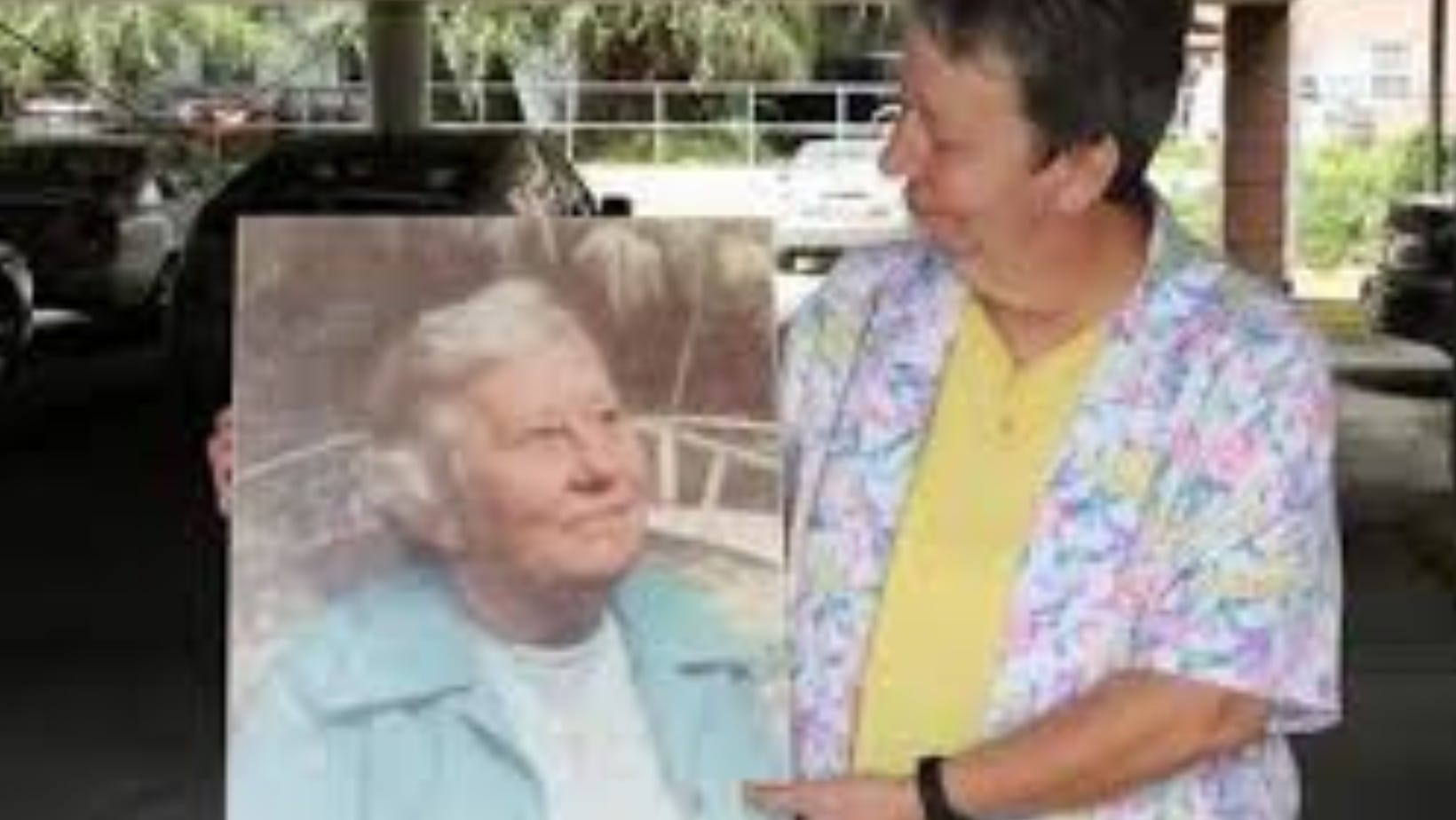
Who Was Lila G. Leach?
Lila G. Leach was born in 1914 and lived nearly a century. At 96 years old, she was still known as bright, witty, and full of love for the simple things in life. Her family described her as someone who loved butterflies, dragonflies, car rides, and family visits. Her granddaughter once said that every Christmas, the family hangs a butterfly or dragonfly ornament on their tree to honor her memory.
At the time of her murder, Lila lived alone in a modest home in Newberry, Florida. She used a walker to get around and depended on daily visits from her family. They had a set schedule—morning meal, afternoon check, evening check—and Lila’s life was stable and calm. Although she lived independently, she was never alone for long stretches, making the timing of her attack particularly chilling.
The Day Everything Changed: July 16, 2010
On July 16, 2010, Lila began her day normally. A relative visited her that morning and brought breakfast. Later in the day, when another family member returned, they walked into a nightmare that would forever change their lives.
Sometime between lunchtime and late afternoon, someone entered Lila’s home and brutally attacked her. She was beaten in an extremely violent manner—so violent that every bone in her face was broken. The house showed signs of a struggle and disorder. Blood was found in both the living room and bedroom.
Lila was rushed to the hospital, but her injuries were catastrophic. She survived the initial trauma but never regained consciousness. For weeks she lay unresponsive, and on September 6, 2010—just shy of two months after the attack—Lila died from her injuries.
Her death changed the trajectory of her entire family. Even now, her granddaughter says the trauma “changed the fabric of our family.”
Inside the Crime Scene: Brutality and Confusion
The crime scene at Lila’s home revealed several important clues, though none have yet led to an arrest.
Investigators determined:
Lila had been violently beaten during daylight hours.
The attack occurred sometime between a morning visit and the afternoon check-in.
The home showed clear signs that someone had searched or ransacked certain areas.
Lila’s cellphone was the only confirmed item missing.
DNA evidence was recovered from the scene.
Testing identified that at least one male was present in the home.
One of the biggest questions has always been motive. Because Lila was elderly, frail, and living alone, some suspected a burglary. Yet nothing of value appeared to be missing except her cellphone. The level of violence seemed excessive for a simple robbery and suggested rage, panic, or an attempt to silence a witness—even one who posed no physical threat.
Other observations suggested the possibility of more than one attacker. The home was ransacked as if someone had been searching for something, yet Lila had been beaten with enormous force. It raised the unsettling possibility that one person harmed her while another searched. This theory has never been proven publicly, but investigators and family members have acknowledged it as a possibility.
Did Lila Know Her Attacker?
Another question investigators had to consider: Did Lila open the door willingly?
There were no public reports of forced entry, though authorities have not definitively confirmed or denied this detail. If the attacker came through an unlocked door, that could also explain the lack of damage.
However, considering the timing of the attack—broad daylight, between regular family visits—some wondered whether the attacker had knowledge of the family’s routine. Lila’s schedule was steady and predictable. Anyone familiar with the household might have known how long she typically spent alone.
Still, investigators have never stated that the attacker was someone she knew personally. The case remains open to multiple possibilities.
Early Investigation and DNA Evidence
The Alachua County Sheriff’s Office launched a full investigation immediately after Lila’s attack. Detectives collected DNA evidence from the scene, giving them hope they would soon identify the suspect. Investigators have confirmed that the DNA belonged to a male, and over the years they have eliminated at least nineteen individuals through comparison testing.
Although DNA was recovered, the profile did not match anyone in available state or federal databases. This has been one of the most frustrating barriers to progress. Without a database match—or someone stepping forward—investigators must rely on continued advancements in forensic technology.
Lila’s family also fought tirelessly to keep the case in the public eye. A Facebook page called “Justice for Lila G. Leach” was created. A billboard displaying Lila’s photo and a plea for information was placed along busy Newberry Road. News outlets continued to run periodic features on the case, particularly around anniversaries of the attack.
Yet despite all these efforts, the case grew colder with time.
The Family’s Pain: A Decade of Grief and No Answers
Years passed, and with them came deep emotional trauma for Lila’s family. They have spoken openly about the nightmares, the what-ifs, the reliving of the moment they found her. They have said repeatedly that Lila “did not deserve to die this way” and that the brutality shocked even those used to working homicide cases.
Lila’s granddaughter has said: “We haven’t had any peace. This changed everything for us. Even at 14 years, it’s still stunning.”
More than anything, the family wants dignity for Lila—dignity in how she is remembered, and dignity in seeing those responsible held accountable.
Renewed Interest: 10 Years Later, Then 15 Years Later
On the 10-year anniversary in 2020, local news stations ran new segments highlighting the case. Detectives reiterated they had DNA evidence and encouraged anyone with information to come forward. The sheriff’s office maintained hope due to advances in forensic methods.
In 2025—the 15-year anniversary—the case once again appeared on the news. Former Sheriff Sadie Darnell said she still believed modern DNA techniques could break the case open. Investigators confirmed that nineteen potential suspects had been ruled out after DNA comparison, but they continued searching for a match.
The Sheriff’s Office, Crime Stoppers, and Lila’s family have collectively offered a reward—most recently reported as $8,000—for information leading to an arrest. While rewards do not always solve cases, they can inspire someone to speak up who might otherwise stay silent.
Could Forensic Genealogy Solve This Case?
One of the biggest developments in cold case investigations over the past decade has been forensic genealogy—the method used to solve the Golden State Killer and hundreds of other cases.
It is not publicly known whether Lila’s DNA evidence has been submitted for genealogical testing. However, given how many cold cases are now being solved through this method, it is a promising possibility.
If family-tree mapping were conducted, even a distant relative of the attacker could provide the pathway needed to identify a suspect.
Given the extremely violent nature of the attack and the presence of DNA, Lila’s case is a strong candidate for this technique.
Why This Case Still Matters
Lila’s murder matters for many reasons:
She was a vulnerable, elderly woman who should have been safe in her own home.
Her family has endured more than fifteen years of unanswered questions.
Her attacker—or attackers—may still be in the community.
Solving the case provides justice not only for Lila but for other potential victims her killer may have harmed.
Cases involving elderly victims often evoke strong emotions because they violate a deep societal expectation—we protect our elders; we care for them. That someone would destroy the life of a 96-year-old woman so brutally shakes the moral foundation of a community.
What Investigators Need from the Public
Investigators continue to urge anyone with information—no matter how small—to come forward. Even a memory that seems insignificant could become the missing link that finally solves the case.
Investigators ask for help with:
• Information about suspicious individuals seen in Newberry around July 16, 2010
• Knowledge of anyone who suddenly left the area at that time
• Tips about people known for break-ins, burglaries, or violent behavior during that period
• Information about individuals who acted strangely after the murder
• Any knowledge about someone who might have had access to Lila’s routine or home
Even if a person is deceased now or lived nearby only temporarily, investigators want to know.
This is not a case where the family seeks revenge. They want closure, justice, and the recognition that Lila’s life mattered.
Tip Line Information
Anyone with information is urged to contact:
Alachua County Sheriff’s Office – Cold Case Investigator
Todd Hand
Phone: 352-367-4164 or 352-756-3308
Or remain anonymous by contacting:
Crime Stoppers of Alachua County
Phone: 352-372-STOP (7867)
The Legacy of Lila G. Leach
More than fifteen years later, Lila’s murder still weighs heavily on Newberry and Alachua County. A woman who lived nearly a century—surviving wars, economic upheavals, and the loss of loved ones—had her life taken violently in her own home.
Her family continues to fight. Community members still remember her. And investigators remain committed to solving the case.
As long as her killer remains unidentified, the story is not over.
Someone knows something. Someone saw something. And someone can still help bring justice to a beloved 96-year-old grandmother who deserved far better.