


The Silent Door: How a Single DNA Trace Broke the 2012 Murder of Joseph Godcharles
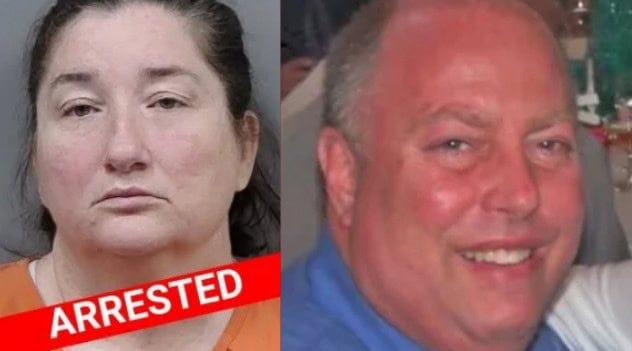
The morning of August 1, 2012, began like any other summer day in North Naples, Florida. Sunlight filtered through the manicured palms of the Key Royal Villas, a gated condominium community tucked just off busy Immokalee Road. But inside Building 14, Unit 202, a quiet horror waited to be discovered. Joseph Godcharles, a 48-year-old father and well-liked Walgreens store manager, lay motionless in the master bedroom of his second-floor condo. He had been stabbed repeatedly the night before, and the person who killed him had left the front door ajar, as if inviting the world to witness what had been done.
No one heard screams. No neighbors reported a struggle. When Godcharles’ teenage son arrived the next morning to check on his father—alarmed that calls had gone unanswered overnight—he found the door unlocked, the apartment silent, and the lifeless body sprawled across the bedroom floor. Collier County deputies arrived within minutes. Homicide detectives noted immediately that nothing about the scene suggested forced entry. No broken glass, no pried locks, no ransacked drawers. The killer, it seemed, had been admitted without hesitation. Whoever walked out hours later left behind only blood, grief, and a single nagging question: why would a man described by friends as “the kind of guy who would give you the shirt off his back” open his door to death?
The first 48 hours of any murder investigation are critical, and detectives worked through the sweltering weekend canvassing neighbors, pulling surveillance video from the gated entrance, and cataloging every fingerprint and shoe impression inside the apartment. A timeline emerged quickly. Security cameras recorded Godcharles steering his silver Hyundai through the community gates at 8:24 p.m. on July 31. He was alone. That timestamp became the last confirmed moment he was seen alive. By sunrise, he was gone.
Investigators compiled a list of acquaintances, co-workers, former partners, and pharmacy customers. Godcharles had managed the Walgreens in nearby Immokalee for years, overseeing a staff that adored him for his calm demeanor and willingness to cover any shift. He collected vintage vinyl records, planned spur-of-the-moment road trips to Key West, and doted on his two children. Friends insisted he had no known enemies, no gambling debts, no illicit side hustles—nothing that would invite violence into his home. Yet the absence of a break-in meant the attacker was either let inside or possessed a key. Detectives quietly began focusing on the inner circle.
Among the names that surfaced early was Julie Ann Krinsky. Then 40, Krinsky was a licensed practical nurse who had known Godcharles since the late 1990s. Their friendship had turned romantic for a brief stretch, ended amicably, and settled into what mutual acquaintances described as a supportive, if sometimes complicated, bond. Krinsky had visited the condo countless times; she knew the layout, the alarm code, the location of spare keys. When detectives interviewed her two days after the murder, she admitted stopping by the previous week to borrow a cooler for a beach outing. She spoke of Godcharles in the past tense, eyes red, voice catching. Investigators logged her statements, collected the clothing she wore the night of the murder, and swabbed her hands for trace evidence. At the time, nothing directly contradicted her account.
Weeks turned into months. The Collier County Sheriff’s Office assigned a succession of detectives to the case, each inheriting boxes of reports, DVDs of surveillance footage, and binders of lab results. Forensic technicians had recovered microscopic fibers, a partial palm print on the bedroom dresser, and several drops of blood that did not match the victim. Yet every comparison sample from friends, family, and known offenders came back inconclusive. The case file grew thicker, but the leads grew colder.
In 2017, Detective William Still took over the investigation. In a brief interview with the Naples Daily News, he admitted that the most frustrating aspect was how easily an innocent explanation could cover every piece of physical evidence. “If an associate or family member is our bad guy and they’ve had contact with our victim, they can say, ‘Well, I’ve been to the house a million times,’” Still said. “We’re looking for that one element the assailant would have a difficult time explaining away in court.” He hinted that DNA remained the best hope, but the technology of the day could not separate commingled samples with sufficient precision.
While detectives chased down new tips, Julie Krinsky built a life two hours north in Beverly Hills, Florida, a quiet Citrus County town of ranch houses and orange groves. She remarried, earned promotions at Florida Cancer Specialists & Research Institute, and became a lead nurse trainer in 2020. On professional networking sites, she highlighted her passion for patient care and her pride in mentoring younger clinicians. Few, if any, of her new colleagues knew of the long-ago murder in Naples or her connection to the victim. Each December, she posted cheerful holiday photos—sunlight streaming across her porch, dogs lounging by the pool, motivational quotes about resilience. Outwardly, she appeared to have moved on.
Inside the Collier County Sheriff’s Office Cold Case Unit, however, the Godcharles file never left the top of the stack. In 2023, detectives learned that a private laboratory had refined a technique known as probabilistic genotyping, which can tease individual DNA profiles from mixtures so dilute or degraded that earlier software rendered them useless. Detectives resubmitted the blood drops found on the bedroom’s baseboard, the touch DNA lifted from the dresser, and the scrapings taken from beneath Godcharles’ fingernails. For months they waited while algorithms compared thousands of genetic possibilities against Florida’s ever-expanding offender database.
The call came in October 2025. A forensic analyst reported that one of the baseboard blood samples contained a partial profile consistent with a woman. The statistical weight was modest—too low for an arrest—but the lineage pointed unmistakably toward Julie Krinsky. Investigators now had scientific corroboration for the nagging suspicion that had lingered for thirteen years. They launched an intensive background review, re-interviewing old witnesses, subpoenaing cell-phone tower dumps from July 2012, and seeking any evidence that might place Krinsky inside the condo after 8:24 p.m. on the night of the murder.
According to the arrest affidavit, the final break arrived when detectives obtained a discarded DNA sample from Krinsky’s household trash. Beverly Hills is unincorporated, and residents wheel their bins to the curb for county collection. Undercover deputies followed the route, retrieved the can liner on pickup day, and delivered coffee cups, soda cans, and dental floss to the lab. The profile extracted from a disposable water bottle matched the blood found in Godcharles’ bedroom with a probability so high that analysts said they would expect to see it only once in 7.2 quintillion random individuals. On December 11, 2025, Judge Janeice Martin signed a warrant charging Julie Krinsky with second-degree murder with a weapon.
The takedown was deliberately low-key. Detectives learned that Krinsky left her house each weekday shortly after 6:30 a.m. for the 45-minute commute to the cancer clinic in Crystal River. On the morning of December 12, surveillance teams watched her lock the front door, step into a white Honda CR-V, and back down the driveway. Uniformed deputies blocked the street, ordered her out at gunpoint, and handcuffed her before neighbors realized what was happening. She said nothing as investigators read her Miranda rights and placed her in the rear of an unmarked SUV. By nightfall, she was booked into the Citrus County Jail, awaiting extradition to Collier County.
At a press conference that afternoon, Sheriff Kevin Rambosk stood before a bank of television cameras and thanked the generations of detectives who refused to let the case gather dust. “Justice may take time,” he told reporters, “but it doesn’t expire.” State Attorney Amira Fox praised the Cold Case Homicide Unit, formed in 2021, for leveraging both new technology and old-fashioned persistence. She declined to discuss a precise motive, citing the ongoing investigation, but confirmed that prosecutors would argue the murder arose from a “personal betrayal” rather than a botched robbery. Sources close to the inquiry say Krinsky and Godcharles had argued in the weeks leading up to the stabbing, possibly over money she had lent him during a brief period of unemployment. Whether that dispute escalated into violence, or whether darker emotions simmered beneath the surface, will likely be explored at trial.
For Godcharles’ family, the arrest reopened wounds that had never fully healed. His son, now in his thirties, told a local television crew that he had driven past the Key Royal Villas every August 1 since high school, replaying the moment he found his father’s body. “I always hoped this day would come,” he said, voice cracking. “But hoping doesn’t make the nights any shorter.” Friends have launched a scholarship in Godcharles’ name for pharmacy students at Florida Gulf Coast University, ensuring that the man who spent his life filling prescriptions and offering calm advice will still shape young caregivers decades after his death.
Julie Krinsky remains incarcerated without bond. Court records show she has retained a prominent Fort Myers defense attorney who specializes in DNA litigation. Legal analysts expect pretrial hearings to focus on the reliability of probabilistic genotyping and the manner in which her discarded DNA was collected. Whatever the outcome, the case already stands as a testament to the evolving science of forensic identification and the stubborn dedication of investigators who refuse to forget.
In the quiet hallways of the Collier County Sheriff’s Office, the Godcharles file has finally moved from the cold-case cabinet to the active-prosecution shelf. Yet detectives insist the work is far from finished. Somewhere in the evidence locker, a single, faded photograph still shows the front door of Unit 202 ajar—an ordinary wooden slab that became the threshold between friendship and fatality. The picture reminds them that every closed door can hide a decade-old secret, and every microscopic trace can speak for the voiceless if the right technology, and the right determination, learns how to listen