


The morning of December 3, 2025, should have marked the beginning of a new chapter for Charity Powell-Beallis. Just 24 hours earlier, the 40-year-old mother had attended what should have been the final divorce hearing from her estranged husband, Dr. Randall Beallis—a man she had spent months trying to escape. Instead, deputies from the Sebastian County Sheriff’s Office discovered a scene that would shock the small Arkansas community of Bonanza and leave a family searching for answers that may never come.
Inside the sprawling mansion on the 1100 block of 1st Avenue, Charity lay dead alongside her six-year-old twins, all victims of gunshot wounds. The welfare check that led to their discovery had been prompted by concerned individuals who hadn’t heard from the family. What investigators found would transform what should have been a story of liberation into one of Arkansas’s most troubling recent homicide cases—a case that raises disturbing questions about the protection offered to domestic violence victims and the systems meant to safeguard them.
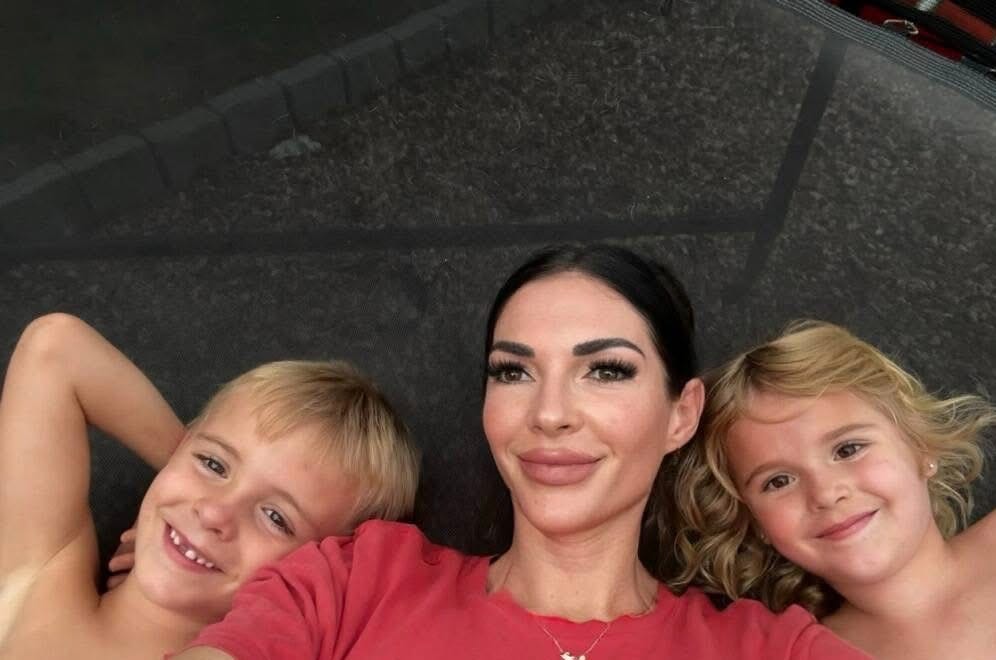
A Marriage Unraveled
The Beallis marriage, which began in 2015, had deteriorated rapidly in its final months. According to divorce records, the couple stopped living together in February 2025, the same month that would mark a turning point in their relationship—and ultimately, in Charity’s desperate quest for safety.
On February 16, 2025, Dr. Randall Beallis was arrested and charged with aggravated assault on a family member, third-degree domestic battery, and two counts of third-degree endangering the welfare of a minor. Court documents alleged that he had choked Charity and caused her physical harm during what appeared to be a domestic violence incident. The arrest marked the beginning of what would become a nine-month battle for Charity—a battle she would ultimately lose.
Despite the serious nature of the charges, the case took a turn that would later become a point of significant controversy. In October 2025, Randall pleaded guilty to only one charge: third-degree battery. His punishment? A one-year suspended sentence and $1,500 in fines. Most significantly, he was ordered to have no contact with Charity or any members of her family unless authorized by a valid court order—a restriction that Charity had specifically requested and approved.
The plea deal, while providing some measure of legal protection, would prove to be woefully inadequate in preventing further tragedy. Charity, recognizing the danger she faced, had filed for divorce on March 5, 2025, less than three weeks after the alleged assault. In her divorce filing, she sought full custody of their children and a protective order for herself and the twins—a request that underscored her ongoing fear for their safety.
The System’s Failure
The inadequacy of the legal system’s response to Charity’s plight became starkly apparent in the months leading up to her death. In August 2025, Charity took the unusual step of commenting publicly on a local news article about domestic violence, writing: “I’m living this battle right now. I am the victim, yet I’ve been treated like the problem while the criminal — a local doctor — is being shielded by the very system that’s supposed to protect us.”
Her comment continued with a damning assessment of the local justice system: “I’ve tried to reach Prosecuting Attorney Daniel Shue, but he won’t even accept a letter from me. My voice, as the victim, has been shut out. This is not just about me — this is about a system that protects offenders and rejects victims. Lives are at stake, including the lives of young children.”
These words, written just four months before her death, read now as a chilling prophecy. Charity’s frustration with what she perceived as a system that failed to take her fears seriously would prove to be tragically justified. Her case highlights a troubling pattern in domestic violence situations where victims feel their concerns are minimized or ignored until it’s too late.
The involvement of multiple agencies in the investigation—including the Sebastian County Sheriff’s Office, Arkansas State Police, Bonanza Police Department, Greenwood Police Department, Fort Smith Police Department, and the Sebastian County Prosecutor’s Office—suggests the complexity and seriousness of the case. The addition of federal assistance from the United States Secret Service and Homeland Security Investigations further indicates the resources being devoted to solving these murders, though as of this writing, no arrests have been made.
The Final Hearing
December 2, 2025, should have been a day of closure for Charity Powell-Beallis. She and Randall attended what was scheduled to be their final divorce hearing at the Sebastian County Courthouse in Fort Smith. The proceedings, held in CourtConnect, were meant to finalize the dissolution of their marriage and establish the legal framework for their separation going forward.
However, the outcome of that hearing remains shrouded in mystery. While court records confirm the hearing took place, there are no publicly available documents referencing its final outcome or decisions made regarding custody, property division, or ongoing protective measures. This gap in the public record has become a focal point for investigators and family members alike, who are trying to piece together what happened in those crucial final hours before the murders.
What is known is that less than 24 hours after leaving the courthouse, Charity and her twins were dead. The timing—a mere day after the final divorce hearing—has led to intense speculation about whether the murders were connected to the legal proceedings. The proximity of these events has not been lost on investigators, who have acknowledged the significance of the timeline while remaining tight-lipped about specific details of their investigation.
A Family’s Grief and Search for Justice
The impact of this tragedy extends far beyond the immediate victims. Charity’s family has been left to grapple with not only their grief but also with frustration over what they see as a preventable loss. John Powell, Charity’s 24-year-old son from a previous relationship, has been particularly vocal in his criticism of the system that failed to protect his mother and siblings.
“My mother fought for nine months, the last nine months, to save her life and them babies, and nothing happened,” Powell told local news outlet KNWA FOX24. “Now all three of them is dead.” His words capture the raw emotion and sense of injustice felt by family members who watched Charity’s desperate attempts to secure safety for herself and her children.
Powell’s assertion that his mother “went out with a fight” suggests that Charity did not passively accept her fate, adding another layer of tragedy to the story. The image of a mother fighting desperately to protect her children, only to be failed by the very systems designed to help her, has resonated throughout the community and beyond.
Charity’s father, Randy Powell, expressed the family’s devastation in particularly poignant terms: “Two of them — six years old — that never done anything to anybody. Perfect, beautiful children that will never take another breath.” His words highlight the particularly cruel nature of this crime, which claimed not only Charity’s life but also those of two innocent children who had their entire lives ahead of them.
The Investigation Unfolds
As the investigation enters its second week, authorities have released few details about what they’ve discovered. According to the Sebastian County Sheriff’s Office, twelve search warrants are “in process,” with six already served. Multiple interviews have been conducted, autopsy results are pending, and “a large amount of evidence has been collected.”
The involvement of federal agencies, including Homeland Security Investigations, suggests that investigators are treating this case with the utmost seriousness and may be pursuing leads that extend beyond state lines. However, the sheriff’s office has been careful to state that they do not believe there is an ongoing threat to the public—a statement that provides little comfort to those seeking answers about who committed these murders and why.
One particularly telling detail emerged when Randall Beallis’s attorney filed a motion to dismiss the divorce case on December 4, citing that “the plaintiff passed away.” The clinical nature of this legal maneuver, coming just a day after the discovery of the bodies, struck many observers as disturbingly impersonal given the circumstances.
Despite the timing of the murders and the history of domestic violence, authorities have not named any suspects in the case. Dr. Beallis, through his attorney, has stated that he is cooperating fully with the investigation and supports the efforts of law enforcement. His attorney has emphasized that Randall is not considered a suspect as of the latest updates, though investigators have been careful not to rule out any possibilities.
The Broader Implications
The Charity Powell-Beallis case has become a flashpoint for discussions about domestic violence protection in Arkansas and beyond. The tragic outcome has prompted questions about whether enough was done to protect Charity and her children, and whether different decisions by law enforcement, prosecutors, or the court system might have prevented this outcome.
The case highlights several troubling aspects of how domestic violence cases are handled:
Plea Bargaining Concerns: The decision to allow Randall Beallis to plead guilty to a single misdemeanor charge rather than face trial on the more serious felony charges has drawn criticism. Critics argue that plea deals in domestic violence cases can send the wrong message to offenders and fail to provide adequate protection for victims.
Protective Order Limitations: While Charity had obtained a no-contact order, its effectiveness in preventing violence has been called into question. The fact that she and her children were murdered just a day after a court proceeding suggests that legal protections alone may be insufficient in high-risk situations.
Systemic Communication Breakdowns: Charity’s public comments about being unable to reach prosecutors and feeling that her voice was “shut out” point to potential communication failures within the justice system. Her sense that the system was protecting her abuser rather than supporting her as a victim reflects a broader concern about how domestic violence cases are prioritized and managed.
Resource Allocation Questions: The involvement of multiple law enforcement agencies and federal resources in the investigation, while welcome, raises questions about whether similar resources were devoted to preventing the crime. Many domestic violence advocates argue that prevention resources are chronically underfunded compared to investigation resources.
Moving Forward
As the investigation continues, the community of Bonanza and the broader Arkansas public are left to grapple with the implications of this tragedy. The case has prompted calls for reform in how domestic violence cases are handled, with particular attention to the plea bargaining process and the enforcement of protective orders.
For Charity’s family, the immediate focus remains on seeking justice for their loved ones while honoring their memory. The twins, whose names have not been publicly released, represent the most innocent victims of this tragedy—children caught in a situation they neither caused nor could escape.
The mansion on 1st Avenue, once a symbol of the Beallis family’s apparent success, now stands as a grim reminder of how domestic violence can destroy lives regardless of socioeconomic status or community standing. The property, which became a crime scene on December 3, has likely seen its final days as a family home.
The Murder of Charity Powell-Beallis
The murder of Charity Powell-Beallis and her six-year-old twins represents more than just another tragic crime story. It serves as a devastating example of how domestic violence can escalate to its most extreme conclusion, even when victims take all the “right” steps—filing for divorce, seeking protective orders, cooperating with law enforcement, and attempting to work within the legal system.
As investigators continue their work, the case remains open and active. Whether justice will ultimately be served remains to be seen, but what is certain is that three lives have been lost and a family has been forever changed. The true measure of our response to this tragedy will be whether we use it as motivation to improve the systems meant to protect domestic violence victims, ensuring that Charity’s death—and the deaths of her innocent children—were not completely in vain.
For now, the case file remains open, the investigation continues, and a community waits for answers that may provide some measure of closure. But for those who knew and loved Charity Powell-Beallis and her children, no resolution can undo the loss of what might have been—a mother free from fear, children safe from harm, and a family given the chance to heal and rebuild.
The story of Charity Powell-Beallis is ultimately a story of a system that failed when it was needed most. It serves as a call to action for better protection of domestic violence victims and a reminder that until we address the root causes of domestic violence and improve our response systems, tragedies like this will continue to occur. The question now is whether we will learn from this loss or whether it will become just another statistic in the ongoing epidemic of domestic violence that plagues our society.
If you or someone you know is experiencing domestic violence, please contact the National Domestic Violence Hotline at 1-800-799-7233 or visit thehotline.org for confidential support and resources.
So angry at how many women die at the hands of a person they no longer love, and also their children not being protected either. Why are we protecting men who kill their families?