


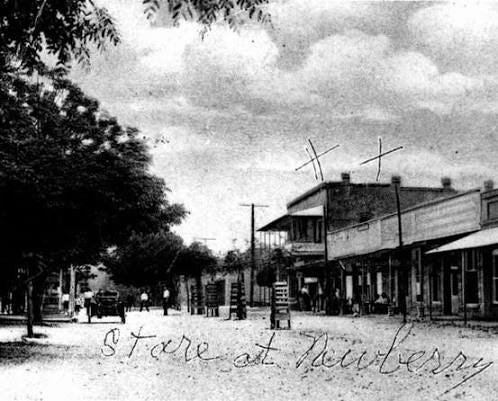
In the sweltering pre-dawn humidity of August 18, 1916, a single shotgun blast shattered the quiet pines of Jonesville, Florida, a small agricultural hamlet ten miles west of Gainesville.
By the time the sun set the following evening, six African American citizens were dead. Five bodies hung limp from the moss-draped branches of a live oak grove just outside the town of Newberry. Among them was a pregnant woman and a local minister. Another man lay dead in a nearby field, riddled with posse buckshot. Weeks later, the man at the center of the original dispute would hang from an official county gallows after an all-white jury took all of seven minutes to seal his fate.
For decades, the event was either scrubbed from official county records or spoken of only in guarded whispers. Locally, the picnic grounds along modern State Road 26 earned a sinister colloquial name: Lynch Hammock.
This is the forensic reconstruction of the Newberry Six Lynchings—how a dispute over livestock curdled into state-sanctioned mob terror, the systematic cover-up that protected prominent town fathers, and the decades-long excavation that finally brought names to the victims.
THE MIDNIGHT AMBUSH
The conflict originated not in an armed standoff or a major crime, but in a routine, often pretextual accusation of property theft.
Boisey Long, an industrious Black farmer and day laborer living in Jonesville, had been accused of stealing hogs from white neighbors. While such accusations in the Jim Crow South were frequently weaponized to settle economic grudges or reassert racial dominance, Newberry Constable George Wynne decided to settle the matter outside normal daylight procedures.
Around 2:00 a.m. on Friday, August 18, Constable Wynne arrived at Long’s home accompanied by a local physician, Dr. L. G. Harris. They carried no formal search warrant that was ever successfully entered into surviving legal records, nor did they wait for daylight or county deputies.
Accounts from inside the cabin preserved by family oral histories and subsequent trial testimonies describe a chaotic breach. Armed men entered or broke through the doorway in total darkness. Long, believing he was under assault by night-riders, seized a shotgun.
Gunfire roared inside the small timber cabin. Constable Wynne collapsed, mortally wounded with buckshot wounds to the abdomen and chest. Dr. Harris was wounded but survived. In the ensuing confusion, Long—bleeding from gunshot wounds himself and wearing only his nightclothes—fled out the back door and melted into the dense palmetto scrub and cypress swamps of western Alachua County.
Constable Wynne was carried into Newberry and placed aboard an Atlantic Coast Line train bound for medical treatment in Jacksonville. He died before sunset.
THE SPREAD OF THE POSSE
Word of Wynne’s shooting spread across Alachua County with terrifying speed. By mid-morning on August 18, an impromptu posse of white citizens had organized in Newberry, reinforced by men arriving on horseback, buggies, and Ford Model T automobiles from High Springs, Archer, and Gainesville.
What was nominally a search party immediately morphed into an indiscriminate campaign of collective punishment. Anyone related to Long, anyone who lived near him, or anyone suspected of knowing his whereabouts was treated as an accomplice.
The first blood was drawn before noon. Posses scouring the fields outside Jonesville intercepted James “Jim” Dennis, a friend and neighbor of Long. Dennis had committed no crime, but vigilantes accused him of hiding Long or knowing where he was stockpiling ammunition. Posse members cornered Dennis in a field and shot him dead on sight. Mob leaders later claimed Dennis “resisted arrest,” a familiar boilerplate justification used across southern newspapers to explain extrajudicial killings.
With Dennis dead, the mob widened its net. County deputies and armed vigilantes rounded up five other Black residents throughout the day:
Bert (Gilbert) Dennis, the brother of the slain Jim Dennis.
Mary Dennis, their sister, who was visibly pregnant.
Stella Young, a young mother and neighbor.
Andrew McHenry, a local laborer.
Rev. Josh J. Baskin, a respected local farmer and Methodist preacher accused simply of being in sympathetic communication with Long’s social circle.
The five were hauled to Newberry and crammed into the town’s small, wooden municipal calaboose (the local lockup). Authorities claimed they were being detained for questioning regarding a wider “hog-stealing ring” and for aiding a fugitive. In reality, the jail functioned as an open-air staging pen.
SATURDAY MORNING AT THE GROVE
Throughout the evening of August 18, tension boiled over in Newberry. Alcohol flowed freely among armed men congregating on the dirt streets outside the lockup. Alachua County Sheriff P.G. Ramsey was supposedly out searching the hammocks for Long, leaving the jail lightly guarded by local deputies who offered no meaningful resistance.
In the dead of night, during the early hours of Saturday, August 19, an estimated 200 to 300 men surrounded the Newberry jail. They battered open the door and dragged the five terrified prisoners into the street. The captives were bound, thrown into wagons, and hauled roughly one mile east of town to a grove of mature live oak trees at the local picnic grounds—a scenic spot where Newberry families routinely gathered for church socials and civic celebrations.
Ropes were slung over the heavy, horizontal limbs of the oaks.
One by one, the victims were hoisted into the air. Mary Dennis, despite pleading for her life and the life of her unborn child, was hanged alongside Stella Young, Rev. Baskin, Andrew McHenry, and Bert Dennis.
The lynch mob made no effort to conceal their work. When dawn broke on Saturday morning, the five bodies remained suspended in the trees. Word spread along the telephone wires to Gainesville, twenty miles east.
What followed was a horrific spectacle typical of the lynching era: cars, carts, and pedestrians lined the dirt road between Gainesville and Newberry. Hundreds of sightseers drove out to view the macabre tableau, picnic, and inspect the victims. Photographers took pictures, and pieces of the hanging ropes were reportedly cut and distributed as souvenirs.
Only late in the afternoon on Saturday did county officials finally order the bodies cut down. They were turned over to grieving family members with a blunt warning to bury them quickly and quietly.
SEVEN MINUTE TRIAL
While his neighbors and relatives hung from oak branches, Boisey Long was surviving in the sweltering swamps, battling untreated bullet wounds, dehydration, and swarms of mosquitoes.
Realizing that surrender to the posse meant instant death, Long made a calculated gamble. He managed to evade the armed cordon and make contact with a respected Black minister in the area. The minister secretly negotiated with Alachua County Sheriff P.G. Ramsey, securing a guarantee that Long would not be lynched on the courthouse steps if he surrendered peacefully.
Sheriff Ramsey, acutely aware that an international spotlight was beginning to swing toward Alachua County, knew that a seventh lynching would draw federal scrutiny. Long turned himself in, and Ramsey immediately smuggled him out of Gainesville under the cover of night, placing him in the Duval County jail in Jacksonville until emotions cooled.
On September 7, 1916, Long was brought back to Gainesville under heavy guard to face trial at the Alachua County Courthouse.
The trial was a legal farce. Long was brought into court visibly weak from his untreated wounds. An all-white jury was empaneled without objection. The prosecution framed the midnight raid by Wynne as a lawful execution of duty, completely ignoring the lack of a warrant or the circumstances of an armed midnight home invasion.
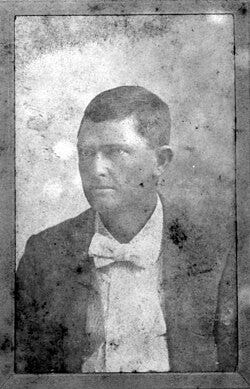
The jury retired to deliberate. Exactly seven minutes later, they returned with a verdict: guilty of first-degree murder, with no recommendation of mercy.
On October 27, 1916—just ten weeks after the initial shootout—Boisey Long was escorted into the enclosed courtyard of the Alachua County Jail and legally hanged by the neck until dead.
THE BLUEPRINT OF IMPUNITY
In the weeks following the lynchings, the legal machinery of Alachua County moved swiftly—not to prosecute the murderers, but to construct a permanent wall of official denial.
Florida Governor Park Trammell publicly ordered an investigation. Circuit Court Judge J.T. Wills convened a special Alachua County Grand Jury in Gainesville to look into the unlawful hangings of five citizens and the roadside execution of Jim Dennis.
The Grand Jury returned a finding that became the standard rubber-stamp conclusion for hundreds of racial murders across the American South: the victims had died “at the hands of persons unknown.”
Yet the identities of the mob leaders were an open secret in Newberry. Prominent landowners, local merchants, law enforcement officers, and civic officials had been present throughout Friday night and Saturday morning. Not a single arrest warrant was ever issued. No indictments were handed down. No deputy was fired or disciplined for surrendering the keys to the jail.
Within a year, the incident was scrubbed from official town narratives. When early county histories were written in the 1920s and 1930s, the massacre was either reduced to a passing footnote about a “negro insurrection” or omitted entirely.
Fear did the rest. Families of the victims fled the region. Black-owned land in western Alachua County was abandoned, sold off at pennies on the dollar, or confiscated for delinquent taxes. A code of silence descended over the white community, while Black elders passed the names down only in hushed family circles, warning their grandchildren never to stop along that stretch of road after dark.
UNEARTHING THE TRUTH
For nearly a century, the Newberry Six remained an unacknowledged ghost in Florida history. That silence began to fracture largely through the dogged investigative scholarship of the late Dr. Patricia Hilliard-Nunn, a professor of African American Studies at the University of Florida.
Dr. Hilliard-Nunn spent years combing through yellowed microfilm, property deeds, oral histories, church records, and census data to rebuild the narrative that the grand jury had buried. Her research uncovered the resting places of several victims. Andrew McHenry, James Dennis, and Rev. Joshua Baskin had been quietly interred in unmarked or weathered plots in the historic cemetery of Pleasant Plain United Methodist Church in Jonesville, just miles from where the initial raid occurred.
Her findings catalyzed a broader civic reckoning: the Alachua County Truth and Reconciliation Project, an initiative aimed at formally documenting and apologizing for the county’s history of racial terror. According to historical records compiled by the Equal Justice Initiative, Alachua County recorded at least 21 lynchings between 1877 and 1950, ranking it among the highest per-capita counties for racial violence in Florida.
In September 2019, more than 103 years after the mob gathered at the lockup, a Florida State Historical Marker was officially dedicated at Pleasant Plain United Methodist Church.
The marker explicitly names the victims:
James Dennis
Bert Dennis
Mary Dennis
Stella Young
Andrew McHenry
Rev. Josh J. Baskin
Boisey Long
The grove of live oaks where the bodies hung along State Road 26 is today surrounded by residential developments, strip malls, and the westward expansion of suburban Gainesville. But the historical record, once deliberately wiped clean, is finally fixed. The Newberry Six are no longer an anonymous statistic of “persons unknown”—they are a documented record of cold-case domestic terror, committed in plain sight.