

Mysterious Death of Edgar Allan Poe is a Cold Case for the Centuries
Edgar Allan Poe Died a Death Similar to His Writings

The Mysterious Death of Edgar Allan Poe: How the Master of Macabre Met an End Stranger Than Fiction
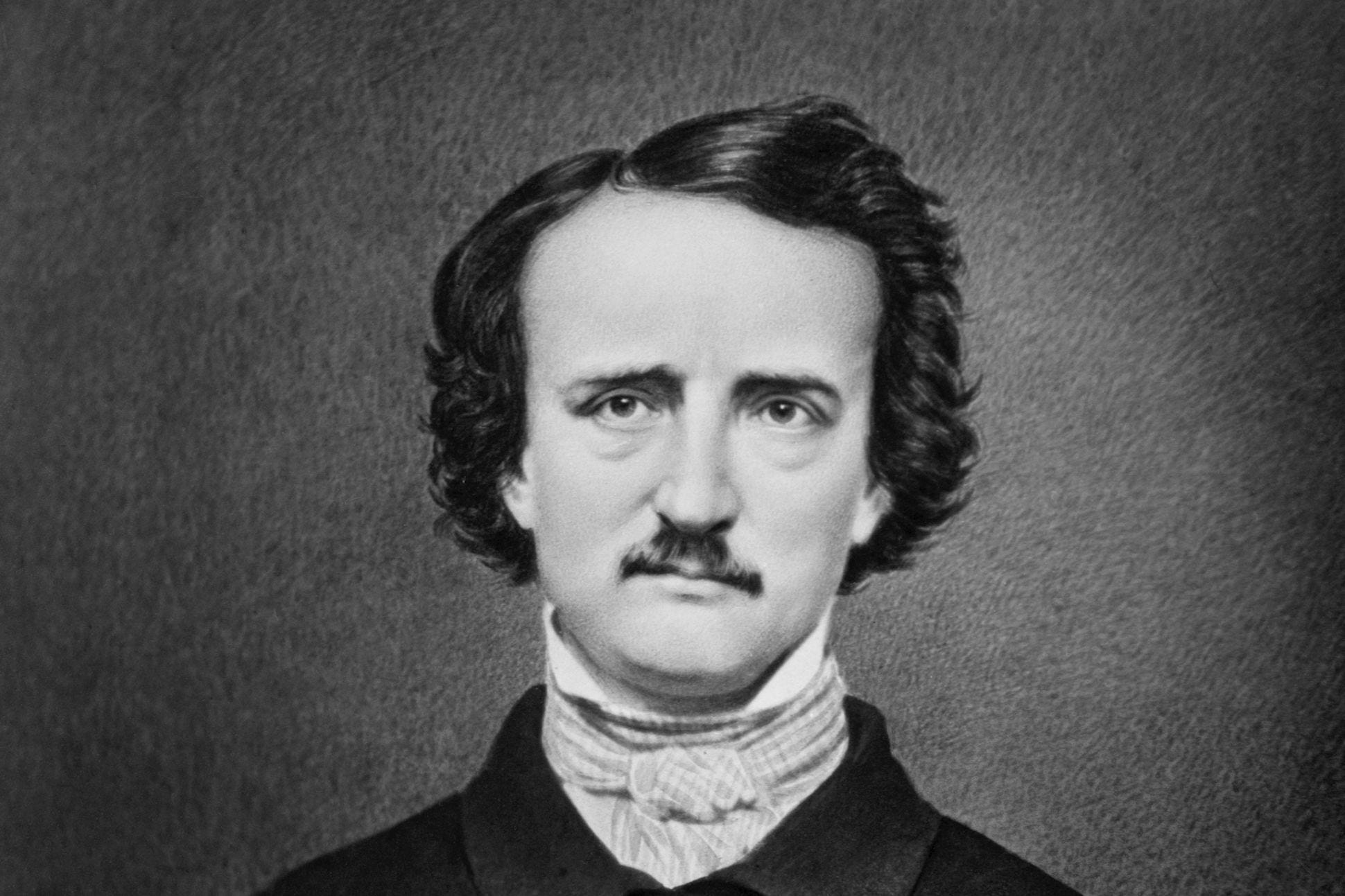
On October 7, 1849, Edgar Allan Poe, the forty-year-old master of Gothic literature who had terrified readers with tales of premature burial and sinister ravens, uttered his final words: “Lord, help my poor soul!” But unlike the carefully crafted mysteries that made him famous, Poe’s own death would become one of American literature’s most enduring unsolved cases—a real-life whodunit that continues to baffle historians 175 years later.
The facts, such as they are, read like something from one of Poe’s own stories. Five days earlier, on October 3rd, the celebrated author was found delirious outside Ryan’s Fourth Ward Polls tavern in Baltimore, wearing shabby clothes that weren’t his own and unable to explain what had happened to him. He spent four days in Washington University Hospital, raving about “spectral and imaginary objects on the walls,” before succumbing to what doctors cryptically described as “congestion of the brain.”
But what really happened during those missing five days between Poe’s arrival in Baltimore on September 28th and his discovery on October 3rd? The answer may lie in a dark corner of American political history that transforms Poe’s death from a simple tragedy into something far more sinister: the brutal practice known as “cooping.”
The Cooping Conspiracy
In 1849, Baltimore was notorious for having some of the most corrupt elections in American history. The city had developed an elaborate underground industry of voter fraud, complete with its own vocabulary. “Cooping” was perhaps the most barbaric practice in this political underworld—a scheme where gangs working for political candidates would kidnap innocent people off the streets, imprison them in small rooms or “coops,” and force them to vote multiple times using different disguises.
The process was methodically brutal. Victims were typically poor, vulnerable individuals who wouldn’t be missed. They were beaten, force-fed alcohol and sometimes opium to keep them compliant, and dragged from polling station to polling station. Between votes, they were given just enough alcohol to maintain their stupor. If they refused to cooperate, they were beaten again. If they became too weak or ill to continue, they were simply abandoned.
The timing of Poe’s death is what makes historians suspect he may have fallen victim to this practice. October 3, 1849, was Election Day in Baltimore, and Ryan’s tavern—where Poe was found—was serving as a polling place. The master of mystery was discovered wearing someone else’s cheap, ill-fitting clothes and a straw hat, completely out of character for the usually fastidious dresser. He was incoherent, apparently intoxicated despite having been sober for six months, and showed signs of having been beaten.
The Evidence That Won’t Die
The cooping theory explains several strange details about Poe’s final days that simple alcoholism cannot. Why was he wearing someone else’s clothes? Cooping victims were often forced to change outfits between votes to avoid recognition by election officials. Why was he found at a polling place? That was exactly where cooping operations were centered. Why couldn’t he explain what had happened to him? Victims were typically kept in such a state of intoxication and confusion that they could barely remember their own names, let alone the ordeal they’d endured.
Dr. J.E. Snodgrass, the physician who first attended to Poe, initially assumed his friend had simply relapsed into alcoholism. But Snodgrass was a staunch temperance advocate with a vested interest in promoting the dangers of drink. The attending physician at Washington University Hospital, Dr. John Moran, explicitly stated that Poe had not been drinking and showed no signs of alcohol withdrawal. In fact, Poe had reportedly refused alcohol on his deathbed.
The physical evidence suggested something far more violent than a simple drinking binge. Poe appeared to have been beaten, was wearing strange clothes, and was found in a location that made no sense for someone of his social standing. He had been traveling from Richmond to Philadelphia for a business engagement—why would he end up in Baltimore, at a tavern serving as a polling place, wearing someone else’s clothes?
A City of Political Violence
Baltimore in 1849 was a powder keg of political corruption. The city’s elections were legendary for their violence and fraud. Gangs affiliated with political parties openly battled in the streets, and voter intimidation was commonplace. The practice of cooping was so widespread that it had developed its own specialized terminology and methods.
Contemporary accounts describe election days where “ruffians would go out in the street, find someone vulnerable and indigent, hit them over the head, ‘coop’ them up in a room, and feed them alcohol and maybe opium until it’s time to vote.” The kidnapped voters would be forced to wear disguises—wigs, fake beards, mustaches—so they could vote multiple times without being recognized by election officials.
Poe, despite his literary fame, was exactly the kind of person who might fall victim to such a scheme. He was traveling alone, had limited financial resources, and was physically slight. Moreover, his well-known sensitivity to alcohol made him particularly vulnerable to the forced intoxication that was central to the cooping process.
The Counter-Theories
Despite the compelling evidence for the cooping theory, numerous other explanations for Poe’s death have emerged over the decades. Some researchers have suggested he died from rabies, citing his difficulty drinking water and the pattern of his delirium. Others have proposed epilepsy, syphilis, diabetes, or even a brain tumor—when Poe’s remains were exhumed 26 years after his death, witnesses reported hearing something rolling around inside his skull, possibly a calcified tumor.
The alcoholism theory persists, despite evidence to the contrary. While Poe had struggled with alcohol throughout his life, he had been sober for six months before his death and had recently joined a temperance society. The fact that he was found apparently intoxicated could be explained by the forced alcohol consumption central to the cooping process.
Some have even suggested murder, pointing to Poe’s complicated personal relationships and professional rivalries. His involvement with Elmira Shelton, a woman whose brothers reportedly disapproved of their relationship, has led to speculation about foul play. But this theory fails to explain the peculiar circumstances of his death as comprehensively as the cooping explanation.
The Unsolved Mystery
What makes Poe’s death truly remarkable is how perfectly it mirrors the mysteries he created in his fiction. Like the narrator of “The Tell-Tale Heart,” we are left listening for clues that might reveal the truth. Like the detective in “The Murders in the Rue Morgue,” we must piece together fragments of evidence to solve a crime that seems impossible.
The cooping theory remains the most comprehensive explanation for the bizarre circumstances surrounding Poe’s death. It accounts for his strange location, his inexplicable clothing, his forced intoxication, his inability to explain what happened, and the timing of his discovery on Election Day. But like any good mystery, the evidence is circumstantial, and the witnesses are long dead.
Perhaps the most Poe-esque aspect of this entire story is that we will likely never know the truth. The master of mystery, who delighted in revealing shocking truths in the final paragraphs of his stories, took the secret of his own death to his grave. In Westminster Hall and Burying Ground in Baltimore, where Poe lies buried alongside his wife Virginia, the answer remains as shrouded in darkness as the raven that made him famous.
For investigators of historical cold cases, Poe’s death presents an eternal challenge: a mystery worthy of the man who wrote that “the death of a beautiful woman is, unquestionably, the most poetical topic in the world.” But for Poe himself, the death of a tortured artist in the grip of political corruption may have proven even more poetical—and more mysterious—than anything he could have imagined.
The cooping theory transforms Poe’s death from a simple tragedy of addiction into something far more sinister: a case of literary genius destroyed by political corruption, a man who spent his life crafting fictional horrors only to fall victim to a real-life nightmare that was stranger than any fiction he created. In the end, perhaps it was fitting that the man who made a career of exploring the dark corners of human nature should meet his end in one of the darkest corners of American democracy.