


Case File: Orlando Police Department / Orange County Sheriff’s Office | MP-2011-00448102
Executive Key Facts Summary
The Victim: Michelle Parker, a 33-year-old mother of three (an 11-year-old son from a previous relationship and 3-year-old fraternal twins) and owner of a local mobile spray-tanning business, Glow Spray Tanning.
Date of Disappearance: Thursday, November 17, 2011.
Last Confirmed Location: The Carter Glen condominium complex off South Goldenrod Road and Lee Vista Boulevard in southeast Orlando, Florida, where she dropped off her toddler twins with her former fiancé, Dale Smith Jr.
The Prime Suspect: Dale Smith Jr. (born 1971), a former U.S. Marine and the father of Parker’s twins. Within two weeks of her disappearance, Orlando police named him as the primary suspect, a designation he held for nearly fifteen years while consistently maintaining his innocence.
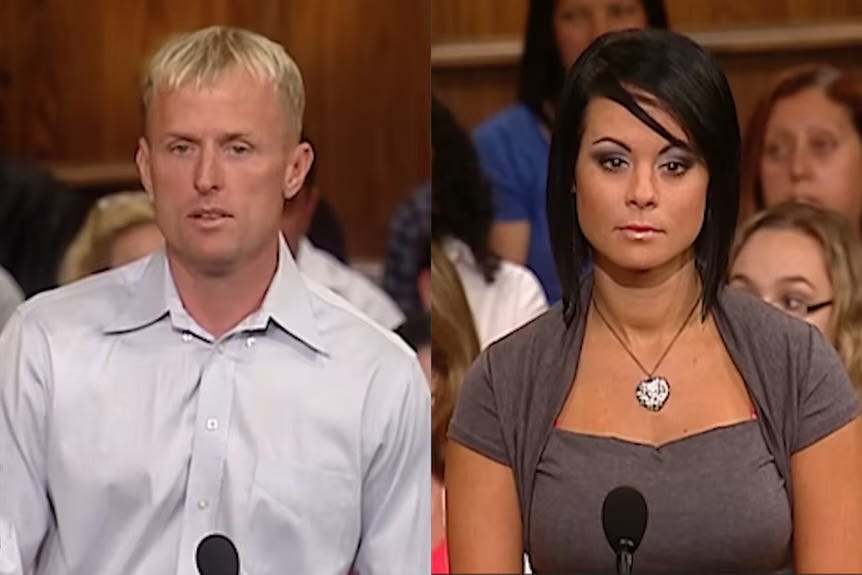
The Critical Catalyst: On the exact day Parker disappeared, a pre-recorded episode of the syndicated courtroom reality program The People’s Court aired nationwide. The episode showcased a bitter financial and emotional dispute between Parker and Smith over a lost $5,000 engagement ring.
Physical Evidence Recovered:
Vehicle: Parker’s black 2008 Hummer H3 was located on November 18, 2011, parked at the Walden Palms condominium complex near the Mall at Millenia on Vineland Road. The custom magnetic decals promoting her tanning business had been stripped off, and the driver-side window was partially down.
Communication Device: Parker’s iPhone 4 was tracked pinging off a cell tower near the Oak Ridge Road corridor before going permanently dark. In early 2012, dive teams recovered the shattered, submerged device from the waters of Lake Conway near the Nela Avenue bridge in Belle Isle.
Status of the Victim: Michelle Parker’s physical remains have never been recovered despite extensive multi-agency searches spanning central Florida lakes, conservation lands, and retention ponds.
The Breakthrough Arrest: In mid-October 2026, the Orlando Police Department, in conjunction with the State Attorney’s Office for the Ninth Judicial Circuit, formally arrested Dale Smith Jr., charging him with second-degree murder.
Current Legal Status: Smith entered a formal plea of not guilty through counsel. He is detained without bond at the Orange County Jail, with an arrest warrant affidavit ordered sealed pending further pretrial proceedings.
The Airing and the Abrupt Silence
On Thursday, November 17, 2011, daytime television across Central Florida broadcast a contentious, emotionally volatile dispute between two former partners. Viewers who tuned in to The People’s Court witnessed 33-year-old Michelle Parker and her ex-fiancé, 40-year-old Dale Smith Jr., trading accusations before Judge Marilyn Milian. At issue was an engagement ring valued at $5,000 that Parker had reportedly tossed off a balcony during a domestic altercation. Milian ultimately ruled against Smith’s counterclaim, ordering both parties to split the financial burden, but the tension captured on camera went far beyond monetary debts. Parker spoke openly of Smith’s explosive temperament, describing past toxicity that bordered on menace, while Smith sat rigid, tight-jawed, and noticeably simmering under cross-examination.
The episode had been taped months earlier in Stamford, Connecticut, but its broadcast on local television happened to coincide with a scheduled, mundane domestic routine. Around 2:00 p.m. that afternoon, Parker climbed into her black 2008 Hummer H3—emblazoned with neon green and pink decals advertising Glow Spray Tanning—and drove toward the Carter Glen gated community on South Goldenrod Road. Sitting in the back were her three-year-old twins, a boy and a girl, shared with Smith.
Parker pulled into the Carter Glen complex around 3:15 p.m. to deliver the children into Smith’s custody. By all official accounts, she arrived safely. But the gate closing behind her departure marked the final verified moment she was seen alive.
Parker had planned an evening full of appointments and errands. She was expected to prep tanning clients and then return home to her oldest son, an eleven-year-old from a prior relationship, who was waiting for his mother. When the hours crept into the evening and repeated phone calls from friends and family went unanswered, concern transformed into alarm. Parker was meticulously attentive to her children; she had never gone hours without checking in, and she had never failed to return home.
At 7:45 p.m., a cryptic, one-word text message bounced from Parker’s phone to her brother: “Water.” When her brother immediately texted back asking for clarification, no reply was returned. Within hours, family members gathered, dialing 911, and the Orlando Police Department opened a missing persons investigation. Michelle Parker was gone.

The Fracture Behind the Lens
To understand the disappearance that captured the national consciousness, investigators had to reconstruct the fractured dynamic between Parker and Smith. Long before television producers scouted their dispute for national syndication, the couple’s relationship had been defined by a cycle of domestic volatility.
Dale Smith Jr. had served in the United States Marine Corps during the 1990s and had a recorded history of volatility and encounters with the legal system. Records from previous relationships revealed past domestic disturbance complaints, allegations of battery, and restraining orders sought by former partners. When Parker began dating Smith, friends noted an initial charm that quickly curdled into possessiveness. By the time their twins were born in 2008, the relationship was disintegrating under the weight of financial disputes, shouting matches, and frequent police dispatches to their residence.
In 2009, Parker took legal steps to protect herself, filing a petition for an injunction for protection against domestic violence. In court filings, she recounted terrifying episodes where Smith had allegedly destroyed property, exhibited explosive rage, and threatened her physical safety. Though the temporary order was eventually allowed to lapse—a common dynamic in abusive relationships where co-parenting pressures and reconciliations intervene—the underlying volatility never abated.
When the dispute over the discarded engagement ring escalated to legal action, Smith sued Parker. Seeking to resolve the matter and recover the value, the pair agreed to submit the case to binding arbitration on The People’s Court.
Family members later revealed that Parker had harbored intense misgivings about the television appearance. She feared that public humiliation would further destabilize Smith, whose pride was deeply entwined with his military background and self-image. On the afternoon of November 17, as the episode aired across the Orlando television market, Smith was placed under a humiliating spotlight in front of friends, neighbors, and colleagues. For investigators, the timing was impossible to overlook: the broadcast acted as an immediate emotional detonator.
The Digital Trail, the Lake, and the Stripped Hummer
Within forty-eight hours of Parker’s disappearance, detectives with the Orlando Police Department, joined by Orange County Sheriff’s deputies, faced an evidentiary landscape that pointed unequivocally away from a voluntary departure.
The first break came on Friday, November 18, when an alert resident spotted Parker’s distinctive black Hummer H3 parked inside the Walden Palms condominium complex. The location—situated along Vineland Road, near the Mall at Millenia and the Florida’s Turnpike corridor—was approximately twenty miles west of Carter Glen. The Hummer had been deliberately altered: the large, magnetic Glow Spray Tanning decals had been violently peeled from both sides and the rear tailgate, removing the vehicle’s identifying profile. Inside, detectives found personal effects, but no signs of an active struggle, no pooled blood, and no keys. The driver-side window was left slightly cracked open against the Florida humidity.
The placement of the vehicle raised immediate tactical questions. Walden Palms was not a random location in Central Florida; investigators quickly discovered that Smith had previous ties to the complex, having lived or stayed there in preceding years.
Simultaneously, forensic analysts worked with telecommunication providers to trace the movement of Parker’s iPhone. The digital breadcrumbs painted a chilling trajectory. After dropping off her children at Carter Glen around 3:15 p.m., Parker’s cellular device did not travel toward her tanning appointments or home. Instead, between 3:30 p.m. and 8:00 p.m., the phone pinged off cellular towers stretching along an east-to-west path across southwest Orlando. Tower data placed the device near the Belle Isle corridor and around Oak Ridge Road before the signal terminated permanently.
The physical reality of that digital trail surfaced months later. In early 2012, law enforcement dive teams and search contractors focused their attention on Lake Conway, an expansive, deep-water chain of lakes spanning Belle Isle and unincorporated Orange County. Beneath the murky waters near the Nela Avenue bridge, divers made a significant recovery: Michelle Parker’s submerged iPhone. The device was heavily damaged, its casing cracked and corroded from weeks underwater, but forensic recovery teams extracted vital serial data confirming it was indeed Parker’s phone.
Someone intimately familiar with the geography of Orlando had driven her car across the city, stripped its identifying markers, thrown her communication lifeline into a deep-water lake, and abandoned the vehicle in an apartment lot tied to Smith’s past.
A Decade in the Shadows of Suspicion
On November 28, 2011, just eleven days after Michelle vanished, then-Orlando Police Chief Val Demings took to the podium and announced what Central Florida had already deduced: Dale Smith Jr. was officially named the prime suspect in Michelle Parker’s disappearance.
Yet, naming a suspect and securing an indictment from a grand jury are vastly different legal challenges. From the onset of the criminal inquiry, Smith exercised his Fifth Amendment right against self-incrimination. He declined formal interrogations, refused polygraph examinations, and retained seasoned defense counsel. Detectives executed search warrants across Smith’s Carter Glen residence and properties owned by his immediate family, including his parents’ residence in the Rose Boulevard area of Orlando. Teams of crime scene investigators deployed forensic lighting, seized vehicles, collected carpet fibers, and scrutinized drainage systems, but initial tests failed to yield biological evidence conclusive enough to support an immediate arrest warrant.
Without Michelle’s body, prosecutors faced the formidable hurdle of a “no-body” homicide prosecution. Florida statutory law allows murder indictments in the absence of a corpse, but establishing corpus delicti—proving that a death occurred and that criminal agency caused that death—requires overwhelming circumstantial evidence that excludes every reasonable hypothesis of innocence.
While the criminal case stalled in investigative purgatory, the battle moved into civil and family courts. In 2013, Parker’s father, Brad Parker, filed a wrongful death lawsuit against Smith in Orange County Circuit Court. The lawsuit alleged that Smith had intentionally battered, choked, or assaulted Michelle inside his home, causing her death before disposing of her body. While the civil proceedings allowed the family to subpoena records and take depositions, Smith repeatedly invoked his constitutional protections.
Simultaneously, the Parker family was stripped of access to the twins. Smith retained legal custody of the children, effectively cutting off contact between the toddlers and their maternal grandparents. For Brad Parker and Yvonne Stewart (Michelle’s mother), the grief of losing their daughter was compounded by an enforced separation from the children who carried her bloodline.
For nearly fifteen years, the Michelle Parker case became synonymous with Central Florida cold cases. Annual vigils were held at the Nela Avenue bridge, roadside billboards displayed Michelle’s smiling face along State Road 436, and private search organizations dragged retention ponds, sinkholes, and dense scrub across Osceola and Orange Counties. Brad Parker and Yvonne Stewart maintained relentless pressure on local law enforcement, refusing to allow their daughter’s file to collect dust on cold case shelves.

The Breakthrough — The Arrest of Dale Smith Jr.
On Wednesday, October 14, 2026, the silence that had shrouded the case for nearly a decade and a half was shattered.
In a joint statement that sent shockwaves through Orlando, the Orlando Police Department announced that Dale Smith Jr., now in his mid-fifties, had been taken into custody and formally booked into the Orange County Jail on a charge of second-degree murder.
The arrest culminated months of renewed investigative activity spearheaded by OPD’s Homicide and Cold Case Units in close coordination with the State Attorney’s Office. Although police maintained that Parker’s physical remains have still not been located, investigators emphasized that advances in technology provided the critical tipping point.
Over the past decade, digital forensics, cell-site analytical tools, and historical satellite tracking technologies have evolved dramatically. Sources familiar with modern cold case reviews indicate that telecommunication data originally collected in 2011—consisting of raw tower pings, signal timing measurements, and location area codes—can now be processed through advanced algorithms capable of constructing micro-geographic timelines. Detectives were reportedly able to map movement windows on the afternoon of November 17, 2011, establishing tight geographic overlaps between Smith’s personal movements, Parker’s phone trajectory, and the abandonment of the Hummer at Walden Palms.
Furthermore, OPD confirmed that detectives conducted exhaustive re-interviews of civilian witnesses, family associates, and past contacts. Over the passage of fifteen years, interpersonal relationships fracture, loyalties dissolve, and fear of retribution diminishes. Statements that were once ambiguous or withheld during the frantic initial days of 2011 were re-evaluated under oath, providing investigators with the corroborating foundation necessary to present a probable cause affidavit to an Orange County judge.
Judge-ordered sealing of the arrest warrant and its supporting affidavit shielded the granular evidentiary mechanics from immediate public scrutiny. Defense counsel representing Smith waived formal reading at his initial appearance and filed an immediate plea of not guilty. In court, Smith’s defense attorney challenged the state’s continued detention of his client, questioning the underlying weight of newly reanalyzed digital evidence and demanding an expedited bond hearing. However, presiding judges ordered Smith held without bond pending a comprehensive Arthur hearing—the rigorous evidentiary proceeding required under Florida law when a defendant is charged with a non-bondable capital or life felony.
The Legal Battlefield Ahead
As the Orange County Courthouse prepares for one of the most high-profile trials in Central Florida history, prosecutors and defense counsel will clash over deep procedural and constitutional issues.
1. The Burden of a “No-Body” Prosecution
Under Florida precedent (such as State v. Allen and Meyers v. State), the state must establish the corpus delicti before a conviction can stand. In traditional homicides, an autopsy establishes the manner and cause of death. Without a body, prosecutors must rely on circumstantial chains: Michelle Parker had no financial withdrawals, no passport activity, no hospital admissions, and no contact with her beloved children across fifteen years. The state will argue that her sudden disappearance—occurring concurrently with an altered crime scene, an abandoned vehicle, a dumped phone, and an explosive televised motive—proves death by criminal agency beyond all reasonable doubt.
2. Digital Forensics vs. Passage of Time
The defense has already indicated its strategy: attacking the degradation of evidence and the unreliability of fifteen-year-old recollections. Defense attorneys will argue that cell phone tower triangulations from 2011 rely on legacy 2G/3G infrastructure that lacked modern GPS precision, creating broad geographic radiuses rather than exact coordinates. They will scrutinize the chain of custody of Parker’s submerged iPhone and challenge the admissibility of software models used to reconstruct historical data. Furthermore, the defense will highlight the absence of physical DNA, fingerprints, or blood linking Smith to the interior of Parker’s stripped Hummer.
3. Evidentiary Admissibility and Motive
A fierce evidentiary fight is expected over the admissibility of The People’s Court broadcast and Parker’s 2009 petition for an injunction for protection against domestic violence. Under Florida’s Williams Rule (codified under Florida Statute § 90.404), evidence of past bad acts or domestic violence can be admitted to demonstrate motive, intent, pattern, or identity, provided it does not serve solely to prove bad character. Prosecutors will argue that the television episode was the direct psychological catalyst that provoked the murder. The defense will counter that admitting past domestic petitions or unscripted television banter unfairly prejudices the jury pool.
An Open Wound in the City Beautiful
For the family of Michelle Parker, the arrest of Dale Smith Jr. provides a measure of long-sought validation, but it does not bring closure. In every interview given over the last fifteen years, Brad Parker and Yvonne Stewart have emphasized that their ultimate goal has never been limited to handcuffs and prison bars; their primary prayer has always been to bring Michelle home and lay her to rest with dignity.
The twins, who were mere toddlers when their mother disappeared, have grown up in the shadow of an unsolved tragedy and a father who has now been formally charged with their mother’s murder. The psychological ripple effects of November 17, 2011, have shaped an entire generation of the Parker-Smith family.
As Dale Smith Jr. sits behind bars in the Orange County Jail awaiting trial, the Orlando Police Department has reaffirmed that the search for Michelle Parker does not stop with an indictment. Cold case detectives continue to evaluate mapping coordinates, hoping that the pressure of formal criminal prosecution will finally yield the location of her remains.
TheColdCases.com will continue to monitor the court docket, track every pretrial filing, and provide ongoing coverage as this landmark Florida justice battle moves toward trial.