


The 27-Year Journey to Justice: How Modern Forensics Unraveled the Linda Rutledge Cold Case Mystery
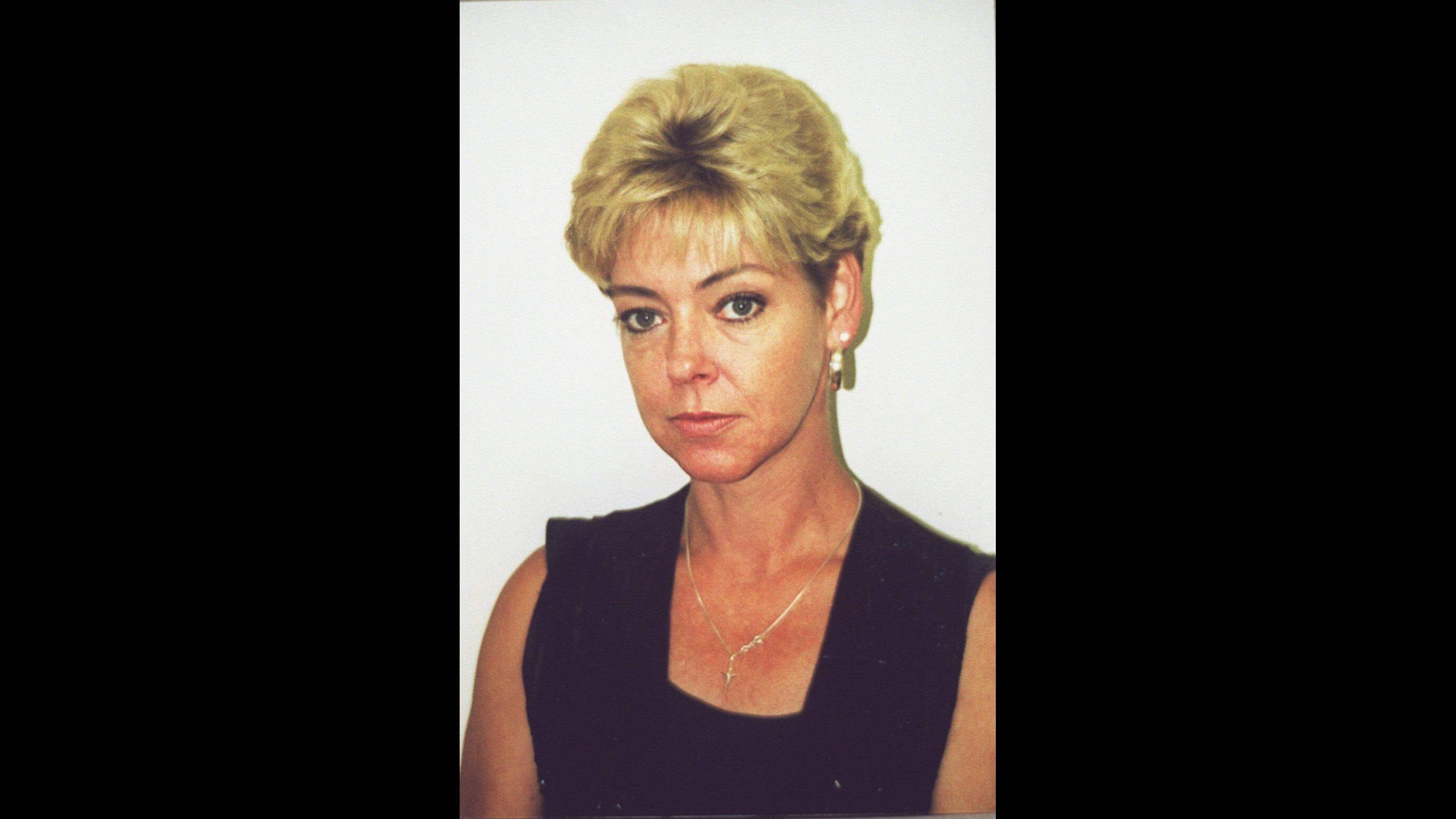
The morning of Linda Rutledge’s death in 1998 seemed ordinary enough in Lexington, Kentucky. The 43-year-old woman was going about her business when she encountered a predator who would remain unidentified for nearly three decades. Found shot to death at the Nixon Hearing Aid Center, Linda became another statistic in America’s growing list of unsolved murders. But her story didn’t end there—it became a testament to the unwavering pursuit of justice and the remarkable power of forensic science.
Today, investigators revealed what they had long suspected but could never prove: Linda Rutledge was murdered by Robert Eugene Brashers, a serial killer who had managed to evade capture while leaving a trail of violence across multiple states. The announcement brings closure to a case that has haunted the Lexington Police Department for 27 years and connects Linda’s tragedy to one of Texas’ most infamous unsolved crimes.
The Breakthrough
The resolution of Linda Rutledge’s murder represents a perfect storm of persistence, technology, and inter-agency cooperation. The crucial breakthrough came when investigators discovered that ballistics evidence from Linda’s crime scene matched shell casings recovered from the 1991 Austin yogurt shop murders—a case that claimed the lives of four teenage girls and had remained unsolved for 34 years.
But ballistics alone wasn’t enough. The real confirmation came through DNA analysis, a field that has revolutionized cold case investigations in recent years. When a sexual assault kit from Linda’s case was finally processed by DNA Labs International in September 2025, the results provided the definitive link investigators needed. The DNA evidence conclusively matched Robert Eugene Brashers, confirming what the ballistics had suggested.
A Serial Predator Unmasked
Robert Eugene Brashers died by suicide in January 1999, taking many secrets with him to the grave. For years, law enforcement agencies across multiple states suspected his involvement in various crimes, but the forensic technology of the era couldn’t provide the concrete evidence needed for prosecution. It wasn’t until September 2025 that Austin police investigators officially identified Brashers as the suspect in the yogurt shop murders, using the same advanced DNA techniques that would later solve Linda Rutledge’s case.
The connection between these two seemingly unrelated crimes—separated by seven years and hundreds of miles—reveals the terrifying scope of Brashers’ criminal activities. The fact that the same weapon and the same DNA appeared at both crime scenes suggests a pattern of violence that may extend far beyond what investigators currently know.
The Investigation That Never Quit
What makes Linda Rutledge’s case particularly remarkable is the dedication shown by investigators who refused to let the case go cold. For 27 years, detectives from the Lexington Police Department continued working the case, maintaining evidence and following up on leads even when hope seemed dim.
The investigation eventually involved multiple agencies working in concert: the Austin Police Department, the Texas Office of Attorney General, the City of Austin Forensic Science Department, the Kentucky State Police Forensic Laboratory, DNA Labs International, the ATF, and the FBI all played crucial roles in solving this case. This level of inter-agency cooperation demonstrates how modern cold case investigations often require resources and expertise that extend far beyond any single department’s capabilities.
“The Lexington Police Department would like to thank the following agencies for their assistance and teamwork in helping bring justice to Linda and her family,” officials stated in their announcement, acknowledging the collaborative effort that made this resolution possible.
The Human Cost
Behind every cold case statistic lies a human tragedy. Linda Rutledge was more than a case file—she was a 43-year-old woman whose life was brutally cut short. Her family has lived for nearly three decades with the pain of not knowing who took her life or why. The resolution of her case, while bringing answers, also reopens wounds that never fully healed.
“The Lexington Police Department wants to honor Linda,” officials emphasized. “Her life was cut short at just 43 years old, and her family has had to live with the pain of losing her and not knowing who took her life. While her case may be solved, it does not bring Linda back, but we hope that by knowing who killed her, her loved ones can begin to heal.”
Linda’s family has requested privacy during this difficult time, a request that underscores the complex emotions that come with cold case resolutions. While there’s relief in finally knowing the truth, there’s also the renewed grief of confronting a loss that time can never fully erase.
The Technology Revolution
The solving of Linda Rutledge’s murder highlights how dramatically forensic technology has evolved since 1998. When she was killed, DNA analysis was still in its relative infancy, and the sophisticated techniques that ultimately identified her killer didn’t exist. The processing of sexual assault kits, once a lengthy and expensive process, has become more efficient and accurate.
Today, investigators can extract DNA from evidence that would have been impossible to analyze decades ago. Genetic genealogy, which combines traditional genealogy with DNA analysis, has opened new avenues for identifying suspects. These technological advances are not just solving individual cases—they’re revealing patterns of criminal behavior that span years and cross jurisdictional boundaries.
A Pattern of Violence
The connection between Linda Rutledge’s murder and the Austin yogurt shop killings suggests that Robert Eugene Brashers may have been responsible for other crimes that remain unsolved. The seven-year gap between these two documented crimes raises troubling questions about his activities during that period and whether other victims await justice.
Investigators across multiple jurisdictions are now likely reviewing cold cases from the 1990s, looking for potential connections to Brashers. The ballistics evidence and DNA profile that solved Linda’s case provide concrete benchmarks against which other unsolved crimes can be compared.
The Broader Impact
The resolution of Linda Rutledge’s case sends a powerful message to other families waiting for answers about their loved ones’ unsolved murders. It demonstrates that cases are never truly closed, that evidence is preserved and re-examined as technology advances, and that investigators never stop pursuing justice.
This case also highlights the critical importance of properly processing and storing sexual assault kits. Linda’s kit, processed 27 years after her death, provided the key evidence needed to identify her killer. Across the country, efforts to clear backlogs of untested sexual assault kits are yielding similar breakthroughs, bringing justice to victims whose cases had been written off as unsolvable.
Looking Forward
While Robert Eugene Brashers escaped earthly justice by taking his own life in 1999, the confirmation of his responsibility for Linda Rutledge’s murder ensures that the historical record is complete. For investigators, this resolution represents both a professional victory and a reminder of why they never give up on cold cases.
For Linda’s family, the announcement brings a form of closure that, while bittersweet, provides answers they’ve sought for nearly three decades. They can now mourn their loss with the knowledge of what happened and who was responsible, rather than living with the uncertainty that has haunted them for so many years.
The solving of Linda Rutledge’s murder stands as a testament to the power of persistence, the importance of technological advancement, and the unwavering commitment of investigators who refuse to let cases go unsolved. As forensic technology continues to evolve, more cold cases across the country are likely to find similar resolutions, bringing long-awaited justice to victims and their families.
In the end, Linda Rutledge’s story is not just about a crime solved—it’s about the triumph of justice over time, of science over uncertainty, and of human dedication over seemingly insurmountable odds. Her case will serve as inspiration for investigators working on the thousands of other cold cases that still await resolution, reminding them that no case is ever truly cold when technology and determination work together in pursuit of the truth.
If you have information about cold cases in your area, contact local law enforcement or submit tips through appropriate channels. Technology may have advanced, but public cooperation remains crucial in solving these long-standing mysteries.