


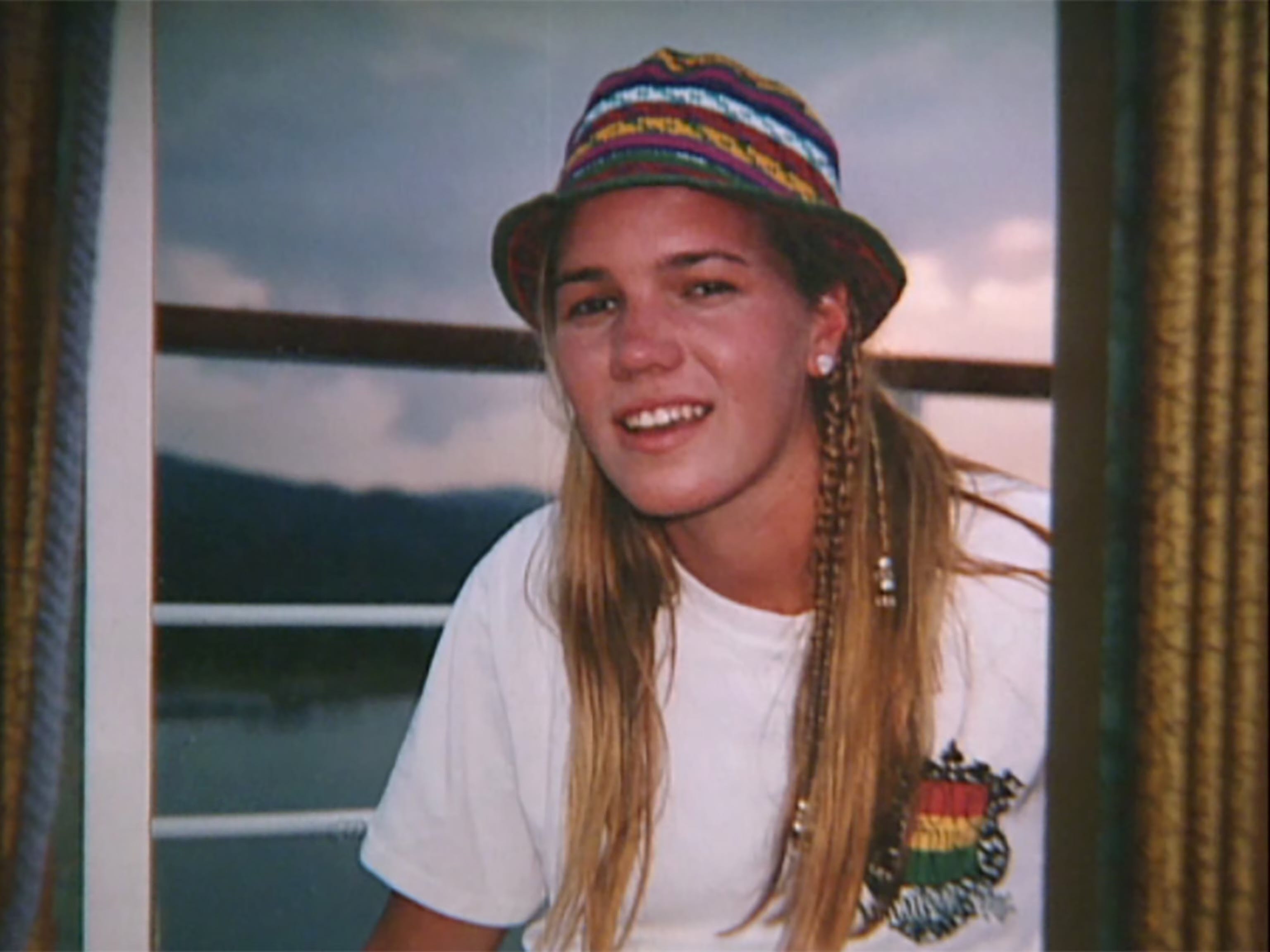
For nearly twenty-five years, the face of nineteen-year-old Cal Poly freshman Kristin Smart remained fixed to faded roadside billboards along California’s Highway 101. To passersby cutting through the rolling hills of San Luis Obispo County, she was an enduring symbol of a coastal paradise’s darkest open secret: a vibrant college student who walked home from a holiday fraternity party in May 1996 and vanished into thin air.
Locals knew the primary suspect’s name. Law enforcement possessed substantial circumstantial indicators. Yet, year after year, no arrests were made, no body was uncovered, and the silence seemed impenetrable.
That silence fractured in September 2019, when a local recording artist with zero formal journalism training released an independently produced, meticulously researched audio documentary titled “Your Own Backyard.” Host Chris Lambert had no subpoena power and no badge. What he did have was geographic proximity, unyielding patience, and the trust of a community exhausted by official inaction.
His work did not merely chronicle a cold case—it resurrected it.
THE ANATOMY OF AN AVOIDABLE VOID (MAY 1996)
To understand why the case languished for a quarter of a century, Lambert’s podcast forced listeners to confront the critical window immediately following the 1996 Memorial Day weekend.
Kristin Smart was last seen around 2:00 a.m. on Saturday, May 25, 1996, after an off-campus party on Crandall Way. Severely intoxicated and unsteady on her feet, she was assisted by two fellow students. Near the perimeter of the Cal Poly dormitories, freshman Paul Flores joined them, eventually taking over the duty of walking Kristin the remaining distance to her residence, Muir Hall.
Flores was the last known person to see Kristin Smart alive.
As Lambert laid bare across early episodes, the initial response by the Cal Poly University Police Department was plagued by administrative delay and fatal assumptions:
The “Runaway” Assumption: Campus police initially declined to treat Smart’s absence as an emergency, suggesting she had left town spontaneously for the long weekend. A formal missing persons report was delayed for crucial days.
Compromised Crime Scenes: Paul Flores’s dorm room in Santa Lucia Hall was not sanitized or cordoned off immediately. By the time investigators conducted an in-depth forensic sweep, the quarter had ended, rooms had been professionally cleaned, and personal belongings had been cleared out.
Unexamined Contradictions: When Flores was first questioned, he carried a black eye. His explanation for the injury changed repeatedly—initially claiming he received it playing basketball, then admitting he lied, before claiming he hit his face on a truck steering wheel while installing a stereo.
By the time the San Luis Obispo County Sheriff’s Office took over primary custody of the investigation, the physical trail had grown cold. Flores retained legal counsel, invoked his Fifth Amendment right against self-incrimination, and stopped talking.
A MICROPHONE IN THE ARROYO
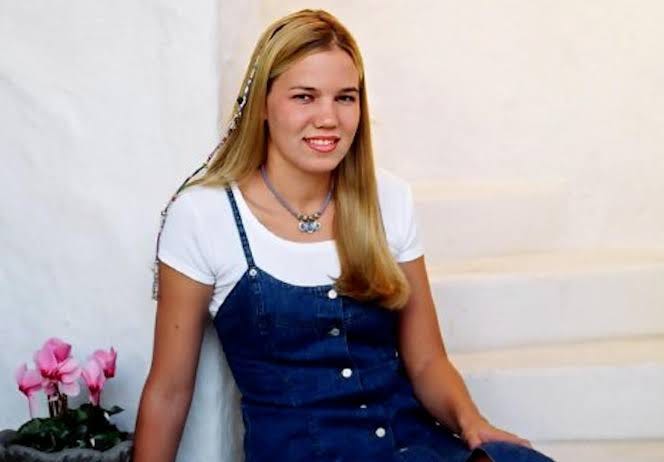
When Chris Lambert began recording in early 2019, he did not set out to play detective; he simply wanted to answer why a billboard featuring Kristin had remained on his daily commute since his childhood.
Working out of a home recording setup, Lambert systematically reconstructed the timeline. Unlike mainstream news outlets that arrived with cameras only on milestone anniversaries, Lambert embedded himself in the community. He knocked on doors, combed through microfiche, cross-referenced forgotten witness lists, and revisited names that appeared only as footnotes in 1990s case notes.
The result was a podcast characterized by rigor, empathy, and a total absence of sensationalism.
Crucially, Lambert uncovered and brought forward fresh witness accounts that had fallen through bureaucratic cracks:
Unheard Dormitory Witnesses: Fellow Cal Poly students living in Flores’s hall recounted suspicious behavior during the early morning hours of May 25, including observations of Flores showering at odd hours and strange noises coming from his room.
Patterns of Predatory Conduct: Lambert interviewed multiple women who described alleged non-consensual encounters with Paul Flores spanning two decades—establishing a persistent behavioral pattern that law enforcement later highlighted during court proceedings.
The Arroyo Grande Connection: The podcast directed public attention to the residences owned by Paul Flores’s parents, Ruben and Susan Flores, in Arroyo Grande. Neighbors, former tenants, and acquaintances shared unusual observations regarding backyard remodeling, poured concrete, and late-night disturbances in the weeks and years following Smart’s disappearance.
The momentum generated by “Your Own Backyard” was unprecedented. It garnered tens of millions of downloads and ignited a groundswell of local engagement. People who had remained silent for decades, fearful of harassment or believing their small piece of the puzzle was irrelevant, began contacting Lambert—who immediately routed verified information directly to cold case detectives.
THE DOMINOES FALL: LAW ENFORCEMENT RE-ENGAGES
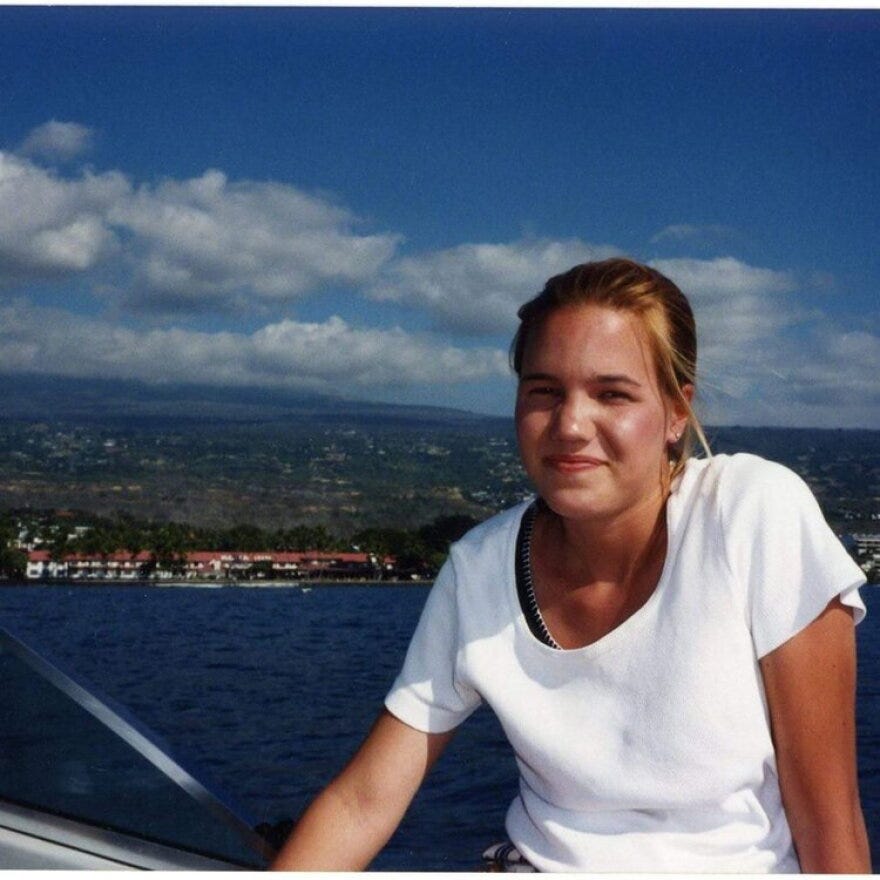
In early 2020, the San Luis Obispo County Sheriff’s Office publicly acknowledged that the podcast had generated actionable leads and renewed momentum.
In February 2020, heavily armed sheriff’s deputies and federal agents served coordinated search warrants across four locations in California and Washington State, including the homes of Paul Flores, his mother Susan, and his father Ruben.
In March 2021, investigators used ground-penetrating radar and heavy excavation equipment behind Ruben Flores’s home on Tally Ho Road in Arroyo Grande. Deep beneath the lattice deck of the rear porch, forensic archaeologists uncovered an anomaly: a patch of disturbed soil measuring approximately six feet long, matching the dimensions of a human burial grave. Forensic analysis of the soil subsequently revealed positive chemical markers consistent with human blood degradation products.
Prosecutors formulated the hypothesis that Kristin Smart’s remains had been buried directly beneath Ruben Flores’s deck for decades—and that following the intense scrutiny sparked by the podcast in late 2019 and early 2020, the remains were excavated and relocated.
A VERDICT, BUT NO FINAL REST
On April 13, 2021, Paul Flores was arrested and charged with first-degree murder; his father, Ruben Flores, was arrested as an accessory after the fact.
The trial, relocated to Monterey County to ensure an impartial jury, concluded in October 2022. Paul Flores was convicted of first-degree murder for killing Kristin Smart during an attempted rape in his dorm room. He was subsequently sentenced to 25 years to life in state prison. Ruben Flores was acquitted of the accessory charge by a separate jury.
Yet, for the Smart family and the community that rallied behind them, justice remains incomplete.
Even after the trial and the exhaustion of initial appeals, investigators have maintained active search operations. Modern search warrants—including renewed ground searches and forensic soil coring at secondary properties associated with the Flores family in Arroyo Grande—underscore law enforcement’s stated mission: the case will not be closed until Kristin Smart is returned home to her parents, Stan and Denise Smart.
THE LEGACY OF CITIZEN JOURNALISM DONE RIGHT
“Your Own Backyard” stands as a masterclass in the constructive potential of independent investigative podcasting. Where true-crime media frequently faces criticism for exploitative narration, Chris Lambert operated with accountability, deference to the victims, and institutional respect for the rules of criminal procedure.
By refusing to let a 1996 dorm room disappear into local mythology, the podcast proved that time does not have to be a cold case’s enemy. Sometimes, answering a quarter-century-old mystery only requires someone willing to listen to the voices that were ignored in their own neighborhood.