


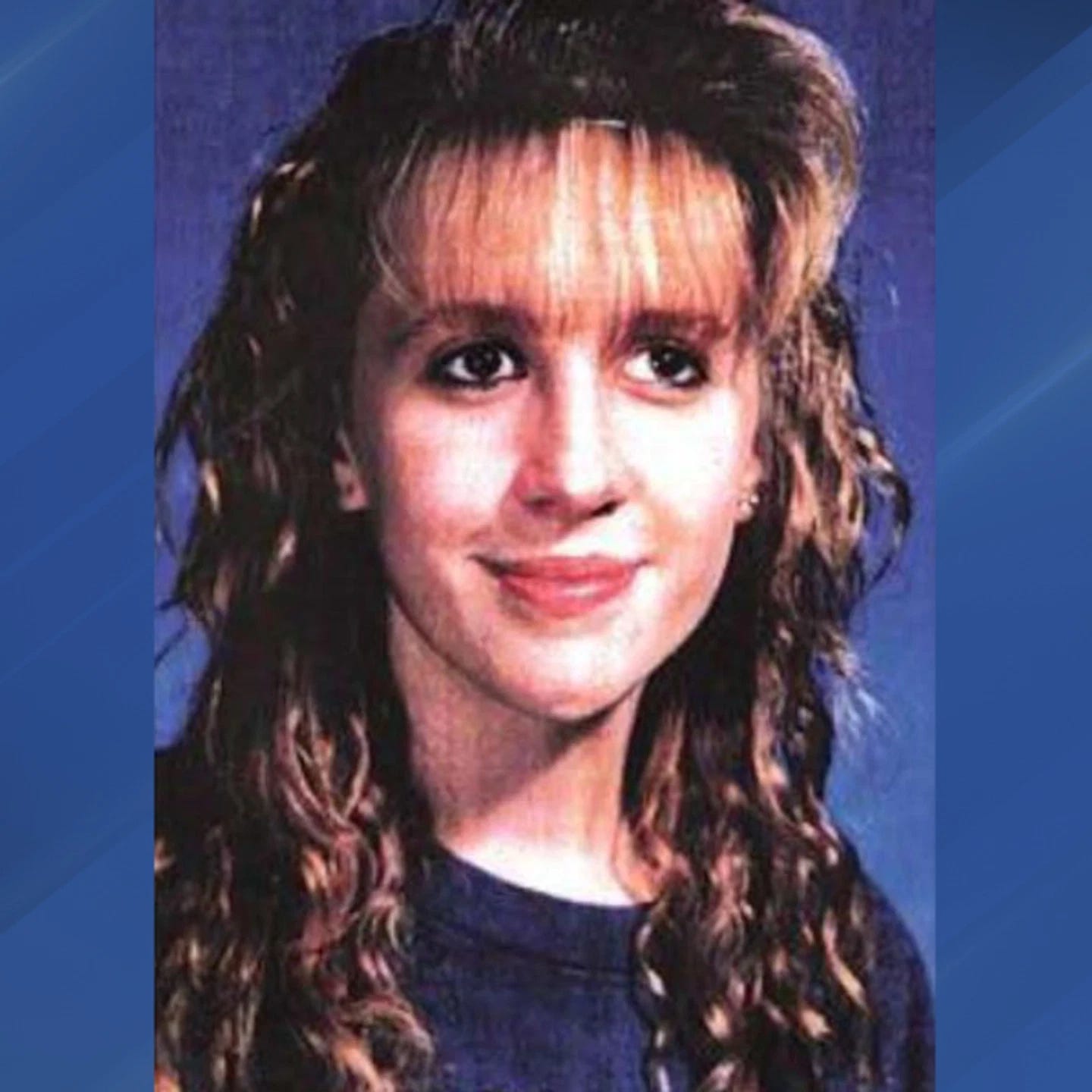
In Webster, some cases never loosen their grip.
Kelley Gaffield was 16 when she disappeared on Aug. 8, 1995, after telling her mother she was going to meet friends in the village. Two months later, her body was found in a wooded area in Webster. The Webster Police Department still lists the case as a suspicious death, and the official cause of death remains undetermined.
What keeps the case alive is not only that no one has ever been charged. It is the silence around Kelley’s last known hours — the friends she said she was meeting, the conflicting accounts of who may have seen her last, and the belief, shared by both investigators and her family, that someone has never told the whole truth about what happened that night.
The last day anyone saw Kelley
On the evening she vanished, Kelley told her mother she was going to meet friends in the village. In 2025, her mother, Christine Reilly, recalled Kelley coming up to her car, kissing her goodbye, and saying she was going to meet up with friends. Reilly said Kelley was supposed to be home by 9:30 p.m., but she never returned. Earlier local reporting said Kelley left home to meet friends, something her mother said she did all the time.
That is where the case begins to narrow into something more troubling. A 2015 Spectrum report said Kelley was last seen walking with an unidentified man on Phillips Road. That detail has never sat easily beside the family’s understanding that she was heading out to meet friends. One possibility does not cancel out the other. Still, together they point to the same unresolved gap in the timeline: who exactly was with Kelley in the final hours before she disappeared?
Why the silence still matters
Police have been careful about what they say in public. Webster’s official case page gives only the essentials: Kelley was last seen at 6:00 p.m. in the Phillips Road area on Aug. 8, 1995, and her body was found Oct. 22, 1995, in a wooded area in Webster. But in recent interviews, current investigator Jeffrey Mortier has gone a step further, saying he does not believe Kelley walked into those woods by herself. That statement may be the clearest public signal investigators have given that other people likely know more than has ever been disclosed.
The family has long believed that as well. News10NBC reported in 2023 and 2025 that Kelley’s relatives have their own suspicions about what happened and believe more than one person may have been involved. Her mother has continued to say publicly that people in Webster know exactly what happened to her daughter.
The lawyer question — and the line you should not cross
The frustration in Kelley’s case has also extended to the people she was believed to be around. In 2025 public interviews, Kelley’s mother questioned why some of Kelley’s friends reportedly got lawyers if they had nothing to hide. That is a powerful family concern, and it reflects decades of anger, grief, and distrust.
But this is where the article has to stay disciplined. Public police records do not identify those individuals, and law enforcement has not publicly said that retaining counsel was evidence of involvement in Kelley’s death. Getting a lawyer can mean many things, including fear, parental advice, or concern about being pulled into a serious criminal investigation. It does not, by itself, prove guilt.
That distinction matters because the strongest version of this story is also the fairest one. The issue is not that unnamed people had lawyers. The issue is that Kelley left home to meet people she expected to see. Investigators believe she likely was not alone, and after three decades, the public still does not have a complete account of who was with her, who saw her last, or why no one has fully closed that gap.
The early response and the long aftermath
The early handling of Kelley’s disappearance remains another source of pain. Her family has said police waited 48 hours before taking a missing-person report because Kelley was treated as a runaway. Investigators today acknowledge how different the landscape was in 1995, before Amber Alerts, camera-equipped phones, Ring footage, or the speed of modern social media. But for Kelley’s family, those explanations have never erased the belief that critical time was lost when it mattered most.
When Kelley’s body was discovered on Oct. 22, 1995, by a hunter in a wooded area, the case shifted from a disappearance to a homicide investigation. Even now, police are withholding the cause of death while reevaluating evidence with New York State Police and newer DNA technology. Mortier has said publicly that the case is solvable.
Why this case still lives in Webster
Kelley did not simply vanish into thin air. She left home to meet people she expected to see. Whether those people were friends, acquaintances, or someone else entirely, someone from that circle — or from that night — may still hold the missing piece.
Today, Webster Police continues to ask for information and says a reward is available for information leading to the arrest and conviction of whoever is responsible for Kelley’s death. That language alone makes clear how investigators view the case, even while the official cause of death remains undetermined on paper. Thirty years later, Kelley Gaffield’s name remains attached to a mystery that feels intimate, unfinished, and impossible to shake: a teenager, a summer night, a promise to come home, and a silence that has lasted far too long.
Anyone with information about Kelley Gaffield’s case should contact the Webster Police Department at (585) 872-1216 or email tips to wpdinvestigations@ci.webster.ny.us.