

Jason Jensen's Letter to the Killer of JonBenét Ramsey
Nearly thirty years after a six-year-old was murdered in her own home on the night after Christmas, a Utah private investigator has done something extraordinary — he mailed a public appeal directly to

A Letter to a Killer
The letter arrived on official letterhead — cream-colored, bearing a fingerprint logo and the address 50 W. Broadway, Suite 300, Salt Lake City, Utah. The sender was Jason Jensen, a licensed private investigator with 27 years of experience who has spent years quietly working one of the most confounding cold cases in American history. The recipient? Not a law enforcement agency. Not a judge or a journalist. The letter was addressed, in capital letters, to JONBENÉT RAMSEY’S ATTEMPTED KIDNAPPER / KILLER.
It is an almost unheard-of move in the world of cold case investigation — a direct, public appeal from a private citizen to an unidentified murderer, outlining a legal strategy for surrender, appealing to conscience, and carrying an unmistakable warning: the walls are closing in. “The police investigation is getting closer to making an arrest,” Jensen wrote. “This is the year. You should get ahead of them.”
The letter, issued in January 2026 and first reported by TheColdCases.com, marks the latest chapter in Jensen’s years-long independent investigation into the death of JonBenét Patricia Ramsey, killed on the night of December 25 or early hours of December 26, 1996, in the basement of her family’s home in Boulder, Colorado. She was six years old. Nearly three decades later, no one has ever been charged with her murder.

TO JONBENÉT RAMSEY’S ATTEMPTED KIDNAPPER / KILLER:
The police investigation is getting closer to making an arrest. This is the year. You should get ahead of them.
A confession by you that her death was an “accident” meaning that it was not your intentions would open the door to manslaughter rather than first degree or capital murder. The statute of limitations for manslaughter in Colorado is 3 years.
The world is more interested in knowing the truth rather than securing justice, especially since the UM1 DNA evidence would prevent them from guaranteeing a conviction. John Ramsey would probably agree with this. He wants to get answers before he dies and to bring peace to his family.
I can help you with arranging an interview with Boulder police. I have helped suspects with “Queen for the Day” letters and immunity for statements in the past.
— Jason Jensen, Jensen Private Investigations, Salt Lake City, UT
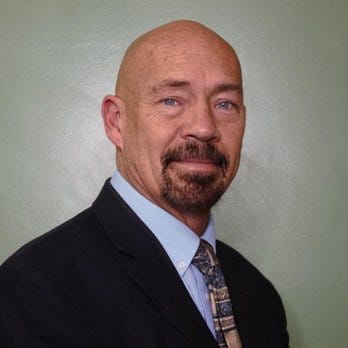
Jason Jensen, Utah Licensed Private Investigator, (801) 759-2248 · jason@jenseninvestigations.com
The Crime That Never Went Cold in the Public Mind
To understand why a letter like Jensen’s carries weight in 2026, one must first understand just how much this case has refused to die — not only as a matter of law enforcement priority, but as a fixture in the American psyche.
JonBenét Ramsey was reported missing by her mother, Patsy Ramsey, on the morning of December 26, 1996. Patsy had discovered a lengthy, handwritten ransom note on the back staircase of the family’s home on 15th Street in Boulder’s wealthy University Hill neighborhood. The note demanded $118,000 — coincidentally, almost the exact amount of a Christmas bonus John Ramsey had received from his company, Access Graphics, just weeks earlier. Hours after police arrived, John Ramsey himself found his daughter’s body in the basement’s wine cellar, concealed beneath a white blanket.
The autopsy determined that JonBenét died from “asphyxia by strangulation associated with craniocerebral trauma.” She had been struck on the head with a blunt object — causing a skull fracture — and strangled with a garrote fashioned from a paintbrush handle and a length of cord. She had also been sexually assaulted. Investigators found no signs of forced entry into the home, though a basement window was noted to have been broken previously by John Ramsey himself when he was once locked out of the house.
Key Facts at a Glance
Victim JonBenét Patricia Ramsey, age 6. Born August 6, 1990, Atlanta, Georgia.
Date of Death Night of December 25 or early hours of December 26, 1996.
Location 700 block of 15th Street, Boulder, Colorado.
Cause of Death Asphyxia by strangulation with associated craniocerebral trauma.
Ransom Note Three pages, handwritten, demanding $118,000 — matching John Ramsey’s recent bonus to the dollar.
DNA Evidence An unidentified male DNA profile (UM1) found on JonBenét’s clothing and under her fingernails. Excludes all Ramsey family members. No CODIS match found.
Ramsey Family Status Fully exonerated by DNA evidence in 2008 by then-District Attorney Mary Lacy.
Case Status Open, active, and unsolved. Boulder Police Department provides annual updates.
Tips Received More than 21,000 tips, letters, and emails since 1996. Investigators have visited 19 states.
From the outset, the investigation became a cautionary tale in mismanagement. Boulder Police — a department accustomed to burglaries and university misdemeanors, not homicides — were widely criticized for compromising the crime scene, failing to immediately isolate witnesses, and, fatally, focusing investigative resources almost exclusively on JonBenét’s parents. John and Patsy Ramsey were subjected to years of scrutiny, innuendo, and media trial. A grand jury did move to indict both parents in 1999 on counts of child abuse resulting in death and accessory to first-degree murder, but then-District Attorney Alex Hunter, citing insufficient evidence, declined to sign the indictments. No charges were ever filed.
In 2006, Patsy Ramsey died of ovarian cancer at the age of 49, without ever seeing her daughter’s killer identified. Two years later, in 2008, a new district attorney, Mary Lacy, formally exonerated the entire Ramsey family based on a DNA profile recovered from JonBenét’s clothing. The unidentified male DNA — now referred to in investigative circles as “UM1” — belonged to an unknown individual who was not a member of the Ramsey family and had never matched any profile in the FBI’s national CODIS database, which contains more than 1.6 million DNA profiles.
“The world is more interested in knowing the truth rather than securing justice, especially since the UM1 DNA evidence would prevent them from guaranteeing a conviction.”
— Jason Jensen, Jensen Private Investigations, January 2026
Who Is Jason Jensen — and Why Is He Writing to a Killer?
Jason K. Jensen is not a hobbyist true-crime enthusiast. He is a licensed Utah private investigator (BCI Licenses #P101979 & #G101978) with 27 years of investigative experience and a master’s degree in Criminal Justice. He is a co-founder of the Cold Case Coalition, a member of the American Investigative Society of Cold Cases (AISOCC), the International Association for Identification (IAI), the International Association for Bloodstain Pattern Analysts (IABPA), and the Association for Crime Scene Reconstruction (ACSR). He has appeared as a commentator on Court TV and on NewsNation, and has been cited in national media on the Ramsey case, the Gilgo Beach murders, and other high-profile cold cases.
Jensen began formally investigating the Ramsey case several years ago, after becoming convinced — through his own review of the publicly available evidence — that the killer was an intruder with likely local ties, someone who had knowledge of the Ramsey family’s routines, finances, and home layout. “The Ramseys were not involved in the death of their daughter,” he has stated publicly. “I have not seen any evidence to overcome the presumption of innocence in this case.”
His January 2026 letter represents a culmination of years of work and a deliberate tactical escalation. Jensen is not bluffing about his experience with this kind of outreach. In the letter, he specifically references his ability to help arrange what is known in legal terms as a “Queen for a Day” letter — a written proffer agreement in which a suspect, without formal immunity, can speak to prosecutors or investigators for a limited purpose, with certain protections. He also mentions facilitating immunity for statements, suggesting he has connections within law enforcement willing to consider this avenue.
The legal framing of the letter is pointed. Jensen notes that Colorado’s statute of limitations for manslaughter is three years — a fact that is, strictly speaking, now legally moot given that more than twenty-nine years have passed. However, the argument Jensen is making is a moral and strategic one: if the killer frames JonBenét’s death as unintentional — an accident that spiraled out of control — they could potentially negotiate down from first-degree or capital murder, which carry no statute of limitations in Colorado, to a lesser charge. Whether prosecutors would entertain such an arrangement in a case of this magnitude is an open question. But the strategy is not without precedent in cold case negotiations.
The Gary Oliva Thread
Jensen’s public letter does not name a specific suspect. But his investigative work over the past several years has centered significantly on one individual: Gary Howard Oliva, a convicted sex offender currently incarcerated in a Colorado state prison for child pornography possession.
Oliva’s name first surfaced publicly in connection with the Ramsey case as early as 2002, when he was identified as a person of interest in an episode of the CBS news magazine 48 Hours Investigates. Lou Smit, a retired homicide detective brought in by the Boulder District Attorney’s Office who became one of the most vocal proponents of the intruder theory, later identified Oliva as a suspect in his own investigation. Smit believed an intruder entered through a basement window — pointing to a suitcase found positioned almost directly below it — and that the killing bore the hallmarks of a sexual predator who had not intended for the child to die.
Oliva was, at the time of JonBenét’s murder, a registered sex offender living in the Boulder area. He has, in letters written from prison, made statements claiming that he killed JonBenét accidentally — claims that align almost precisely with the legal framing Jensen is now offering in his public letter.
In 2023, Jensen took a significant investigative step: he commissioned forensic handwriting analysis comparing Oliva’s known writing samples to the infamous three-page ransom note found in the Ramsey home. Two independent experts, reviewing the material, found what Jensen described as “compelling similarities” between Oliva’s handwriting and the ransom note. Oliva has never been formally charged in connection with JonBenét’s death, and Boulder Police have declined to confirm or deny whether he remains an active suspect in their ongoing investigation.
Note on Gary Oliva: Oliva has never been charged in connection with JonBenét Ramsey’s death. His name appears in public records related to the case as a historical person of interest identified by investigators. Boulder Police have not confirmed his current status in the investigation. All references here are drawn from public record and published investigative journalism.
Decoding the Ransom Note — Jensen’s SBTC Theory
Among the most enduring mysteries of the Ramsey case is the ransom note itself — a bizarre, three-page document written on Patsy Ramsey’s own notepad with a pen found in the home. Its literary quality is peculiar for a ransom demand: it contains cinematic flourishes, references to a “small foreign faction,” instructions referencing “deviations from instructions,” and an unusual vocabulary that experts say points toward someone educated but not necessarily college-trained — someone who read extensively. The note concluded with the phrase “Victory! S.B.T.C.”
The SBTC signature has never been definitively decoded. Various theories have suggested it stood for “Saved By The Cross,” a religious reference; others have proposed initials, organizational acronyms, or coded names. Jensen developed a striking new theory: that SBTC refers to “single-band truncated-crystal” calculations — a term used in a physics research paper published in March 1996 by two scientists at the University of Colorado Boulder, located less than half a mile from the Ramsey family home.
“The odds of a paper being written in March 1996 referencing SBTC and a ransom note signed SBTC in December 1996 just half a mile apart seems uncanny to me,” Jensen told The U.S. Sun. He further noted that the vocabulary in the ransom note — words like “attaché,” “deviation,” and “countermeasures,” which he identifies as eleventh-grade vocabulary words — alongside specific typographic choices (the use of printed forms of the letters “a” and “t” instead of standard cursive forms) suggests a writer who consumed a great deal of printed material but may not have had formal higher education. “I believe the killer or attempted abductor was a local, someone likely living in the neighborhood,” Jensen said. “So I find this link of SBTC back to the university to be quite compelling.”
What Boulder Police Say: New Evidence, New Technology, New Eyes
Jensen’s letter did not emerge in a vacuum. It arrived during what may be the most active period of official reinvestigation since the case’s early years.
In December 2025, the Boulder Police Department released its annual case update — a practice it has maintained in recent years in response to growing public interest, accelerated by a major Netflix documentary series that re-examined the evidence. Chief Stephen Redfearn confirmed that investigators had conducted several new interviews as well as re-interviewed individuals based on tips, and had collected new evidence while retesting other pieces with advanced DNA technology. “Techniques and technology constantly evolve,” Redfearn said. “This is especially true with technology related to DNA testing.”
The UM1 DNA profile — which has been a central feature of the case since its existence was confirmed in 2003 — remains unidentified in national databases. However, the landscape of forensic DNA science has changed enormously since 2003. Investigative genetic genealogy, the technology that identified the Golden State Killer in 2018, has since helped solve dozens of cold cases across the country. John Ramsey has been among the most vocal advocates for applying this methodology to his daughter’s case, publicly calling on the Colorado governor to compel Boulder Police to release evidence to qualified genealogy researchers.
Former Denver District Attorney Mitch Morrissey, who has been involved in discussions about the case, noted the challenge: the DNA in question is described as a complex mixture — approximately a 50/50 blend — which makes genealogical sequencing difficult with current technology. “We are not at a stage with sequencing to be able to do a 50-50 mixture,” he has said, though he and others remain cautiously optimistic that continued advances will eventually make it possible.
Meanwhile, sources reported in late 2025 that Boulder Police had quietly assigned a new lead detective to the Ramsey case — Kenny Beck, a former Alabama law enforcement officer who joined Boulder PD in 2023. Jensen, who has met with Beck on multiple occasions, expressed confidence in the new investigator’s approach. “New eyes mean new perspective,” Jensen said. “He’s running like a sprinter, and he’s all over the JonBenét case.”
“This investigation will always be a priority for the Boulder Police Department. It is never too late for people with knowledge of this terrible crime to come forward.”
— Chief Stephen Redfearn, Boulder Police Department, December 2025
John Ramsey: Thirty Years Without Answers
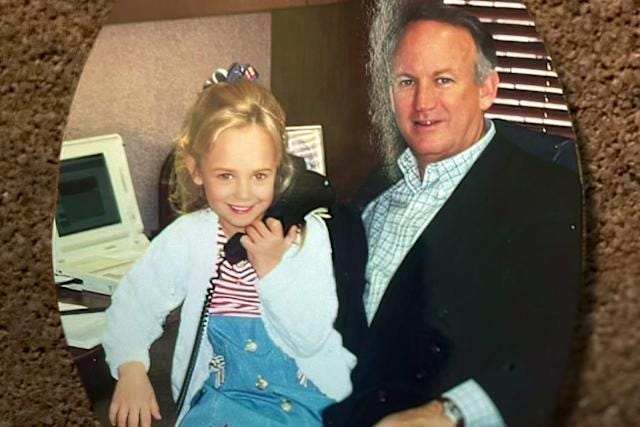
At the center of this case — and explicitly named in Jensen’s letter — is John Bennett Ramsey, who was 53 years old when he found his daughter’s body in that basement on December 26, 1996, and is now in his early eighties. He has outlived his wife, Patsy, by two decades. His daughter’s face remains the lock screen of his phone. He has met with five different Boulder Police chiefs since the murder. He has fought publicly and privately for better investigative resources, for DNA testing, for outside help.
Jensen’s letter invokes him directly: “John Ramsey would probably agree with this. He wants to get answers before he dies and to bring peace to his family.” It is both an appeal to compassion — directed at the killer — and a quiet acknowledgment of the human clock that is running. John Ramsey has said publicly and in interviews that new leadership at Boulder PD has renewed his hope. “It was not very good for 25 to 26 years,” he has said of the previous investigation. He has expressed optimism about genealogical DNA technology, noting that it has cracked other seemingly impossible cold cases.
The former Ramsey family attorney Hal Haddon, who broke his silence at a CrimeCon event in Aurora, Colorado in 2025, pointed to a specific piece of physical evidence he believes has been underexamined: the garrote used to strangle JonBenét — a crude instrument fashioned from a length of cord and a paintbrush handle. “I have pressed hard for DNA analysis of the knots in this garrote, which our DNA experts say could be promising, because someone had to tie those, and they’re fairly sophisticated,” Haddon said.
What Jensen Is Really Doing — and Why It Matters
It would be easy to dismiss a letter addressed to an unknown killer as a theatrical gesture. But Jensen’s background, his years of documented investigative work, and his cultivated relationships with both Boulder law enforcement and the Ramsey family suggest something more calculated is at work.
The letter serves several functions simultaneously. First, it is a genuine legal overture — Jensen is not merely signaling; he is specifically offering a mechanism (Queen for a Day, immunity arrangements) through which a suspect could come forward with some level of legal protection. Second, it is a psychological pressure point. If Jensen and others are correct that the killer has been watching this case for thirty years — as killers often do — then a public letter declaring “this is the year” plants a seed of urgency that may accelerate decision-making. Third, it is a signal to law enforcement: Jensen is publicly staking his credibility on the claim that an arrest is imminent, which creates pressure on Boulder PD to either validate or refute his confidence.
And then there is the matter of what the letter does not say. It does not name Gary Oliva. It does not claim certainty about any individual. It leaves the door open. It speaks to the killer — whoever that person is — in the language of self-interest, legal strategy, and, quietly, mercy. “The world is more interested in knowing the truth rather than securing justice,” Jensen writes. It is a sentence that could only have been written by someone who has spent years thinking about what it would take to finally close a wound that has never healed.
The Shape of Justice, Nearly Thirty Years On
JonBenét Ramsey would have turned 35 years old in August 2025. Her case has outlasted a district attorney’s career, a police chief’s tenure, and a mother’s life. It has survived thousands of tips, hundreds of interviews, dozens of suspects, multiple grand juries, and the full weight of American media obsession. It has been examined in books, documentaries, podcasts, academic papers, and congressional inquiries. A Paramount+ miniseries dramatizing the murder aired in 2026.
And yet the killer has never been found.
Jensen’s letter represents a kind of last-resort creativity — the willingness of one investigator to do something unconventional, even audacious, on the theory that thirty years of conventional approaches have not been enough. He knows it may not work. He knows the person who killed JonBenét Ramsey may never read it, or may read it and feel nothing. But he also knows what he wrote in its opening line: the police investigation is closer than it has ever been. The DNA technology is advancing. A new detective is on the case. A father is running out of time.
“This is the year,” Jensen wrote.
For the family, for the investigators, for the thousands of people who have followed this case across three decades — that is both a promise and a prayer.
If You Have Information
Boulder Police Tip Line 303-441-1974
Email BouldersMostWanted@bouldercolorado.gov
Northern Colorado Crime Stoppers 1-800-222-TIPS (8477)
Jason Jensen / Jensen Investigations (801) 759-2248 · jason@jenseninvestigations.com
TheColdCases.com · All sources verified. All suspects presumed innocent unless charged.
Poor baby. I hope you rest in peace.
Don’t they automatically take DNA samples from incarcerated people now? Can they match this Gary person to this?