


A 42-year cold case identification in Boise connects a reclusive chemist who died by cyanide to America’s most infamous unsolved retail poisoning.
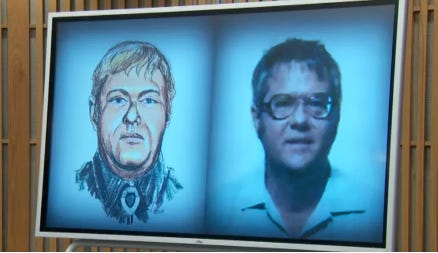
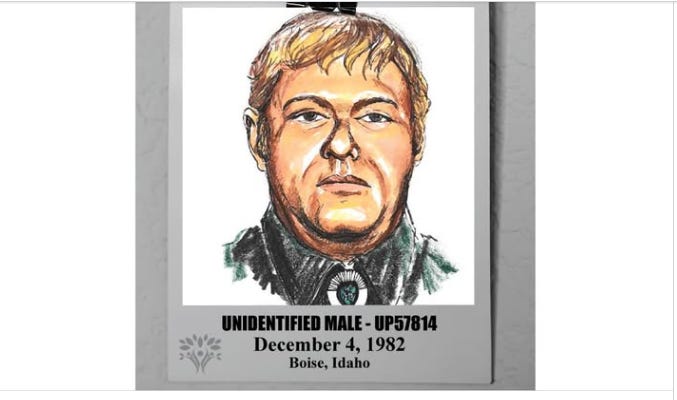
BOISE, Idaho — For more than four decades, one of the Pacific Northwest’s most haunting enigmas was known simply as the “Unknown Wanderer.”
On December 4, 1982, inside Sacred Heart Catholic Church in Boise, an unidentified man collapsed beneath a pew just before confession was scheduled to begin. In his pockets lay nearly thirty keys, a Seiko watch, $1,900 in cash, and a typed note instructing that the money be used for his burial and cremation, with the balance donated to the parish. The note was signed with an alias: “William L. Toomey.”
His cause of death: acute cyanide ingestion.
Now, an investigative breakthrough by the Ada County Sheriff’s Office has shattered that decades-long wall of silence. Using advanced genealogical DNA testing on skin cells salvaged from the wanderer’s wallet and tracing a key engraved with “Mills Court” to a hardware shop in Florida, detectives officially identified the man as Dr. Mathew Francis Betkouski—a brilliant, reclusive organic chemist with a Ph.D., ties to NASA-funded research, and a chilling web of circumstantial links to America’s most notorious cold case: the 1982 Chicago Tylenol murders.
The Fall of 1982: Panic Across America
To understand why Betkouski’s identification has sent shockwaves through the true-crime and forensic communities, one must return to late September 1982. Over three terrifying days in the Chicago area, seven people—including three members of a single family—collapsed and died within minutes of taking Extra-Strength Tylenol capsules.
The killer had systematically opened capsules, packed them with lethal quantities of cyanide, slipped them back into retail bottles, and returned them to pharmacy and grocery store shelves across Cook and DuPage counties. The crime reshaped American consumer safety forever, giving birth to tamper-evident packaging and federal anti-tampering statutes.
Yet, despite an FBI manhunt spanning decades, the original perpetrator was never caught. Prime extortion suspect James Lewis served federal prison time for demanding $1 million to “stop the killings,” but investigators never proved he physically tampered with the bottles, and Lewis died in 2023 without ever being charged with murder.
The Clues Connecting Betkouski to Chicago
When Ada County Cold Case Detective Tim Cooper and Sheriff Matt Clifford addressed the media alongside renowned forensic psychiatrist Dr. Park Dietz, they carefully outlined why Dr. Betkouski has emerged as a person of intense investigative interest:
Expertise in Chemistry & Cyanide: Betkouski held a Ph.D. in organic chemistry and had worked on specialized defense and NASA-contracted projects at the White Sands Test Facility in New Mexico. Colleagues told detectives he had a long-standing fascination with toxicology and volatile compounds.
The Chilling Coincidence: In early 1982, shortly before he was terminated from his position at White Sands, Betkouski allegedly made a remark to a fellow scientist musing about how easily a lethal poison could be concealed inside over-the-counter medication capsules.
The May 1982 New Mexico Death: Detectives unearthed an unresolved cyanide poisoning in Las Cruces, New Mexico, from May 1982—months before the Chicago terror. The deceased had been taking over-the-counter capsules, an anomaly during an era when civilian cyanide poisonings were extraordinarily rare.
Physical Possessions: Among the belongings traced to Betkouski was a hand-drawn map of Chicago dating to the 1970s, personal photographs taken in the Chicago metropolitan area, and a vial containing sodium cyanide labeled in handwriting matching his own.
The Vanishing Act: On October 15, 1982—scarcely two weeks after the Chicago murders gripped national headlines—Betkouski abruptly vacated his residence in New Mexico. He told acquaintances he had been on the road, adding ominously that he had not been “any place one would want for vacation.”
Key Comparisons: The Murders vs. The Wanderer
While the circumstantial profile presented by Ada County authorities is compelling, federal and Illinois state investigators caution against jumping to conclusions.
Toxic Agent:
Chicago Tylenol Case: Potassium cyanide (KCN) was used in the adulterated capsules.
Dr. Betkouski: Had sodium cyanide (NaCN) in his possession and died from a lethal dose of cyanide.
Location in Late September 1982:
Chicago Tylenol Case: Concentrated across Cook and DuPage counties in Illinois.
Dr. Betkouski: Unconfirmed travel during the exact window; no verified paper trail or receipts placing him in Illinois stores.
Tampering Modality:
Chicago Tylenol Case: Required retail shelf restocking, tampering with retail seal packaging, and physical retail distribution.
Dr. Betkouski: Had laboratory expertise and theoretical capability, but no confirmed eyewitness accounts placing him on store floors.
Current Official Status:
Chicago Tylenol Case: Remains an active, unsolved FBI and state homicide investigation.
Dr. Betkouski: Formally identified decedent; classified as an investigative person of interest, but not an officially named homicide suspect.
The Arlington Heights Police Department and Illinois State Police noted that Ada County detectives previously floated a potential link several years ago, and task force reviewers found no direct evidentiary match placing Betkouski in the specific stores where contaminated bottles were purchased.
Boise authorities acknowledge these gaps. They emphasize that while criminal profilers and forensic psychiatrists reviewed Betkouski’s profile and deemed him a viable candidate, the burden of conclusive proof has not yet been met.
A Final Confession?
Why did Dr. Mathew Francis Betkouski take a lethal dose of cyanide in the sanctuary of Sacred Heart Church on a freezing December morning in 1982?
Did he step into that Boise church seeking absolution for an act of mass terror that stunned the world, or was his death the tragic, isolated suicide of a brilliant scientist whose life had spiraled out of control?
With all investigative files now transferred to the Chicago-area task force, the true-crime and investigative communities are closer than ever to answering whether the “Unknown Wanderer” was running from his own demons—or running from the blood of seven innocent strangers.
For more cold case breakdowns and forensic updates, subscribe to TheColdCases.com.
Fascinating development. Thank you.