


CASE PROFILE & KEY DETAILS

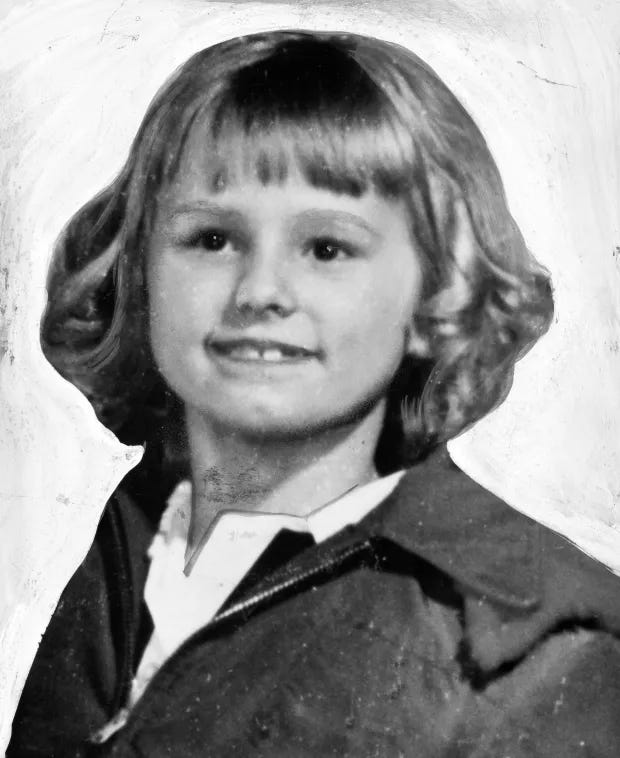
Victim: Gloria Kowalewicz (Age 8, third-grade student)

Date of Crime: Saturday, November 12, 1960

Location of Abduction: South Side of Chicago, Illinois (en route to St. Mary of Mount Carmel Church)

Location Discovered: Drainage ditch in a forest preserve southwest of Chicago / Cal-Sag region

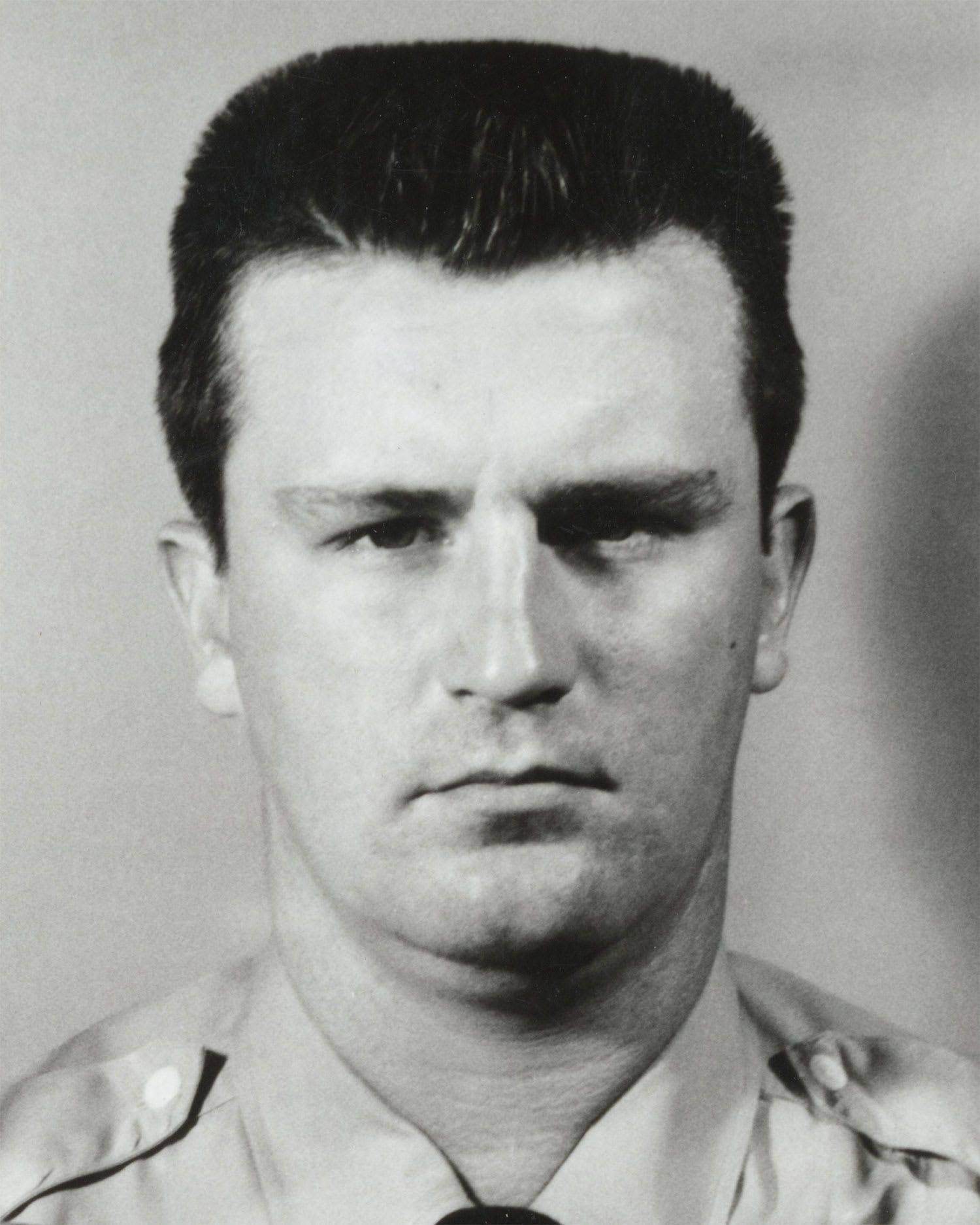
Identified Perpetrator: Thomas Francis McInerney Jr. (Chicago Police Patrolman / later Violent Crimes Detective)

Perpetrator Life Span: Died in 2006 at age 70 in Las Vegas, Nevada

Career in Law Enforcement: Joined CPD in 1959; served 28 years until retirement in 1987; later worked as an investigator for the Federal Public Defender’s Office in Nevada until 2004

Critical Evidence: Preserved fingerprint lifted from the strap of Gloria’s white communion purse matched McInerney’s 1959 police application fingerprint card; semen DNA profile extracted from clothing via modern genetic genealogy / Sexual Assault Kit Initiative (SAKI) testing

Current Police Status: Formally cleared as solved by the Chicago Police Department, Illinois State Police, and FBI. Detectives and criminologists are currently cross-referencing unsolved cold-case homicides across McInerney’s 28-year jurisdiction.
The Three-Block Walk
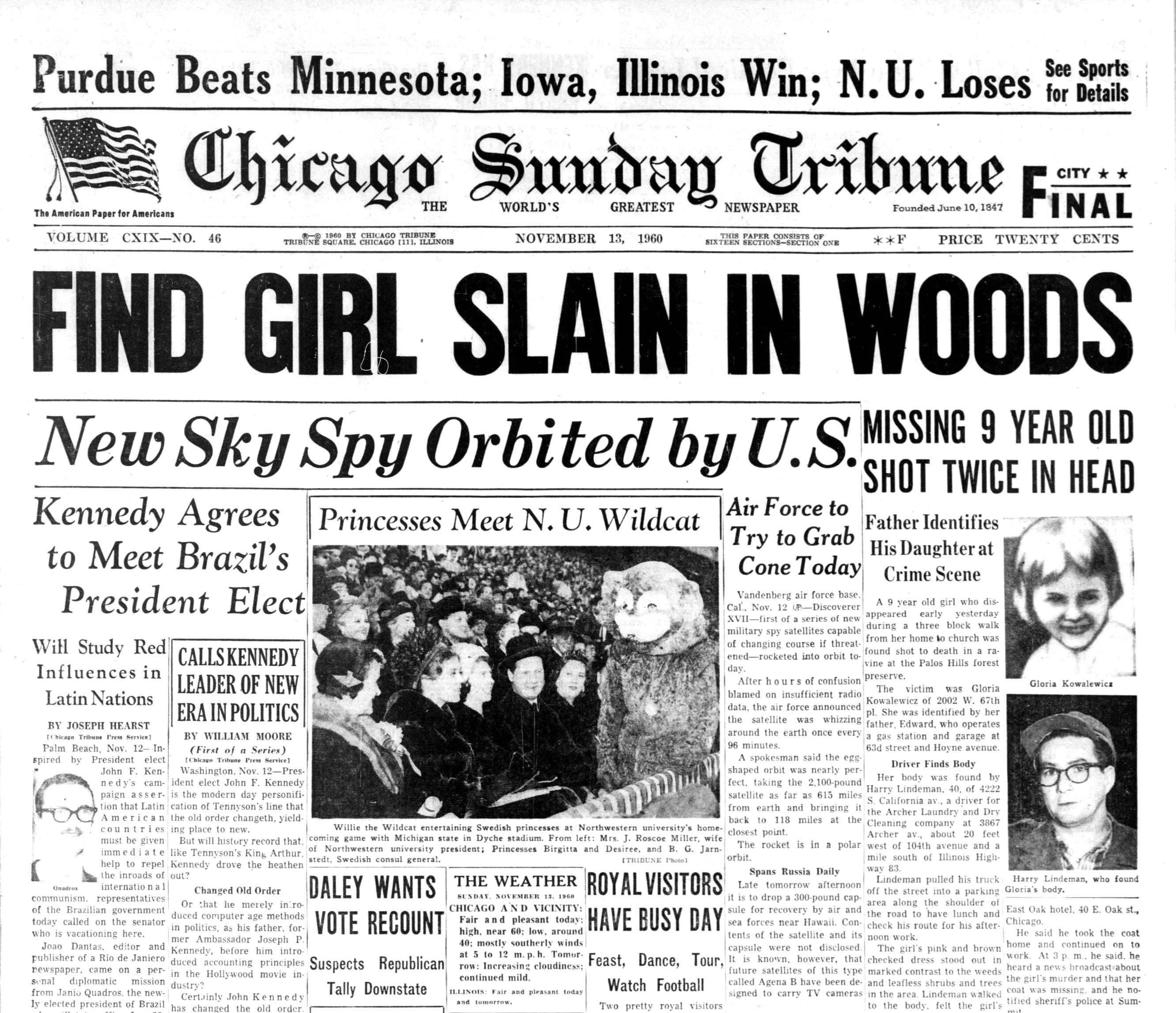
The morning of Saturday, November 12, 1960, broke brisk and grey over the tight-knit Polish-American enclaves of Chicago’s South Side. Eight-year-old Gloria Kowalewicz—a bright-eyed third-grader known for her devout spirit and gentle demeanor—stepped out of her front door just before 8:00 a.m.
She was dressed neatly for morning Mass, clutching a small, white communion purse that held her rosary and personal prayer book. Her destination was St. Mary of Mount Carmel Church, a sanctuary standing merely three residential blocks away. It was a familiar stroll through a neighborhood where families left their front doors unlocked and neighbors watched the street corners from kitchen windows.
Gloria never walked through the church doors.
When she failed to return home, panic rippled through her household. By late morning, Chicago police cruisers were dispatched to search the neighborhood streets, alleys, and rail corridors.
The search ended roughly four hours later in the quiet desolation of a Cook County forest preserve southwest of the city limits. A passerby spotted a child’s body dumped in a cold drainage ditch.
Gloria had been sexually assaulted and shot to death.
Scattered along the rural roadway and leading along the highway corridor back toward Chicago, investigators discovered a grim trail: her small coat, her shoes, a spent bullet slug, and the delicate white communion purse she had carried that morning.
The brazen brutality shook Chicago to its core. A massive manhunt launched immediately. Detectives went door-to-door, knocking on hundreds of residences across the South Side. Investigators interviewed upwards of 1,300 people, chased down thousands of tips, conducted polygraph examinations on over a dozen potential suspects, and had Chicago police divers dredge the freezing waters of the Cal-Sag Channel near Ridgeland Avenue searching for the murder weapon.
Yet, as the weeks turned into months and the months into decades, every lead evaporated. The killer seemed to possess an eerie, phantom-like ability to slip through the dragnet without leaving a trace.
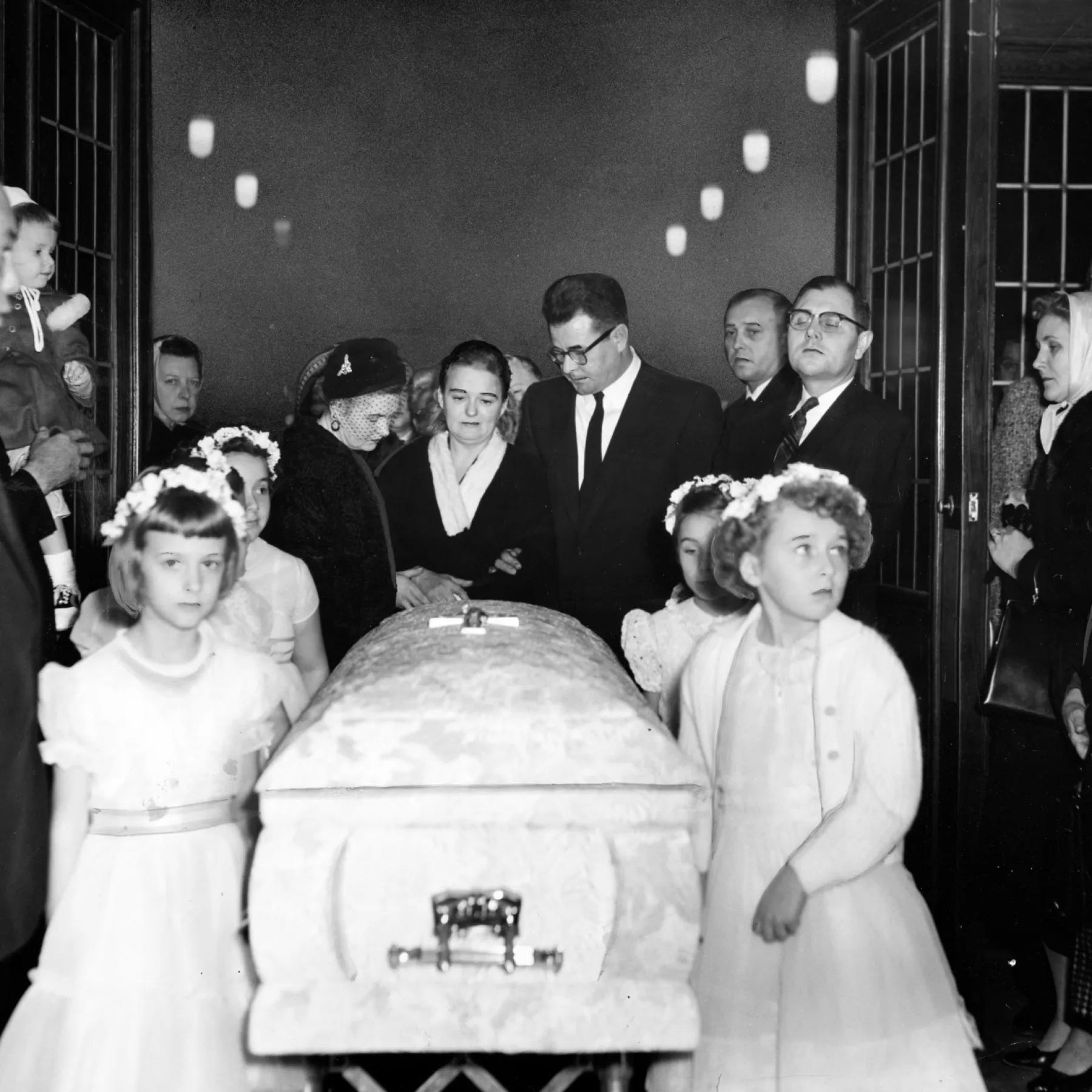
Gloria’s devastated parents, Walter and Josephine Kowalewicz, spent the remainder of their lives looking out their front window, tortured by the unknown. Both passed away long before knowing the identity of the person who extinguished their daughter’s life.
The Monster with a Badge
For nearly 66 years, the file on Gloria Kowalewicz gathered dust in the Chicago Police Department’s cold case archives.
Then came the forensic revelation.
The Chicago Police Department, collaborating with the Illinois State Police and the FBI through a federal Sexual Assault Kit Initiative (SAKI) grant, subjected the preserved physical evidence to cutting-edge forensic analysis. Decades earlier, forensic technicians had secured bodily fluids from Gloria’s garments, from which a male DNA profile was isolated in 2010. By 2024, investigative genetic genealogy and enhanced latent print scanning converged on an unexpected target.
Forensic specialists re-examined the white communion purse dropped on that roadside in 1960. Using modern optical and chemical lifting techniques, analysts enhanced a latent fingerprint lifted from the purse’s strap.
When the latent print was uploaded to cross-match against archived fingerprints, a hit surfaced.
The print did not belong to a transient, a known predatory sex offender, or a paroled felon. It belonged to Thomas F. McInerney Jr.—a print he had willingly pressed into ink when he applied to become a Chicago Police officer in 1959.
The DNA profile pulled from the crime scene corroborated the fingerprint match: McInerney was Gloria Kowalewicz’s killer.
At the time of the murder in November 1960, McInerney was 24 years old and an active Chicago patrolman who had been on the force for barely a year. Far from being hunted by law enforcement, McInerney spent the next three decades wearing the badge. He eventually secured promotions up the ranks, ultimately serving as a violent crimes and homicide detective—the very department tasked with catching child murderers and violent predators.
McInerney retired comfortably with a city pension in 1987 after 28 years on the force. He relocated to Nevada, where he worked as an investigator for the Federal Public Defender’s Office until 2004. In 2006, at the age of 70, McInerney died in Las Vegas without ever spending an hour in handcuffs for the horrific act he had committed in the autumn of 1960.
In an unsparing official statement, the Chicago Police Department addressed the institutional horror:
“His abhorrent actions not only took the life of an 8-year-old child, but left her parents and all who knew and loved her shattered as they searched for answers. McInerney should never have worn the CPD star, and it is devastating to accept that he was never identified and held accountable while he was alive.”
The Mechanics of Betrayal
The revelation of McInerney’s identity explains the single biggest mystery that confounded the 1960 task force: How did a cautious, 8-year-old Catholic schoolgirl vanish in broad daylight on a 3-block route without raising an alarm or screaming for help?
Criminologists and veteran investigators point to the dark power of the uniform.
In 1960, children were explicitly conditioned to view police officers as absolute authority figures and protectors. If an adult stranger pulled to the curb in a civilian vehicle, an 8-year-old girl walking alone might run or scream. But if a man displaying a Chicago Police patrolman’s star and official credentials signaled her over, or offered her a ride away from the morning chill, fear would instantly be replaced by obedience.
Michael Gould, a veteran law enforcement officer and founding member of the NYPD’s K-9 unit, observed the psychological trap:
“What makes this even more horrific is that McInerney may have used his influence as an officer to lure her into his car. We teach our children that you should trust law enforcement, and when they leverage that against innocent people, particularly children, it’s horrendous.”
Furthermore, McInerney’s position inside the police department provided him with a protective shield no street criminal could ever buy:
Insight into Crime Scene Handling: Even as a junior patrolman, McInerney understood basic procedural sweeps, search radius conventions, and patrol boundaries.
Knowledge of Investigative Blind Spots: By dumping Gloria’s body in a remote forest preserve across county/district jurisdictions and strewing her belongings along a travel corridor, he introduced jurisdictional fragmentation.
Internal Camouflage: When task force detectives combed the South Side, questioning over a thousand citizens and administering polygraphs, they looked outward toward civilian deviants. No one turned the microscope inward toward the newly badged 24-year-old patrolman walking beats in the district.
The Haunting Question: Did He Kill Again?
While the resolution of Gloria Kowalewicz’s murder brings historical clarity, it has opened a chilling chapter for cold-case detectives across Illinois and Nevada.
Serial homicide experts widely agree that predatory sexual sadism directed at children is rarely a “one-off” aberration. It is practically unheard of in criminal profiling for an offender to suddenly commit a daytime predatory abduction, sexual assault, and firearms execution of an 8-year-old child, and then desist entirely for the remaining 46 years of his life.
Former investigator Michael Gould underscored this reality:
“My prediction is there are going to be other victims linked to McInerney. I don’t think this was a sole act. This, in my view, would have been a planned and intentional act. It’s rare that this happens once in a serial murderer’s life. They don’t do it one time. In fact, it usually escalates when they are successful.”
Why McInerney Was the “Ideal” Serial Predator:
The Murder Weapon & Mobility: As an armed detective, McInerney possessed departmental weapons, unmarked municipal vehicles, and round-the-clock plausible deniability for being in anomalous places at unusual hours.
Control of the Narrative: During his long tenure in violent crimes, McInerney directly investigated assaults, shootings, and homicides. If an officer with homicidal inclinations worked inside homicide, he would understand forensic evidence collection, the limitations of latent print processing, blood-typing protocols of the pre-DNA era, and how police case files were routed and buried.
Access to Vulnerable Populations: Detectives frequently interact with runaways, vulnerable youths, sex workers, and marginalized individuals—victims whose disappearances during the 1960s, 70s, and 80s were frequently mishandled or categorized as low-priority runaways by big-city departments.
The Chicago Police Department and regional cold-case units are reviewing unsolved child homicides and missing-person cases spanning McInerney’s entire 1959–1987 CPD tenure, as well as his subsequent post-retirement years as an investigator in Nevada.
The Legacy of Preserved Evidence
If there is a quiet victory in this tragedy, it belongs to the anonymous evidence custodians and detectives of the Chicago Police Department who, across 66 years, refused to incinerate or discard the physical traces of Gloria’s final morning.
In thousands of mid-century cold cases nationwide, physical evidence was routinely lost, contaminated, damaged by damp basements, or deliberately purged during departmental moves. In Gloria’s case, however, the strap of her communion purse, her clothing, and crime-scene ballistics were cataloged, wrapped, and protected across six decades of technological evolution.
They were preserved long enough for science to invent tools that 1960 investigators could only imagine:
Investigative Genetic Genealogy (IGG): Extracting degraded single-source male DNA profiles and mapping them across public genealogy databases to construct familial pedigree trees.
Laser & Specialized Chemical Latent Print Development: Lifting microscopic ridge details off brittle 1960s purse materials that original powder-and-tape techniques could not resolve.
Automated Fingerprint Identification Systems (AFIS): Instantly searching historical municipal hiring records that were once buried in paper filing cabinets.
Justice Denied, Truth Delivered
Thomas F. McInerney Jr. died in the dry desert air of Las Vegas, enjoying full retirement benefits, free of handcuffs, criminal trials, or prison bars. He cheated the criminal justice system he had sworn an oath to uphold.
Gloria Kowalewicz never saw her ninth birthday. Her parents passed away with their grief unsoothed and their questions unanswered.
Yet, truth carries an endurance that outlasts the lifespans of criminals.
The clearance of Gloria Kowalewicz’s case proves that time cannot erase forensic evidence. For investigators at TheColdCases.com, the unmasking of McInerney is not an ending—it is the beginning of a sweeping forensic audit of an ex-cop’s 28-year career, ensuring that any other victims left in his wake are finally brought into the light.