

Dian Fossey’s Murder: Will It Ever Be Solved?
Dian Fossey was an animal activist brutally murdered in Rwanda

The Enduring Mystery of Dian Fossey’s Murder: Could Modern Technology Finally Crack the Case?
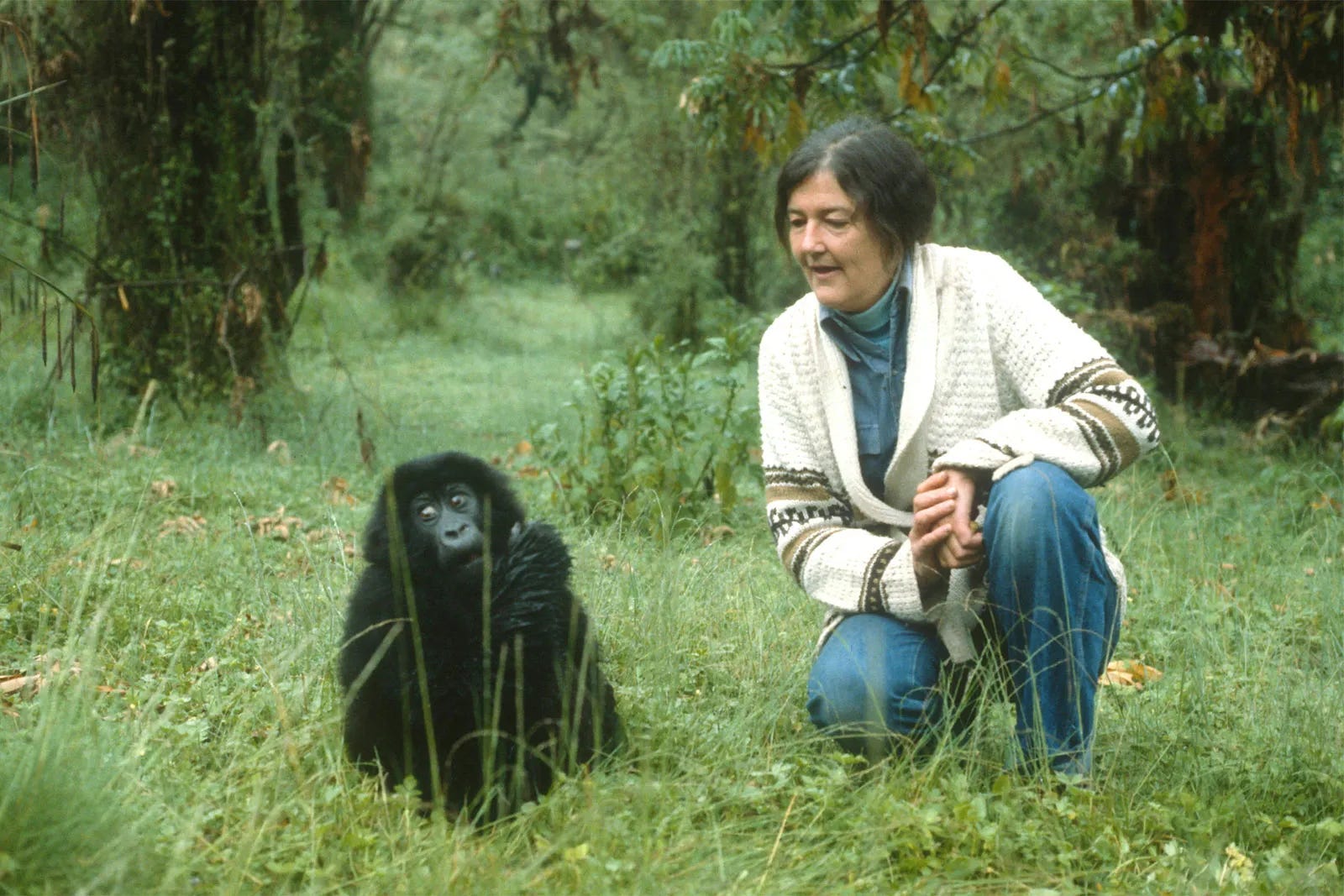
December 27, 2025, marks 40 years since the brutal murder of renowned primatologist Dian Fossey in her remote mountain cabin in Rwanda’s Virunga Mountains. As we enter a new era of forensic technology, questions linger: Could modern investigative techniques finally solve one of the most famous cold cases of the 20th century?
The scene that greeted Wayne McGuire on that misty morning remains etched in conservation history. Fossey, 53, lay dead in her cabin at the Karisoke Research Center, her body bearing the horrific marks of a machete attack. The brutal murder of the woman who had dedicated her life to protecting mountain gorillas shocked the world and spawned countless theories about who wanted her dead—and why.
The Perfect Storm of Suspects
Fossey had accumulated enemies like few others in the conservation world. Her aggressive anti-poaching tactics—including burning poachers’ camps, administering fake poisonings to extract confessions, and publicly humiliating suspected gorilla killers—had made her a target for revenge. Local poachers despised her. Rwandan authorities resented her interference. Even some of her own research assistants had grown to fear her volatile temper.
“Dian had created what you might call a perfect storm of motives,” says Dr. Ian Redmond, who worked with Fossey for years and discovered her body. “She was fighting poachers, corrupt officials, and even challenging the tourism industry. The list of people who wanted her gone was extensive.”
The official investigation quickly focused on Wayne McGuire, Fossey’s American research assistant. Rwandan authorities convicted him in absentia in 1986, claiming he murdered Fossey to steal research notes for his own work. McGuire, who had already fled to the United States, maintained his innocence and was never extradited. But many who knew the case found the prosecution’s theory unconvincing.
The Evidence That Remains
What makes Fossey’s case particularly intriguing for cold case investigators is the physical evidence that was preserved—or at least, was supposed to be preserved. According to FBI documents obtained through Freedom of Information requests, several crucial pieces of evidence were collected from the crime scene:
Hair samples found clutched in Fossey’s hand, presumably torn from her attacker’s head during the struggle
Blood samples from the crime scene
The murder weapon—a machete found under her bed
Fossey’s clothing from that night
But here’s where the case takes a frustrating turn. When researchers later attempted to access these materials for advanced DNA testing, they received conflicting responses from the FBI: some evidence was reportedly “destroyed,” while other samples were “lost.” This mishandling of evidence from one of the most famous murder cases of the 20th century has left investigators scrambling to work with what’s available.
Modern Technology’s Promise
Today’s forensic capabilities far exceed what was available in 1985. Dr. Michael Kennedy, a forensic expert who has studied the Fossey case, believes modern technology could potentially crack the case—if the evidence still exists and was properly preserved.
If they maintained her clothing correctly, labs could process that for trace DNA, according to Kennedy. Touch DNA technology can now extract genetic material from skin cells left when someone handles fabric, even decades later.
The machete, if it still exists and hasn’t been contaminated, could be re-examined using modern techniques. “We could potentially recover epithelial cells or skin cells from the handle,” Kennedy notes. “Modern latent fingerprint analysis could also reveal prints that weren’t detectable in 1985.”
Advanced DNA analysis techniques like PCR (Polymerase Chain Reaction) amplification and mitochondrial DNA testing weren’t available during the original investigation. These methods can work with incredibly small sample sizes and can even help identify individuals through familial DNA matching.
The Rwandan Perspective
Rwanda has made significant investments in modern forensic technology since establishing the Kigali Forensic Laboratory in 2005. The facility now handles DNA analysis, fingerprint matching, and other advanced investigative techniques that could potentially be applied to cold cases like Fossey’s murder.
“Forensic technology includes scientific analysis of evidence recovered at a crime scene and then presents the findings to judicial authorities,” explains a representative from the Rwanda National Police. “Forensic evidence is analyzed through different scientific methods like ballistics, blood tests, DNA testing, and fingerprint matching.”
However, the passage of time presents enormous challenges. Witnesses have died, memories have faded, and crucial evidence may have been lost forever. The political landscape has also shifted dramatically—Rwanda has transformed since the 1994 genocide, and priorities have understandably changed.
Theories That Persist
Multiple theories about Fossey’s murder continue to circulate among those familiar with the case:
The Poacher Revenge Theory: Fossey had made mortal enemies among local poachers, particularly one named Munyarukiko, whom she had publicly humiliated and whose possessions she had destroyed. Some believe he or his associates finally took their revenge.
The Corruption Theory: Fossey had allegedly discovered evidence of gold smuggling operations in the park and was preparing to expose high-level corruption. Her cabin was ransacked, suggesting someone was searching for specific documents.
The Witchcraft Theory: Local poachers believed Fossey possessed supernatural powers and had taken protective talismans from captured hunters. Some speculate that someone was sent to retrieve these items and panicked when Fossey awoke.
The Professional Hit Theory: The methodical nature of the murder—entering through a carefully cut hole in the cabin wall, the precise machete blows—suggests professional killers rather than local poachers.
The Digital Age Advantage
Modern investigators have tools that go beyond traditional forensics. Social media analysis, digital archives, and global databases could potentially identify patterns or connections missed in the original investigation. Genealogy databases have helped solve numerous cold cases through familial DNA matching, even when the original perpetrator’s DNA isn’t in criminal databases.
“The key is finding any remaining biological evidence,” explains Kennedy. “If we can get a DNA profile, we can search genealogy databases, international criminal databases, and potentially identify the killer or their family members.”
Reality Check: The Challenges
Despite technological advances, significant obstacles remain. The crime scene was compromised from the start—local workers and investigators trampled through the cabin before proper forensic protocols could be established. The murder weapon was passed from hand to hand, destroying potential fingerprint evidence. Critical evidence has been lost or destroyed.
A Case Worth Solving
Beyond the historical significance, solving Fossey’s murder could provide closure to her family, friends, and the conservation community that continues her work. The Dian Fossey Gorilla Fund International maintains her research station and continues protecting the mountain gorillas she loved.
“For the gorillas to outlive her is something those who knew Dian Fossey say was all she ever wanted,” notes Redmond. “To die in the forest she shared with the animals she loved was the ending she would have written for herself.”
But justice remains elusive. Whoever murdered Dian Fossey didn’t just kill a woman—they attempted to silence a powerful voice for conservation. Solving her murder would send a message that those who harm conservationists cannot escape justice, even decades later.
The Path Forward
For investigators willing to take on the challenge, several steps could potentially advance the case:
Evidence Audit: A comprehensive search for any remaining physical evidence, including items that might be stored in Rwandan or American archives
International Cooperation: Formal collaboration between Rwandan authorities, the FBI, and international forensic experts
Witness Re-examination: Interviewing any surviving witnesses or their family members who might have heard deathbed confessions
Technology Application: Using modern forensic techniques on any evidence that can be located
Database Searches: Comparing any recovered DNA profiles against international criminal and genealogy databases
The question remains: Will the political will exist to reopen a 40-year-old case with so many challenges? For those who believe in justice and the importance of protecting those who protect wildlife, the answer should be yes.
As we mark four decades since Dian Fossey’s murder, her legacy lives on in the thriving mountain gorilla populations she helped save. Perhaps it’s time for modern technology to ensure her own story reaches the conclusion she deserves—justice served, mystery solved, and a killer finally held accountable for one of conservation’s most infamous crimes.
The gorillas she loved continue to survive and thrive. Now, maybe, the truth about her death can survive too.
I agree, an evidence audit would be critical in this case. Great read. This is a case definitely worth another technological-forward look.