


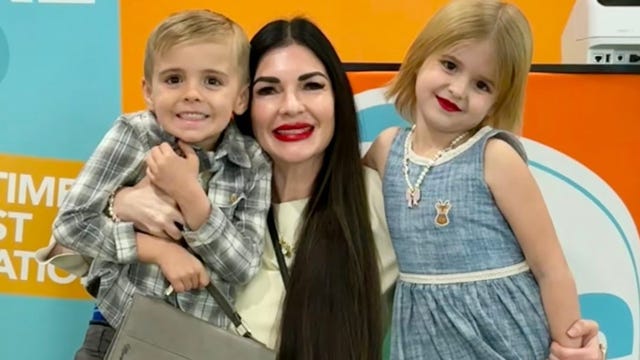
It was a welfare check that shouldn’t have been necessary. On the morning of December 3rd, 2025, concerned individuals who hadn’t been able to reach Charity Beallis contacted the Sebastian County Sheriff’s Office. Deputies arrived at a house on the 1100 block of First Avenue in Bonanza, Arkansas — a sprawling property valued at nearly $800,000. No one answered the door. With the help of two individuals employed at the home, law enforcement gained entry.
Inside, they found 40-year-old Charity Beallis and her six-year-old twins, a boy named Maverick and a girl named Eliana, dead from apparent gunshot wounds. All three were transported to the Arkansas State Crime Lab in Little Rock. The small town of Bonanza, nestled in Sebastian County in the River Valley region of Arkansas, would never be the same.
The discovery shook not just the community but the entire country. Because what made this case extraordinary — and extraordinarily disturbing — was not only the deaths themselves, but what had come before them. The day before the bodies were found, Charity had attended what was supposed to be her final divorce hearing from her estranged husband, Dr. Randall Beallis, a Fort Smith family practitioner with a complicated and troubling history. The divorce hearing had not gone the way Charity had hoped. And now she and her children were gone.
Over the months that followed, the case would pull back the curtain on a documented pattern of domestic violence, a medical establishment slow to act, a court system many felt had not done enough to protect a mother who’d begged openly and publicly for help, the mysterious prior death of another of Dr. Beallis’s wives — and, ultimately, an official autopsy determination that stunned the public and left more questions than it answered.
The Beginning of the End
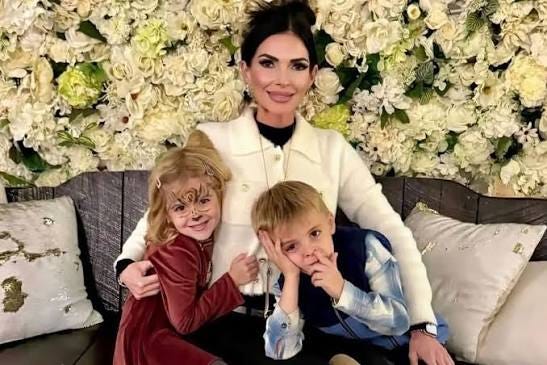
Charity Powell and Dr. Randall Beallis married in 2015. On the surface, it had the trappings of a comfortable life: a prominent physician husband, a large home in the Arkansas countryside, twin children born in 2019. But court records and accounts from those close to Charity paint a picture of a relationship that had turned toxic long before the dramatic events of late 2025.
Trouble had been documented as early as 2020. In May of that year, police were called to the Beallis residence following reports that Charity and Randall had both participated in slashing the tires of John Powell — Charity’s then-17-year-old son from a previous relationship. According to the responding officer’s report, both Charity and Randall confirmed they had slashed the tires, doing so while holding their infant twins. Police contacted the Arkansas Department of Human Services and called the Child Abuse Hotline. Randall would eventually plead no contest to misdemeanor criminal mischief and receive a one-year suspended sentence.
The most serious incident — the one that would trigger the divorce and criminal proceedings — came on February 16th, 2025. According to court documents, Dr. Randall Beallis was arrested and charged with aggravated assault on a family member, third-degree domestic battery, and two counts of third-degree endangering the welfare of a minor. The allegation was that he had choked Charity and caused her physical harm in front of their children.
In a police report from the incident, Randall told officers he had “pushed her up against the wall and shoved her into the sink.” He would later write to the Arkansas State Medical Board denying the most serious allegations, claiming that Charity “went into a rage” and that he “had no other choice but to use some physical force to get out,” and that he “never squeezed her neck nor choked her at any time.”
Charity filed for divorce on March 5th, 2025. In her filing, she asked for full custody of the twins and a protective order — both for herself and for the children. The couple had stopped living together in February 2025, and Charity remained in the Bonanza home with the children. A court order barred Randall from contacting Charity or any members of her family unless authorized by a valid court order.
“I’m living this battle right now. I am the victim, yet I’ve been treated like the problem while the criminal — a local doctor — is being shielded by the very system that’s supposed to protect us.”— Charity Beallis, in a public Facebook comment, August 2025
In August 2025, Charity took the extraordinary step of speaking out publicly. In a comment on an unrelated local news Facebook post, she wrote what amounted to a desperate cry for help — and an accusation against the very institutions meant to protect her. The comment went on to state that she had tried to reach Prosecuting Attorney Daniel Shue, but that he “won’t even accept a letter” from her, and that her voice, as the victim, had been “shut out.” She ended the post with a plea: “Transparency matters. Accountability matters. Victims matter.”
The post resonated widely, but the response from institutions was muted. Charity had reportedly also reached out to State Senator Terry Rice, a Republican state senator representing her area. Sen. Rice later confirmed to multiple news outlets that Charity had indeed come to him and told him she feared for her life and the lives of her children. He said he connected her with resources at the Arkansas State Police Crimes Against Children Division — but those resources would prove insufficient.
The Plea Deal That Haunts the Case
In October 2025, roughly eight months after his arrest, Dr. Randall Beallis stood before a judge and entered a guilty plea. But not to the original charges — not to aggravated assault on a family member, not to endangering the welfare of his children. His charges had been quietly amended down. He pleaded guilty to a single count of third-degree battery — a misdemeanor.
His punishment was a one-year suspended sentence and $1,500 in court fines. He served no jail time. His medical license remained active. The Arkansas State Medical Board had been presented with an 88-page file of complaints and abuse allegations. The matter had been tabled repeatedly at board meetings. An Arkansas Department of Health spokesperson confirmed to local news that Dr. Beallis was discussed at the board’s October 2025 meeting, and that the matter was tabled once again. Just days later, he pleaded guilty to misdemeanor battery.
Case File: The Charges
Dr. Randall Beallis — Criminal Record
Feb. 2025: Arrested — Aggravated Assault on Family Member, 3rd-Degree Domestic Battery, 2 Counts Endangering Welfare of Minor (Felony + Misdemeanors)
Oct. 2025: Charges amended to single count of 3rd-Degree Battery (Misdemeanor)
Oct. 2025: Pleaded guilty — sentenced to 1-year suspended sentence, $1,500 fines, no jail time
Oct. 2025: Ordered to have no contact with Charity or her family without court authorization
Medical license: Remained active throughout proceedings and beyond
2020: No-contest plea to misdemeanor criminal mischief (tire-slashing incident with stepson)
The plea deal would become one of the most contested aspects of the entire case. Domestic violence advocates and Charity’s family questioned how a man accused of choking his wife in front of their children could walk away with a misdemeanor charge and no incarceration. The Arkansas State Medical Board’s inaction added another layer to the public outrage.
Charity, through her son John Powell, reportedly approved the no-contact order she had requested as part of the plea conditions. But the reduction of felony charges to a misdemeanor meant that Randall retained far more legal standing — including in the ongoing divorce and custody proceedings — than he might have had a felony been prosecuted. The systemic implications of this decision would become tragically apparent.
The Day That Changed Everything
December 2nd, 2025 was supposed to be the end of a long and painful chapter. Charity appeared at the Sebastian County Courthouse in Fort Smith for what was scheduled to be the final hearing in her divorce from Dr. Randall Beallis.
It did not go well for Charity. According to Sheriff’s Office Captain P. Pevehouse, court transcripts from the hearing — which investigators would later review as part of the death investigation — reveal a woman at the edge of her rope. Charity had cycled through four attorneys over the course of the divorce proceedings and ultimately appeared at the final contested hearing representing herself. The transcripts, according to investigators, showed that at the hearing Charity expressed a desire to be reconciled with her estranged husband — a development that would later be cited by authorities in explaining the official cause-of-death determination.
At the conclusion of the hearing, the court ordered that joint custody of the six-year-old twins would begin. Charity had been fighting for full custody and a protective order. Instead, she was ordered to hand the children to Randall by December 5th. According to Randall’s attorney Michael Pierce, the couple had attended a full-day court session. The lawyer wrote in an email days later that “at some time on or around December 3, 2025, the tragic event occurred before Mr. Beallis was able to receive his children back from their mother.”
After the hearing, Charity returned home with the twins. That night, at approximately 10 p.m. on December 2nd, home security records show that Charity used her phone to deactivate the alarm system at the Bonanza residence — the system to which she had exclusive access. After deactivation, the alarm company’s data showed no doors or windows were opened.
By the following morning, all three of them were dead.
“She begged for nine months for somebody to listen to her and protect her and them kids, but it seemed like nobody wanted to listen.”— John Powell, Charity’s adult son, speaking to NewsNation’s Banfield
The Investigation: Warrants, Agencies, and Unanswered Questions
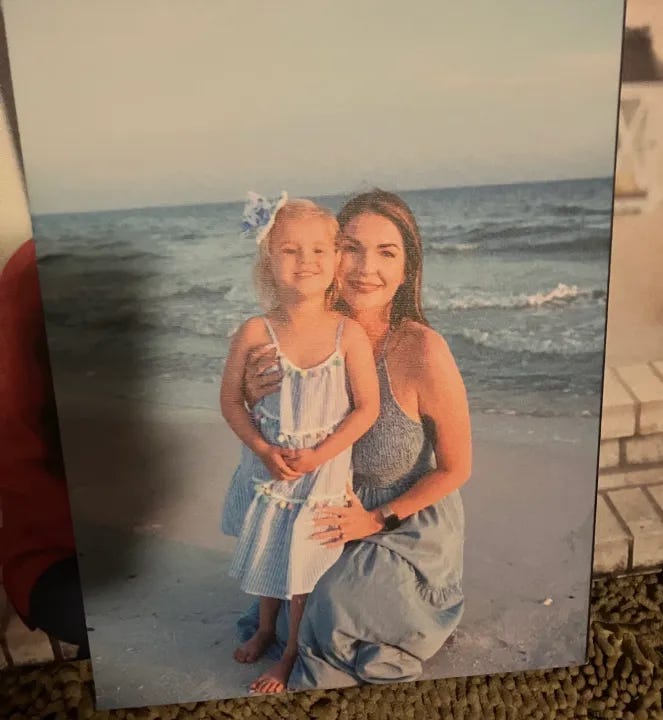
The scale of the investigation that followed was remarkable for a case involving a rural Arkansas home. The Sebastian County Sheriff’s Office became the lead agency, but they were quickly joined by Arkansas State Police, the Bonanza, Greenwood, and Fort Smith police departments, the Sebastian County Prosecutor’s Office — and, strikingly, federal agencies: the United States Secret Service and Homeland Security Investigations.
The involvement of federal agencies sparked immediate speculation. The Secret Service’s financial crimes mandate and HSI’s broad investigative reach hinted that investigators might be looking at financial matters — property, assets, life insurance — in addition to the circumstances of the deaths themselves. No official explanation was given for the federal involvement.
By December 9th, the Sebastian County Sheriff’s Office disclosed that six search warrants had been served and another twelve were “in process.” Officials confirmed that “numerous interviews” had taken place, more were pending, and a “voluminous number of tips” had been received. “Each lead is being actively pursued,” the statement read. Then came weeks of silence.
Key Physical Evidence
Home security data: Alarm deactivated by Charity via phone at ~10 p.m. Dec. 2. No doors or windows opened after deactivation. Deputies used a key to enter the following morning and found all entries operating properly. Randall Beallis drove a Tesla; company location data confirmed his vehicle was not near Bonanza that night. His cell phones did not ping any towers in proximity to the residence.
The Dumpster Discovery
Days after the discovery of the bodies, an unexpected piece of the puzzle surfaced in an unlikely way. On December 6th — just three days after authorities found the Beallis family — a dumpster diver at an apartment complex called The Reserve at Chaffee Crossing on Chad Colley Boulevard in Fort Smith pulled a large black trash bag from a dumpster. Inside were items belonging to Charity Beallis: family photographs, a necklace with the names of her children engraved on it, and a receipt bearing Charity’s Bonanza address.
The woman who found the items contacted Charity’s family. When Charity’s son John Powell brought the discovery up with an investigating detective, the detective’s alleged response stopped him cold: “How did you find out?” The Sebastian County Sheriff’s Office subsequently said they could neither confirm nor deny the discovery — a response that struck many observers as conspicuously evasive.
The significance of Charity’s personal belongings — including a necklace bearing her children’s names — appearing in a dumpster miles from the scene has never been publicly explained by investigators.
The Battle Over Remains and the Divorce
Even in death, the legal battles between Charity’s family and Randall Beallis continued. On December 4th — just one day after authorities announced the discovery of the bodies — Randall’s attorney Michael Pierce filed a motion to dismiss the divorce case, citing the fact that “the plaintiff passed away.” Pierce’s argument was that because the divorce decree had not yet been signed at the time of Charity’s death, the divorce was never legally finalized, making Randall technically a widower rather than a divorced man — and therefore potentially entitled to assets Charity would have received in the settlement.
Charity’s father, Randy Powell, responded with raw, unfiltered grief and rage. He contacted the court and, according to a letter filed by District Court Judge Shannon Blatt, accused the judge of bearing responsibility for his daughter’s and grandchildren’s deaths — saying she “might as well have pulled the trigger herself.” Judge Blatt filed a report with the Fort Smith Police Department and sent a letter to counsel memorializing the incident.
Eventually, a court ruled that Charity’s 24-year-old son, John Randall Powell, would handle funeral arrangements for his mother and become administrator of her estate. Randall Beallis was given authority over the twins’ remains. The family’s wish — that all three be buried together — went unfulfilled. Charity was buried on December 29th, 2025. In January 2026, John told reporters he didn’t know whether the twins had been buried, cremated, or where they were: “Randy has told me nothing.”
The Shadow of Shawna Beallis
As the investigation into Charity’s death continued, an older, unresolved shadow fell across the case. Randall Beallis had been married before Charity. His second wife, Shawna Jeanette Graham Beallis — a licensed practical nurse — had died on January 5th, 2012, in Fort Smith, Arkansas. She was 34 years old.
According to the initial incident report obtained by KNWA/FOX24, officers were called to the Beallis residence that day. When they arrived, Randall answered the door and said, “She killed herself.” Police found Shawna dead in the bedroom from a gunshot wound. The report also noted that furniture and other items were scattered throughout the home. Fort Smith Police ruled Shawna’s death a suicide. Evidence from the original investigation was destroyed in 2014 after the case was closed.
The case was reopened in 2021 after “additional information” was provided to the Bonanza Police Department. A police report from that review notes that Charity’s father, Randy Powell, was interviewed — and reportedly claimed that Charity knew who was responsible for Shawna’s death. Randy Powell later told KNWA/FOX24 he never said his daughter was directly involved, only that “she knew who did it.” The 2021 review was again closed, citing limited evidence. With the original forensic evidence destroyed, a definitive resolution of Shawna Beallis’s death appears permanently out of reach.
Shawna’s family, once news of Charity’s death broke, publicly called for the earlier case to be reopened. The pattern — a wife of Randall Beallis, found dead by gunshot wound, death ruled a suicide, Randall present or nearby — was not lost on those following the case.
The 2012 Death That Resurfaced
Jan. 5, 2012: Shawna Beallis, 34, found dead at home from gunshot wound. Randall Beallis answered the door and said “She killed herself.”
Death ruled a suicide by Fort Smith Police.
2014: Physical evidence from original investigation destroyed after suicide ruling.
2021: Case briefly reopened after “additional information” provided to Bonanza PD. Closed again due to insufficient evidence.
Dec. 2025: Shawna’s family calls for renewed investigation in wake of Charity’s death.
Status: No charges ever filed. Original forensic evidence gone.
An Official Answer That Raised More Questions
Three months after the discovery of the bodies — on March 4th, 2026 — the Sebastian County Sheriff’s Office released its long-awaited update. The Arkansas State Crime Lab had completed its autopsies. The official determination: Charity Beallis died by suicide. Maverick and Eliana, the six-year-old twins, died by homicide.
The announcement was met with a mixture of stunned disbelief and, in some quarters, grim acceptance. The Sheriff’s Office paired the autopsy findings with several supporting pieces of evidence: Tesla location data showing Randall’s vehicle was not near the Bonanza residence that night; cell phone records showing his phones did not ping towers near the scene; and home security data showing that no doors or windows were opened after Charity deactivated the alarm at 10 p.m. on December 2nd. When deputies arrived the following morning, they used a key to enter, and subsequently tested each door and window, finding them all operational.
Randall Beallis’s attorney, Michael D. Pierce, issued a statement saying his client “continues to recover from the tragic event that took his children from him,” and that they were “not surprised by the findings.” The statement further warned that “continued defamatory and libelous false accusations and statements including those made on social media against Mr. Beallis will be reviewed and potentially pursued in the legal system.”
“The Sebastian County Sheriff’s Office has made a clear statement that they have not found evidence indicating any conclusion other than those determined by the autopsies conducted by the Crime Lab.”— Michael D. Pierce, attorney for Randall Beallis, March 2026
What the Official Account Does Not Explain
Yet the official account left significant forensic questions unaddressed — questions that reporters, advocates, and members of the public have continued to raise. The Sheriff’s Office confirmed that Charity had suffered “gunshot wounds” (plural), reportedly to two separate locations on her body — a detail confirmed publicly by her father, Randy Powell, who said she had wounds to both her chest and her head. The Sheriff’s Office did not release the full autopsy report, which would include wound trajectory analysis, sequencing, and the forensic reasoning behind the suicide determination.
The ruling is public. The reasoning is not. How two gunshot wounds in two separate body locations are consistent with a self-inflicted death is a question forensic examiners can and do answer — but the public documentation supporting this conclusion has not been made available. Captain Pevehouse’s March 4th news release stated that the investigation was “continuing” as the Sheriff’s Office awaited search warrant returns on electronic forensic examinations, suggesting that digital evidence — potentially including Charity’s communications, search history, and financial records — had yet to be fully analyzed.
It is worth noting, for fairness, that the alibi evidence for Randall Beallis is not circumstantial. Tesla GPS data, independent cell tower records, and home security logs all converge on the same conclusion: he was not physically present at the Bonanza residence that night. These are data sets from independent sources — not easily fabricated or dismissed. The forensic picture that investigators assembled points away from Randall as the direct physical actor.
But the determination of manner of death — suicide — carries its own weight of unanswered questions. And for the family of Charity Beallis, no official determination erases the fundamental question: how did a woman who spent nine months publicly begging for protection end up in this position?
Maverick and Eliana

In the avalanche of legal proceedings, competing narratives, and public debate, it is worth pausing to name and remember the youngest victims at the center of this case. Maverick and Eliana Beallis were six years old. They were born in 2019 to Charity and Randall. They were present in the home in Bonanza during the months of domestic turmoil. They were named in the endangering-welfare-of-minors charges that were ultimately dropped as part of the plea agreement in October 2025.
The autopsy determined their deaths were homicides. The Sheriff’s Office has not classified the overall case as a murder-suicide, leaving the question of who killed Maverick and Eliana formally open — at least in official public communications. The investigation, as of the most recent update, was continuing with electronic forensic evidence still being examined.
The twins’ remains were released to their father, Randall Beallis. As of early 2026, John Powell did not know where they had been laid to rest. Charity was buried alone on December 29th, 2025.
What This Case Reveals
Whatever the precise legal and forensic determination ultimately proves to be, the Charity Beallis case has exposed a series of systemic failures that are not in dispute.
A man accused of felony aggravated assault on his wife — choking her, in front of their children — pleaded guilty to a misdemeanor and walked free. The medical board charged with overseeing his professional fitness repeatedly tabled the matter and took no action before or after the guilty plea. The prosecuting attorney reportedly refused to accept written communication from the victim. A state senator heard her fears and connected her to resources, but those resources were not enough.
Charity Beallis did not go quietly into desperation. She posted publicly on social media. She named names. She cited her case number and invited scrutiny. She begged, by her own son’s account, for nine months. And still, at the end of a final custody hearing that went against her, she was alone in a house with her children and whatever despair or desperate calculus had consumed her.
The case has become a flashpoint for domestic violence advocacy groups in Arkansas and nationally, who point to the plea bargaining process as a structural failure. When serious charges — felony assault, child endangerment — are reduced to misdemeanors without the victim gaining substantive protection, the message sent to victims considering coming forward is unmistakable. The case also raises questions about the adequacy of protective order enforcement, the responsiveness of medical licensing boards to documented abuse allegations, and whether prosecutorial discretion, as exercised here, adequately weighs the safety of domestic violence victims against other legal considerations.
“There was nobody else in the world who had any reason to harm her or those babies but him. She begged for nine months for somebody to listen.”— John Powell and Randy Powell, Charity’s son and father
Charity’s family — her father Randy Powell, her son John Powell — have been outspoken in their grief and their conviction that the systems around Charity failed her at every turn. John has described a stepfather who slashed his truck tires and a legal system that shielded a “powerful and evil man.” Randy Powell told the court’s judge, in an anguished phone call, that she “might as well have pulled the trigger herself.” The anger is raw, understandable, and speaks to a family still searching for accountability in a case where official findings have, so far, closed more doors than they’ve opened.
Randall Beallis continues to practice medicine in Arkansas. His medical license remains active. He has maintained throughout that he is innocent of any involvement in the deaths of his wife and children and has stated his cooperation with law enforcement. The investigation remains technically open, pending electronic forensic returns.
April 2026
As of April 2026, no arrests have been made in connection with the deaths of Maverick and Eliana Beallis. The Sebastian County Sheriff’s Office has stated publicly that it found no evidence contradicting the autopsy conclusions — but also that the investigation remains open, with electronic forensic analysis ongoing.
The full autopsy report, including the forensic evidence supporting the suicide determination, has not been released to the public. The physical evidence recovered from the scene — weapons, shell casings, trace evidence — has not been described in public documentation. The mystery of Charity’s belongings found in a Fort Smith dumpster three days after the deaths has not been officially addressed.
The children of Maverick and Eliana’s deaths have been ruled homicides. No one has been charged with those homicides. That remains the central unresolved fact in this case: two six-year-olds were killed, and as of this writing, no person has been held accountable.
The death of Shawna Beallis in 2012 — with its original evidence destroyed and its 2021 reopening again closed — remains an officially unresolved chapter in a book that keeps acquiring new and troubling pages.
Charity Powell-Beallis was 40 years old. She had survived abuse, fought through a broken system with everything she had, spoken openly about her fear, and sought help from legislators, prosecutors, courts, and the public. Her son John said she had dreamed of becoming a domestic violence advocate — of turning her pain into protection for others. She never got the chance.
Maverick and Eliana were six years old. They deserved protection. They did not receive it.
This case is not over. The investigation continues. And until there are answers — real, public, documented answers about how two children died and why no one has been charged — the Bonanza tragedy remains not just a personal family catastrophe but a civic failure demanding accountability.
Case Timeline
2012
Jan 5
Death of Shawna BeallisRandall’s second wife found dead of gunshot wound at their Fort Smith home. Death ruled a suicide. Evidence later destroyed in 2014.
2015
Marriage to CharityCharity Powell marries Dr. Randall Beallis. Twin children Maverick and Eliana born in 2019.
2020
May
Tire-Slashing IncidentBoth Charity and Randall confirmed to police they slashed stepson John’s tires while holding infant twins. DHS contacted. Randall later pleads no contest to misdemeanor mischief.
2025
Feb 16
Arrest of Randall BeallisDr. Beallis arrested and charged with felony aggravated assault, domestic battery, and two counts of endangering welfare of a minor after allegedly choking Charity in front of the children.
2025
Mar 5
Charity Files for DivorceFiles for divorce, requesting full custody of the twins and a protective order for herself and the children.
2025
Aug
Charity’s Public PleaCharity posts publicly on Facebook about the system failing her, names the prosecutor’s office, and begs for accountability. Also contacts State Senator Terry Rice.
2025
Oct
Plea DealCharges amended; Randall pleads guilty to misdemeanor battery only. One-year suspended sentence, $1,500 in fines. No jail time. Medical license untouched.
2025
Dec 2
Final Divorce HearingAfter four attorneys, Charity represents herself. Court orders joint custody to begin Dec. 5. Charity wished to reconcile, per court transcripts. That night, she deactivates the home security alarm.
2025
Dec 3
Bodies DiscoveredSebastian County Sheriff’s Office conducts welfare check. Charity, Maverick, and Eliana found dead from gunshot wounds at 9:30 a.m. All transported to Arkansas State Crime Lab.
2025
Dec 6
Charity’s Belongings Found in DumpsterA dumpster diver at a Fort Smith apartment complex finds a bag containing family photos, a necklace with the children’s names, and a receipt with Charity’s address.
2025
Dec 9
Investigation UpdateSCSO announces 6 search warrants served, 12 in process. Arkansas State Police, Fort Smith PD, Bonanza PD, Greenwood PD, U.S. Secret Service, and Homeland Security Investigations all named as parties.
2025
Dec 29
Charity Buried — AloneCharity laid to rest. The twins’ remains remain with Randall Beallis. John Powell says he has not been told where they are or whether they have been buried.
2026
Mar 4
Autopsy Results ReleasedSCSO announces: Charity’s death ruled suicide. Maverick and Eliana’s deaths ruled homicides. Randall’s Tesla GPS, cell towers, and home security data cited as alibi. Investigation ongoing — electronic forensics pending.
2026
April
No Arrests. Investigation Open.As of publication: no charges filed in connection with the homicides of Maverick and Eliana Beallis. Dr. Randall Beallis remains a practicing physician. The full autopsy report is not public.