


A Child Lost to Violence: The Cold Case of Marvayah Darby and Milwaukee’s Unyielding Pain
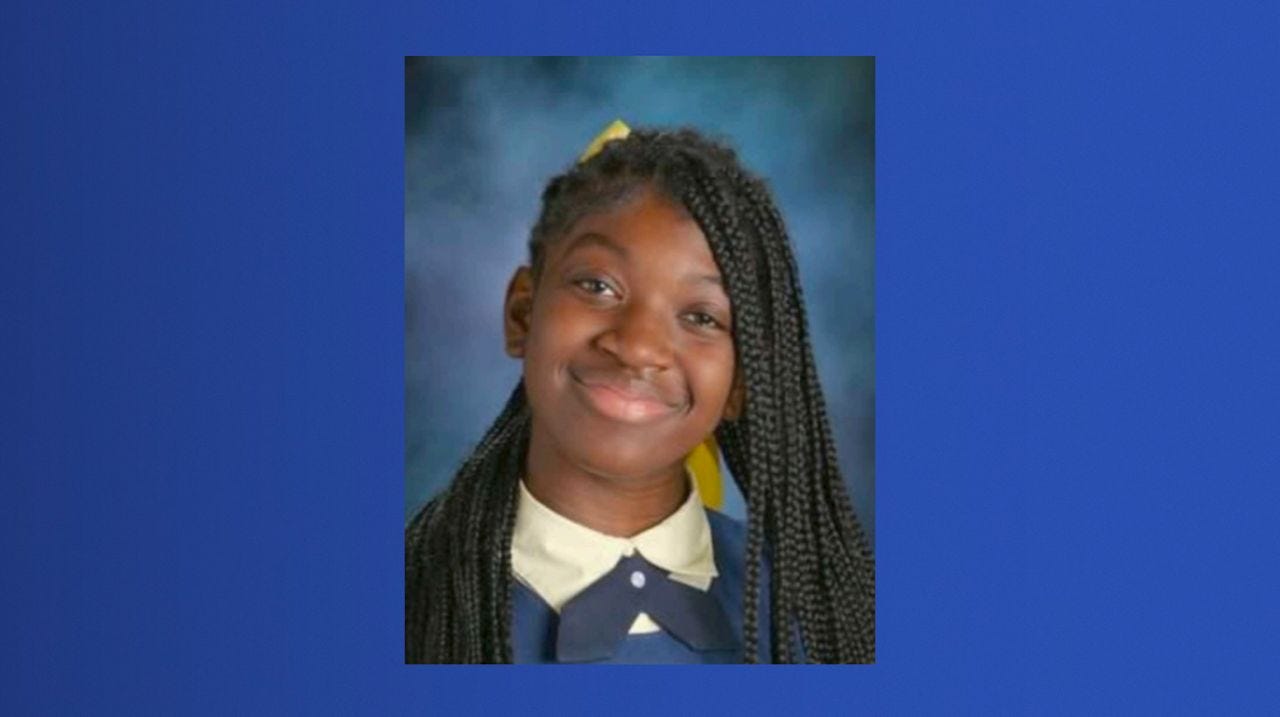
Milwaukee, a city already too familiar with the sound of gunfire, woke on June 13, 2025, to yet another headline no parent should ever have to read: a 12-year-old girl had been shot dead in her own bed. Marvayah Darby was not caught in cross-fire on a playground, or struck by a stray round while walking to a corner store. She was asleep inside her family’s Long View neighborhood home shortly after 1 a.m. when someone—police still do not know who—unloaded multiple bullets from a slow-rolling silver or gray SUV. One of those rounds killed her. By sunrise she was gone, and by winter the investigation had gone colder than Lake Michigan’s January shoreline.
On December 10, exactly 180 days after the killing, the FBI’s Milwaukee field office did something it rarely does for a single city homicide: it offered a $10,000 reward. The gesture is as blunt as it is unusual. Federal agents almost never publicize a reward for a local shooting, but Milwaukee police have acknowledged they have run out of leads.
Long View sits on Milwaukee’s north side, a grid of modest two-story duplexes and aging bungalows that once housed factory workers who walked to now-shuttered plants. Today the neighborhood’s soundtrack is sirens. In the eight-day stretch that surrounded the killing, police logged 23 shots-fired calls within a one-mile radius. One bullet pierced a 68-year-old woman’s living-room window as she watched television; another struck an occupied daycare van parked outside a church. Residents told the Journal Sentinel they no longer allow children to sit near front windows.
Yet even within that grim context, the idea that a gunman would fire indiscriminately into a home at 1:20 a.m.—and keep firing until a child was dead—felt like a moral floor had collapsed. Detectives believe the house itself may have been the target, not Marvayah. The family had moved in only weeks earlier; relatives say they have no idea why anyone would want to harm them. Investigators have scoured doorbell cameras, license-plate readers, and social-media videos. They have interviewed neighbors, schoolmates, and anyone listed in gang databases. Every trail has ended at the same blank wall: no motive, no eyewitness, no forensic fingerprint beyond the caliber of the bullet.
In homicide work, the first 48 hours are considered critical. After that, memories degrade, surveillance loops record over themselves, and suspects scatter. Marvayah’s investigators blew past that deadline without a viable description. By the 48-day mark they had chased down 63 tips; none materialized. Now, at day 180, the case file is labeled “cold,” a bureaucratic epitaph that means the detective squad must ration hours to fresh killings still generating 911 calls.
Milwaukee Police Inspector Paul Lough, a 26-year veteran, does not mince words. “This one has completely gone cold,” he said, adding that Marvayah’s murder is the only 2025 homicide in which detectives have “zero actionable intelligence.” The department’s clearance rate—82 percent—sounds impressive until one considers the human denominator: 18 percent of 139 homicides means 25 families still waiting for answers. Marvayah’s family heads that mournful list.
The FBI’s entrance into the case is both blessing and omen. Federal analysts can subpoena cell-tower dumps, trace firearms across state lines, and leverage interstate task forces. But the Bureau does not ordinarily parachute into street-level homicides unless invited, and the invitation itself signals local despair. Agents have re-canvassed the neighborhood, erected electronic billboards on I-43, and even flown a surveillance drone during summer nights, hoping to jog memories. Thus far, silence.
Police vow they will not close the file, but resources are finite. By spring, unless new evidence surfaces, the case will be transferred to a “cold-case” detective who already juggles 47 unsolved homicides dating back to 1998. The file will move to a basement evidence room, and the neighborhood will record fresh shootings, each one pushing the 12-year-old’s name further into archival obscurity—unless someone speaks.
Tip lines remain open: 414-276-4684 for the FBI, 414-935-7360 for Milwaukee police. Anonymous apps like P3 accept encrypted messages. Crime Stoppers will even relay tips through Instagram DM. Investigators insist they do not need a courtroom-ready affidavit—just a name, a license plate, a rumor repeated at a barber shop. “We’ll do the rest,” Inspector Lough promises.
Milwaukee will close 2025 with 139 homicides, an 11 percent increase over last year. Each statistical point represents a family’s private grief now stapled to public spreadsheets. Non-fatal shootings have declined slightly, but the city has still tallied 507 incidents in which someone was shot and lived. Trauma surgeons at Froedtert Hospital compare the wound patterns to those they saw during the worst years of the Iraq War. The youngest survivor this year was 18 months old; the oldest 83. Detectives quietly acknowledge a grim ratio: for every fatal shooting, there are roughly four non-fatal ones that could just as easily have ended in death. Marvayah’s case reminds residents that probability is not destiny; it is simply a bullet’s whim.
Criminologists call it “the code of the street”—the informal prohibition against cooperating with police. But the silence surrounding this death feels different, less about loyalty to a gang than about collective fatalism. Cities across America—Louisville, Albuquerque, St. Louis—have all recorded historic homicide counts since 2020, fueled by pandemic disruption, flooded illegal gun markets, frayed police–community relations, and adolescent social-media feuds that escalate in minutes. But Milwaukee’s geography concentrates the pain: 70 percent of 2025’s homicides occurred in a 12-square-mile quadrant of the north side, an area whose population would fit inside a single Chicago neighborhood.
Local officials have responded with both carrots and sticks. The state legislature approved $3 million for “violence interrupter” nonprofits; simultaneously, prosecutors sought—and received—federal funding to create a “gun crimes” task force. Community leaders argue the approaches are not mutually exclusive, but they warn that programs take months to staff, while bullets travel 2,500 feet per second. Marvayah’s death is the latest evidence that prevention arrives slower than desperation.
The $10,000 FBI reward is tax-free and can be split among multiple tipsters. It is also, in the grand scheme of street economics, modest. Federal agents concede the sum is symbolic, designed less to purchase information than to prick conscience. Rewards can work: in 2022 a $15,000 payout helped solve the shooting of 5-year-old Prince McCree. But that case broke open after 45 days; Marvayah’s has already quadrupled that lifespan. Studies show that tips spike immediately after a reward announcement and then decay exponentially. Agents have 30 days before the billboard cycle refreshes; after that, even the electronic placards will be reassigned to bank-robbery suspects or fentanyl traffickers.
Until an answer arrives, the family will keep cooking dinner for five, setting a sixth plate that goes untouched. And Milwaukee will keep counting its dead, each number a story that ends too soon, each silence a bullet still traveling through the night.